
You invest heavily in marketing to get people into your store, yet many leave without buying those small, profitable items. Ignoring the checkout zone hurts your total revenue significantly. Counter display trays are the silent salespeople you need to fix this problem right now.
Counter display trays maximize sales per square foot by capturing attention at the critical point of purchase. They organize products, reinforce brand identity, and trigger impulse buys for smaller, high-margin items like accessories or cosmetics, making them an essential component of a profitable retail strategy.

Many brands overlook this small tool, focusing only on large wall shelves or floor units. However, the counter is where the final decision happens. It is the last chance to speak to your customer before they leave. If you do not optimize this space, you are leaving money on the table. Let's look at why these trays matter and how to build them right.
How do counter displays trigger impulse purchases effectively?
Customers often stand in line, bored and waiting to pay. If you leave this space empty, you lose easy money. A well-placed tray turns waiting time into shopping time instantly.
Counter displays place low-cost, high-desire items right at eye level during the checkout process. By disrupting the waiting experience, they encourage customers to add one last item, significantly increasing the average transaction value without requiring extra effort from your sales staff.

Based on my experience in the industry, the checkout counter is the most valuable real estate in any shop. We often refer to these as "Countertop Displays." They are designed to sit on the checkout desk or service counter. Their primary job is to stimulate impulse purchases. Think about the last time you bought a chocolate bar or a small bottle of hand sanitizer; it was likely sitting in a tray right next to the register.
These displays are perfect for consumables or small accessories. Because they are small, they must be visually impactful. We often use materials like acrylic or metal to create a premium feel that matches the store's environment. The key here is visibility. If a customer is waiting, their eyes wander. A counter display creates a focal point. It organizes small items that would otherwise look messy on a flat surface. By presenting these items in a neat, branded tray, you elevate the perceived value of the product. It stops being "clutter" and starts being a "curated offer." This psychological shift is what drives the impulse buy. If you are a retail brand, you cannot afford to ignore this specific type of fixture.
Which material is best for your custom display trays?
Choosing the wrong material ruins your brand image. Cheap plastic looks bad, but heavy metal costs too much. You must balance durability, aesthetics, and your budget carefully.
The best material depends on your product's lifecycle and volume. Acrylic offers clarity for cosmetics, while wood adds warmth for organic brands. For high-volume orders, injection molding reduces unit costs, whereas laser-cut metal or handmade wood works best for smaller, premium batches.
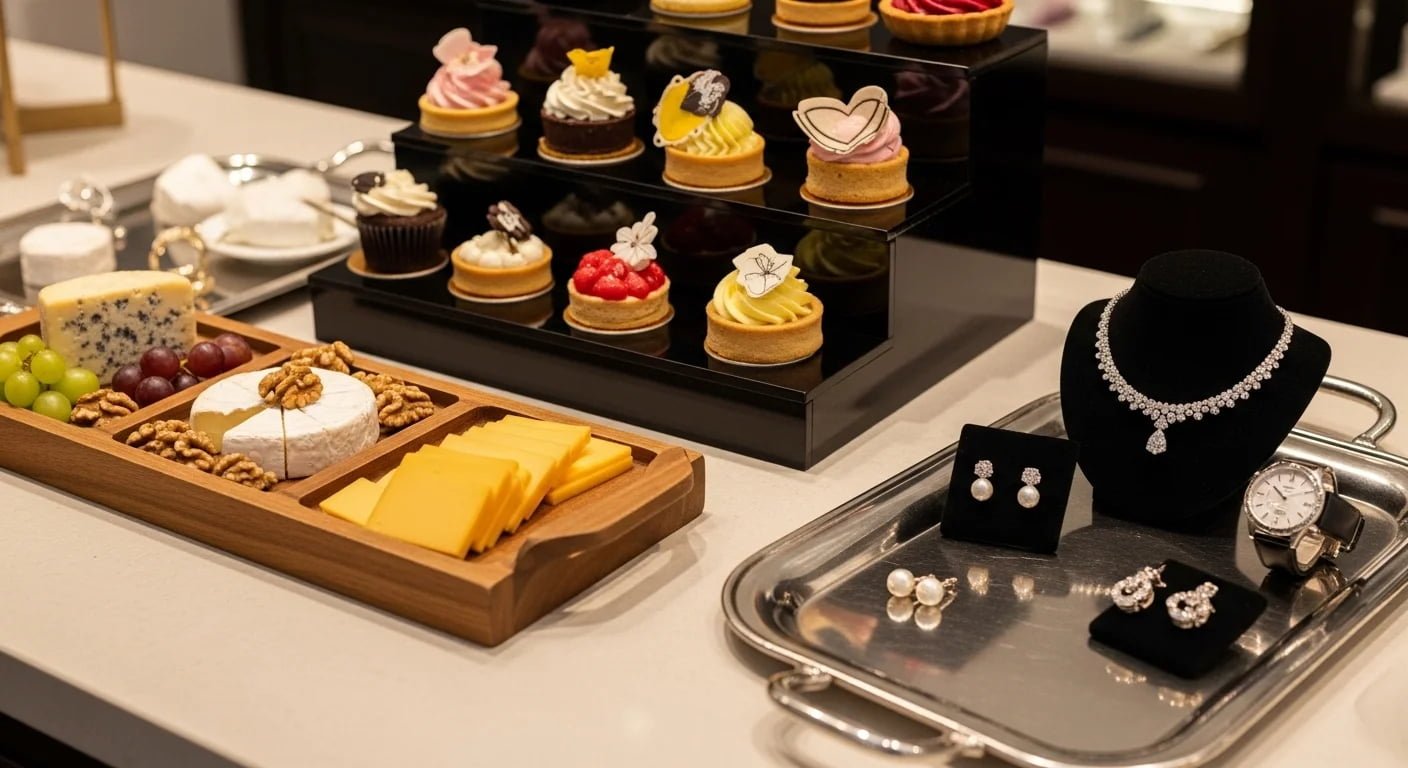
When we discuss materials for Display Fixtures and Bespoke Shopfittings, we have to look at production methods. For metal parts, we evaluate whether to open a mold based on your order quantity. In principle, we do not need molds for most iron processes unless the shape is very unique. Opening a mold is just to improve efficiency. For small batches, using a laser machine to cut iron pipes and plates is actually cheaper and faster. A metal mold usually costs between $100 and $1000 and takes 5 to 15 days to make. If you only need 50 trays, opening a mold adds unnecessary cost and time.
However, for plastic parts, the logic changes. Injection molding provides a perfect finish but the mold fees are higher, usually exceeding $1000. If your quantity is small, we recommend 3D printing. We can achieve smooth surfaces and great colors with modern 3D printing. For wood and acrylic, we generally do not use molds at all. We use CNC machines and cold presses. We also use metal 3D printing for special structures in stainless steel or aluminum, with a very fast lead time of 12 to 36 hours. You must choose the material that fits your volume. If you are doing a large rollout for a chain store, injection molding or metal molds make sense. If you are doing a small custom run, laser cutting and handmade assembly are the winners.
How do surface finishes elevate your brand value?
A scratched or dull display makes your product look cheap. Poor finishing kills customer trust immediately. High-quality surface treatments protect the tray and reflect your premium status.
Finishes like PVD coating provide durability and anti-fingerprint properties, essential for high-touch areas like counters. Powder coating offers endless color matching for brand consistency. These details prevent wear and tear while ensuring your display looks pristine even after months of use.

For luxury brands, the surface finish is everything. For example, we work with watch brands that require stainless steel with gold plating. It must look exactly like the watch itself. This requires PVD (Physical Vapor Deposition) coating. PVD creates a thin protective film that is hard and corrosion-resistant. To make it even better, we add an AF (Anti-Fingerprint) layer. This is crucial for counter trays because customers touch them constantly. The AF layer uses nanoscale materials to stop oils and fingerprints from sticking, making the tray easy to wipe clean.
For other metal displays, we use powder coating. Currently, most factories in China and Vietnam use natural gas or electricity for this. Advanced equipment increases powder utilization and reduces pollution. In my factory, we calculate the powder usage precisely for every order. We control the thickness of the coating to ensure parts fit together perfectly. If the coating is too thick, the parts won't assemble; if it's too thin, it looks cheap. We also see wood finishes like painting, lacquering, or veneering. For high-end projects, we might apply five layers of paint (2 base, 3 top) and sand it down if there is even a tiny dust particle. The goal is a flawless look. Your display tray is an extension of your product. If the tray looks cheap, the customer thinks the product is cheap.
Should you choose flat-pack or pre-assembled shipping?
Shipping costs are rising, eating into your profit margins. Wasting space in a container is throwing money away. The right packing strategy saves freight costs and prevents damage.
Flat-pack (KD) shipping saves 50% to 80% of container space, significantly lowering freight costs. However, for complex counter trays, pre-assembled shipping ensures perfect presentation out of the box. The choice depends on labor availability at your store versus your shipping budget.
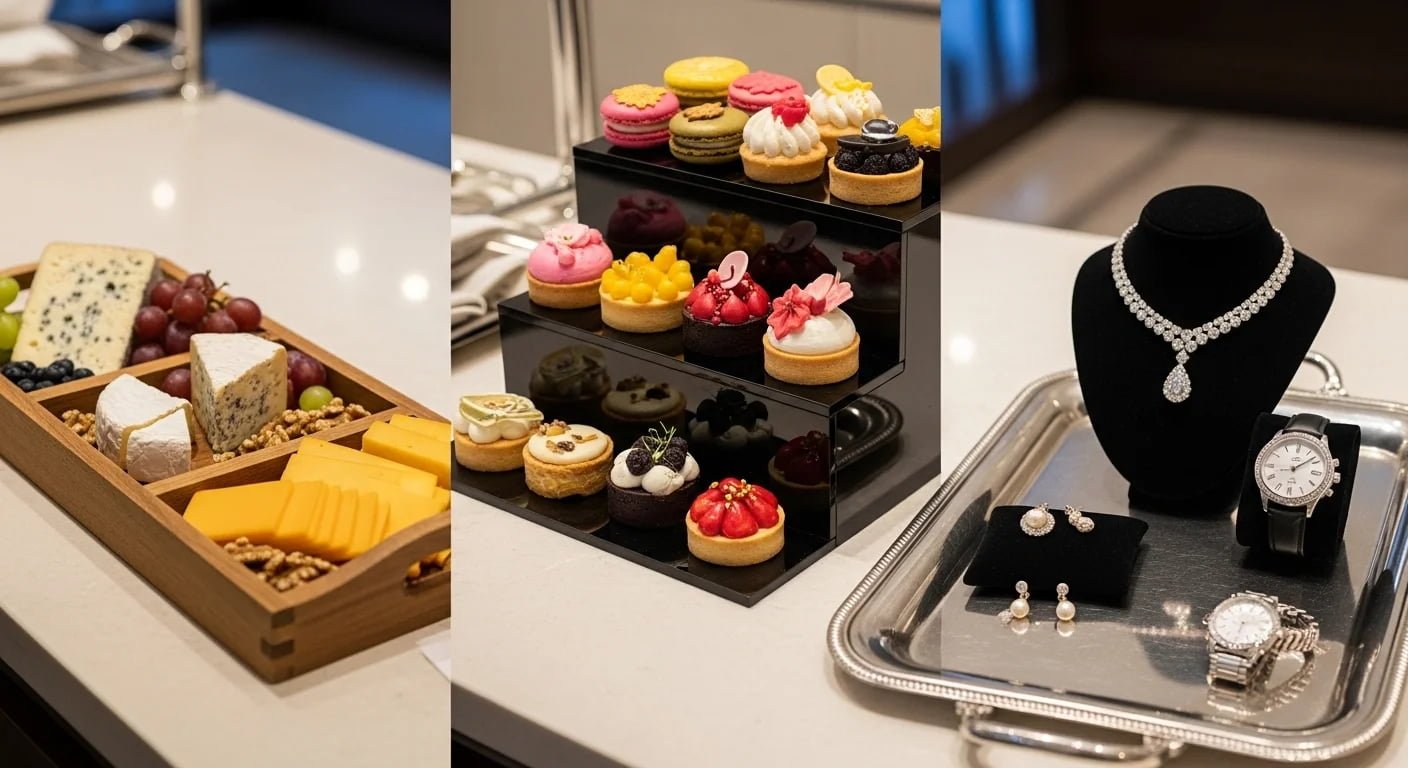
This is a major decision in our industry. Compared to shipping fully assembled units, Knocked Down (KD) or disassembled shipping can save at least 50% to 80% of sea freight container space. It also reduces packaging material costs. If we ship assembled, the box needs a lot of filler to stop the display from moving inside the truck or ship. This adds cost and waste. However, you have to think about the labor cost at the destination.
In China and Vietnam, labor costs are lower than in North America or Europe. If a display is complex, assembling it in the USA might cost much more than the shipping savings. For example, a heavy checkout counter with many parts requires skilled labor to assemble. In this case, shipping it assembled might be better despite the freight cost. But for counter trays, we often design them to be "KD" but easy to assemble. We use structures that a store employee can put together quickly. Some designers now prefer structures that are easy to install, balancing the freight savings with the ease of setup. We also try to design components that can nest inside each other to save space. It is a balance game. You need to calculate the total landed cost: manufacturing + shipping + local assembly labor.
How do you select the right manufacturing partner?
Bad suppliers cause delays and quality issues. You cannot afford a partner who disappears or delivers late. Finding a factory that understands design and logistics is crucial.
Look for suppliers with in-house engineering who can offer rapid prototyping and material advice. While Vietnam offers tariff benefits for North America, China currently holds the advantage in complex supply chains and component availability. A good partner bridges the gap between design concepts and production reality.
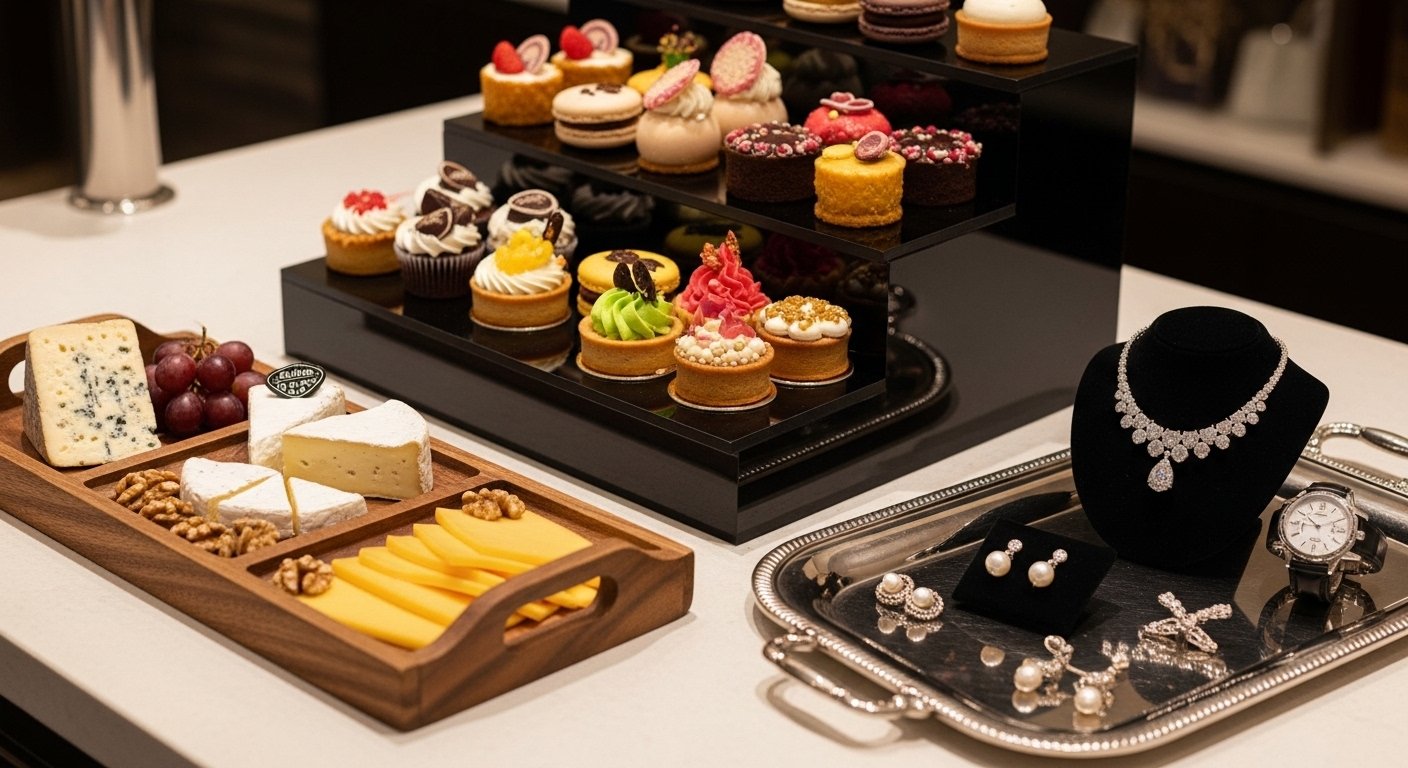
I run factories in both China and Vietnam, so I see the differences daily. If you are a buyer from North America, Vietnam is attractive because of lower tariffs. The rule of origin usually requires that the import ratio of the total value is less than 40%. For example, if we make a metal display in Vietnam but import a glass part from China, it still qualifies as "Made in Vietnam" if the local value add is high enough. We ship many containers from Xiamen to Ho Chi Minh City to support this. However, Vietnam's supply chain is not as complete as China's. Finding specific accessories there is hard, and options are fewer.
China has a complete industrial chain. If you need a specific certification, a rare material, or a complex prototype, China is faster. We can finish a prototype in one week in China. In other countries, this might take three weeks. Foreign buyers often face issues like products not matching samples, non-compliance with local laws (like E0 or P2 board standards), or vague delivery times. A good supplier acts as a consultant. We check your design for production risks. We suggest standard parts to save money. We ensure the packaging can survive a drop test. Whether you choose China or Vietnam depends on your priority: if it is complex and urgent, China is best. If it is a large, standard order for the US market, Vietnam saves on duties. You need a partner who tells you the truth about these options.
Conclusion
Counter display trays are vital for boosting impulse sales and enhancing brand presence. By selecting the right materials, finishes, and manufacturing partners, you create a profitable and consistent retail experience.