
Every retailer faces the same nightmare: a store full of great products that nobody notices. Without the right presentation, your brand fades into the background and sales start to drop [3].
Display fixtures and bespoke shopfittings are critical because they define your brand tone and directly drive product sales [3]. They serve as silent salespeople that organize the retail environment, create a premium shopping experience, and build the necessary trust to turn a browser into a loyal buyer.
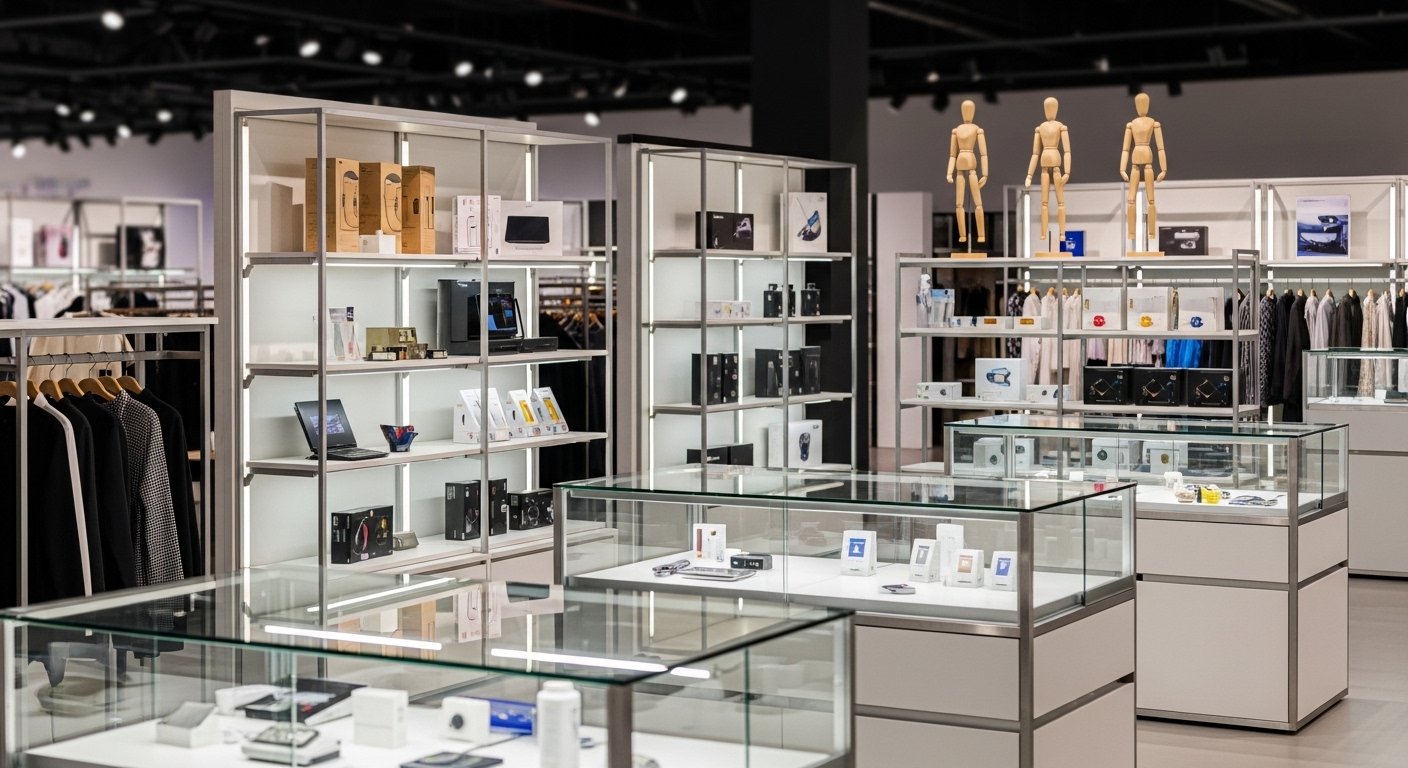
I have spent over a decade in this industry, starting on the factory floor and eventually founding my own company. I have seen how a single design choice can change the fate of a retail space. If you want to know how these tools actually work to grow your business, keep reading.
How do custom display fixtures enhance brand identity and drive product sales?
Standard shelves make your high-value products look like cheap commodities. This loss of perceived value hurts your reputation and kills your profit margins. Custom solutions ensure your store reflects your unique brand story [1][3].
Custom display fixtures and bespoke shopfittings enhance brand identity by creating a consistent store image across all locations [1]. By aligning the fixture design with brand values, these tools attract your target audience and encourage them to engage with products, which leads to much higher sales [3].
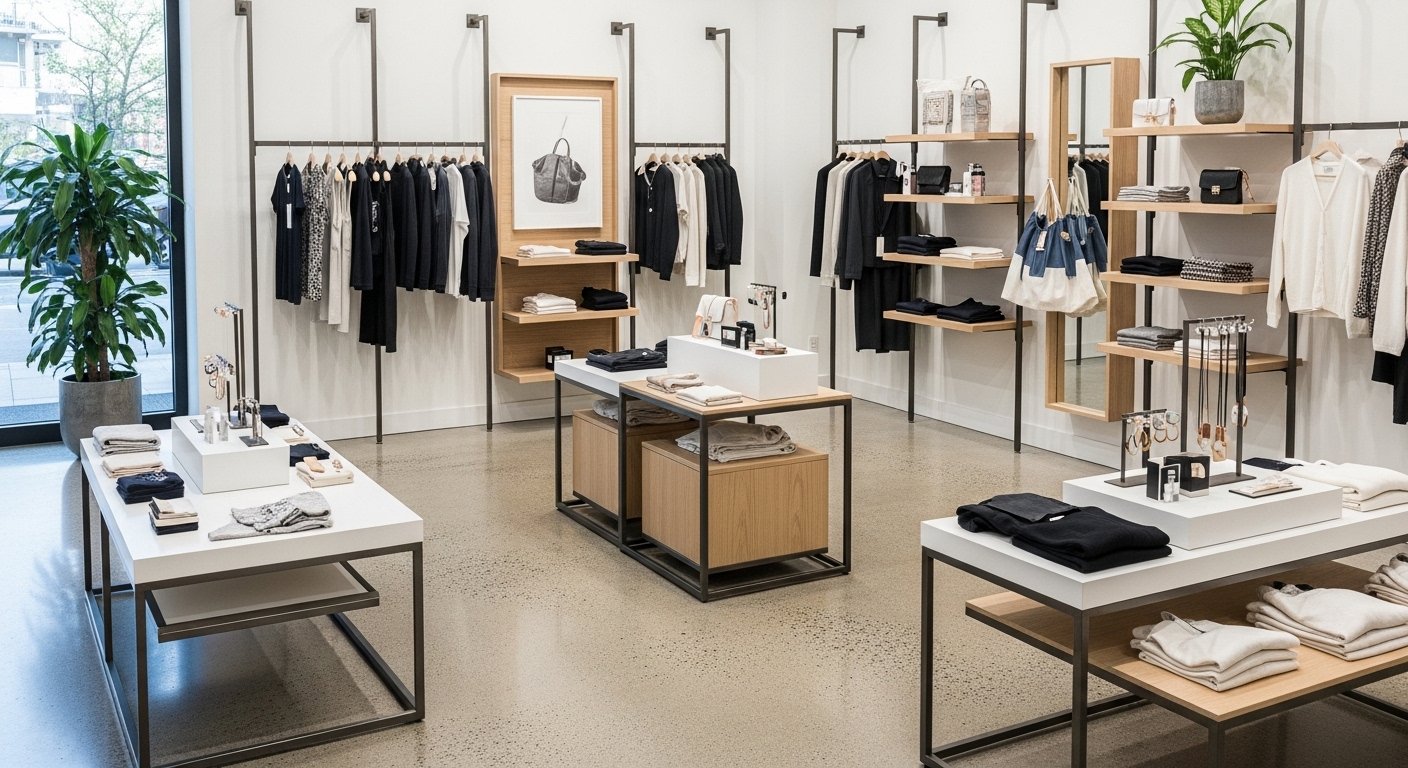
In my experience, the "silent salesperson" effect is real. When I work with luxury brands, we use specific materials and lighting to create an emotional connection. For mass-market retail, the focus shifts to efficiency and clear communication. The key is that the fixture must match the product's price point and the customer's expectations [2].
| Store Type | Primary Goal | Common Materials Used |
|---|---|---|
| Luxury/Jewelry | High-end feel, exclusivity | Stainless steel, PVD coating, high-gloss lacquer [2][6] |
| Fashion/Apparel | Brand vibe, easy browsing | Wood veneer, powder-coated steel, LED strips [2][3] |
| Electronics | Innovation, durability | Acrylic, metal 3D printing, glass [1][3] |
| Supermarkets | Efficiency, volume | Particle board, durable powder coating [1][2] |
When a brand decides to roll out a new image, they need standardization. I always tell my clients that unique branding requires a professional factory to handle large-scale production. This ensures that a shop in London looks exactly like a shop in New York [1]. This consistency builds global trust, and trust is what ultimately closes the sale.
In what ways do advanced materials and high-precision manufacturing processes ensure the premium presentation of retail products?
Poorly finished displays look unprofessional and break easily under daily use. Issues like peeling paint or warping wood can make your entire brand look neglected. Precision in manufacturing is the only way to protect your retail investment [2][3][5].
Advanced materials like MDF, PVD coatings, and high-precision CNC or laser cutting ensure a flawless and durable finish [2][3][6]. These processes guarantee that every component fits together perfectly, maintaining the high-end aesthetic needed to showcase premium retail products and withstand heavy foot traffic [1][5][6].
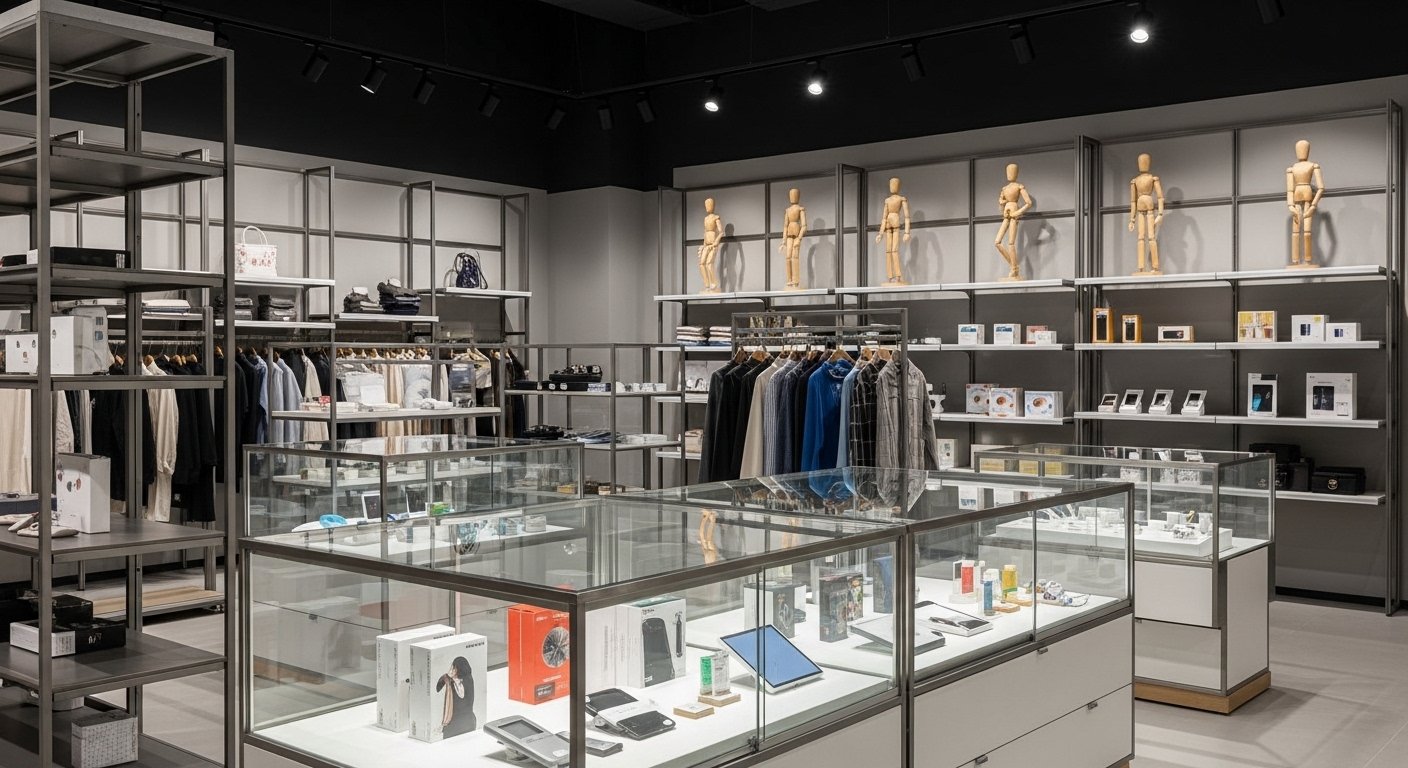
I believe that the choice of material is where most projects succeed or fail. For instance, PVD coating with an Anti-Fingerprint (AF) layer is a game-changer for metal fixtures. It keeps surfaces looking clean even in busy stores [6]. I also use 3D printing for small batches or complex shapes. It allows us to create smooth, beautiful parts without the high cost of traditional molds [1].
We also have to think about the environment. I often suggest using moisture-resistant boards or eco-friendly materials like recycled plastics. Understanding how materials react to their environment is a science. For example, using MDF behind marble can be risky because they expand at different rates when the temperature or humidity changes [3].
| Process/Material | Benefit for Retail | Note from Experience |
|---|---|---|
| Laser Cutting | Extreme accuracy for joints | Best for complex metal structures [1] |
| PVD Coating | Hard, wear-resistant finish | Essential for high-touch luxury areas [6] |
| Powder Coating | Colorful and durable | We use electricity/gas to reduce pollution [1] |
| 3D Printing | Rapid prototyping (12-36 hrs) | Great for unique, low-volume components [1] |
How can optimized fixture design and assembly strategies improve cost-efficiency and supply chain reliability in global retail expansion?
Shipping air in pre-assembled boxes is an expensive mistake. High logistics costs and assembly errors on-site can delay your grand opening and ruin your budget. You need a smart strategy that balances manufacturing speed with shipping costs [1][3].
Optimized designs using Knock-Down (KD) structures can save between 50% and 80% on shipping space [1]. Strategies like using modular components and sourcing from both China and Vietnam help manage costs, lower tariffs for US markets, and ensure a reliable supply chain for fast global expansion [1][2][5].
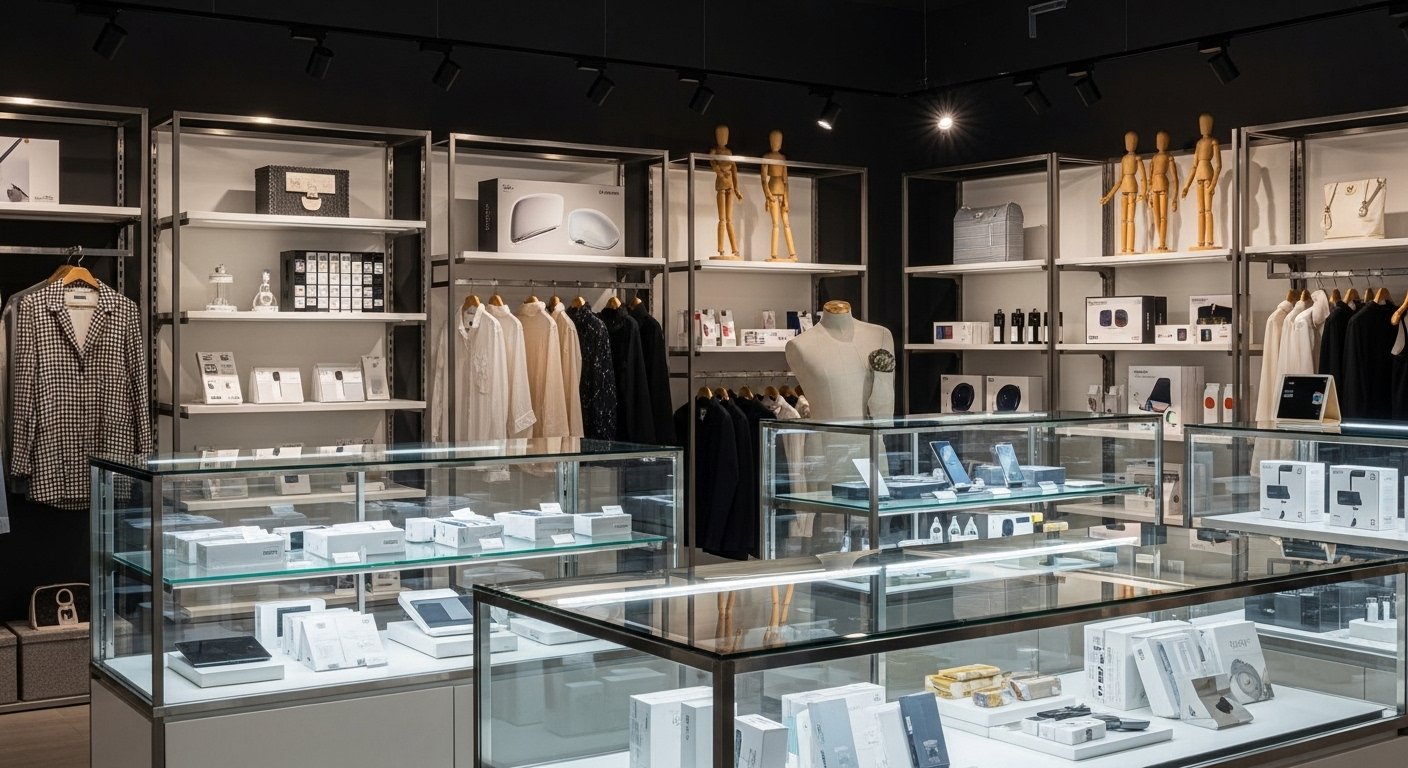
I always look for ways to save my clients money without sacrificing quality. One way is to design internal structures, like shelf supports, as "universal parts." This means we can reuse the same parts for different displays, which speeds up production and lowers costs [1]. In our Vietnam factory, we help our North American clients reduce import duties while maintaining the high standards we developed in China [2][5].
A major challenge in global retail is the "hidden cost" of shipping. Many freight forwarders add extra fees that can eat up your profit [3][4]. Also, if a design is too complex, local workers might struggle to put it together. That is why I push for "easy-to-install" structures. This allows one worker to finish the assembly quickly, which is the best way to balance labor costs in the West [2].
| Strategy | Cost Saving | Impact on Quality |
|---|---|---|
| KD (Knock-Down) | 50-80% lower shipping cost | Requires precise engineering for easy assembly [1] |
| Dual Sourcing | Lower tariffs (Vietnam to USA) | Matches China’s engineering with local assembly [2][5] |
| Modular Design | Lower production/inventory cost | Increases speed of delivery and repairs [1][2] |
| Early Engineering | Avoids expensive rework | Catching errors at the desk is free; in the factory, it is a loss [6] |
Conclusion
Display fixtures and bespoke shopfittings are essential for brand identity, product presentation, and cost-efficiency [1][3]. By using advanced materials and smart shipping strategies, you can scale your retail business globally while maintaining a premium look [2][5].