
Retailers often struggle to grab attention in a crowded market. Customers walk past products without a second glance, leading to missed sales. My display fixtures and bespoke shopfittings solve this immediately.
Point-of-purchase displays act as silent salesmen that highlight products and communicate brand value right at the moment of decision [3]. These display fixtures increase product visibility and guide shopper behavior, which directly leads to higher retail sales and better brand recognition.
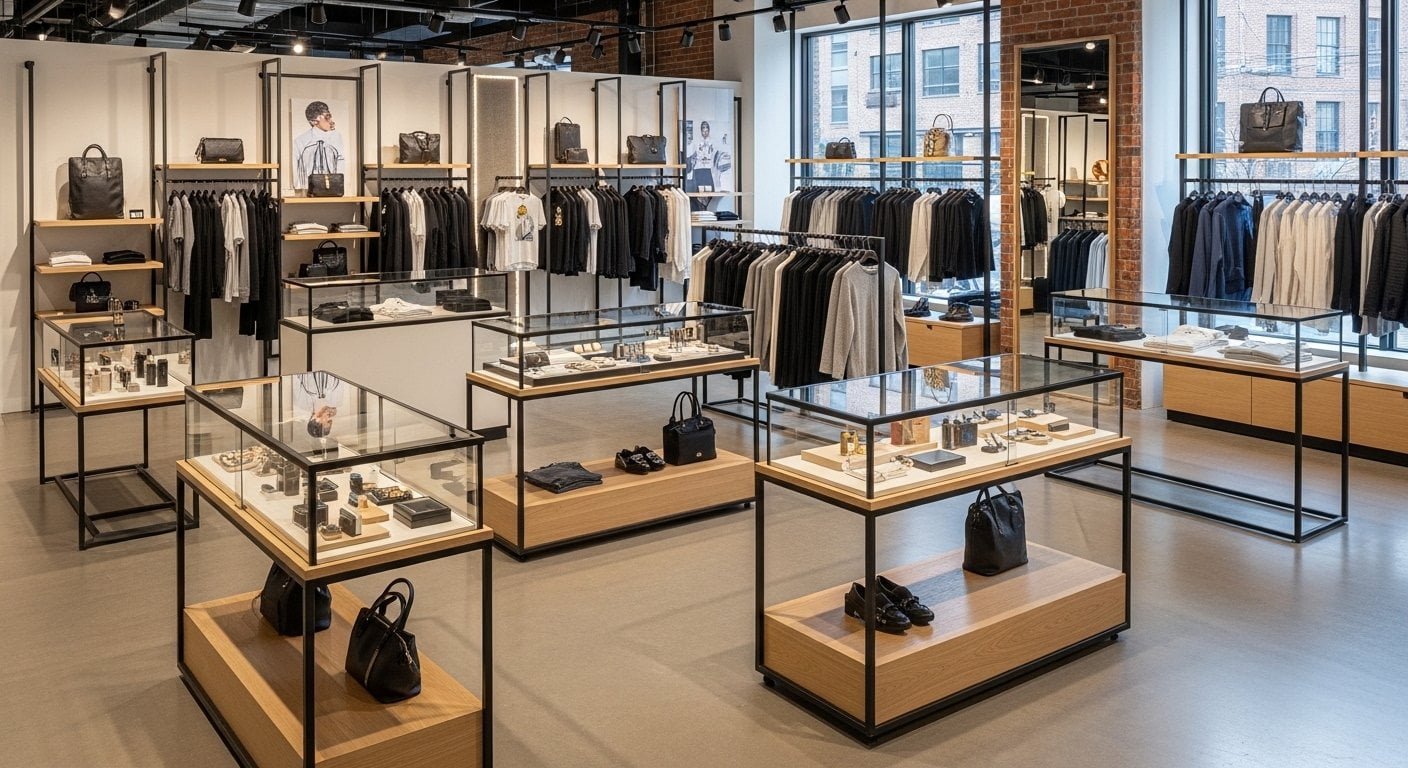
I have spent over 12 years in the factory and the boardroom. I know that a great display is the difference between a product that sits on a shelf and one that flies off it. If you want to stop losing customers to the shop next door, you need to understand how these tools work.
How do custom POP displays enhance retail brand identity and "tonality" to drive consumer interest?
Many brands look the same on the high street today. Generic shelves make your products look cheap and forgettable. Custom shopfittings create a unique atmosphere that makes your brand stand out and feel special.
Custom display fixtures enhance brand "tonality" by using specific materials and finishes that match your brand's personality [3]. This high-quality look builds trust and interest, making your retail space much more attractive to your target consumers.
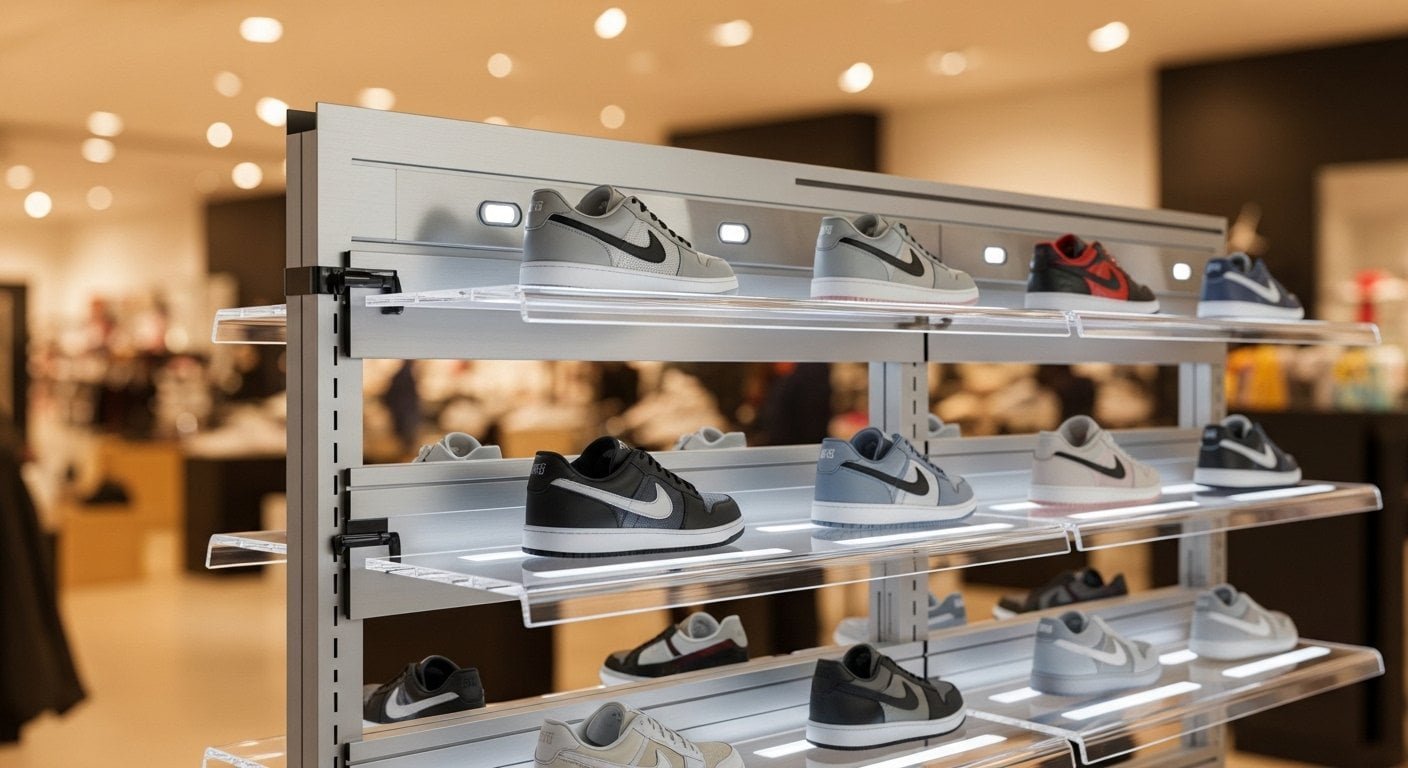
In my experience, "tonality" is not just a buzzword. It is the physical feeling a customer gets when they walk into a store. For luxury brands, I always recommend a higher level of finish. For example, luxury projects require at least two layers of base paint and three layers of topcoat [3]. This creates a flawless surface that says "quality" without saying a word. If the paint has even a small bubble or a "peach skin" texture, we sand it down and start over [3].
We also use materials like PVD coating with anti-fingerprint layers to keep metal surfaces looking perfect even in high-traffic stores [6]. This attention to detail reflects the care you put into your products. When Mark, a designer I work with, asks for a specific "feel," we look at the combination of light, texture, and structure. A jewelry brand might need high-density MDF with a high-gloss finish, while a lifestyle brand might prefer the warm texture of solid wood or veneered boards [2].
| Brand Level | Recommended Material | Finish Requirement | Impact on Consumer |
|---|---|---|---|
| Luxury | Metal with PVD, Marble | 5+ paint layers, zero defects [3] | High trust, premium perception |
| Mid-Range | MDF, Fire-resistant board | 3 paint layers or HPL [2] | Professional, reliable feel |
| Value/Mass | Particle board, Melamine | 1 base, 2 top coats [3] | Clean, organized, accessible |
In what ways can advanced manufacturing techniques and material choices optimize the effectiveness of POP displays?
Poorly made displays break easily or look "off," which can hurt your brand image. Constant repairs and replacements drain your budget and waste your time. Modern manufacturing ensures your displays are durable, beautiful, and cost-effective.
Techniques like laser cutting for metal and 3D printing for complex parts optimize both cost and quality [1]. Choosing the right materials, such as durable powder-coated steel or moisture-resistant wood, ensures your display fixtures are effective and last a long time in a busy store.
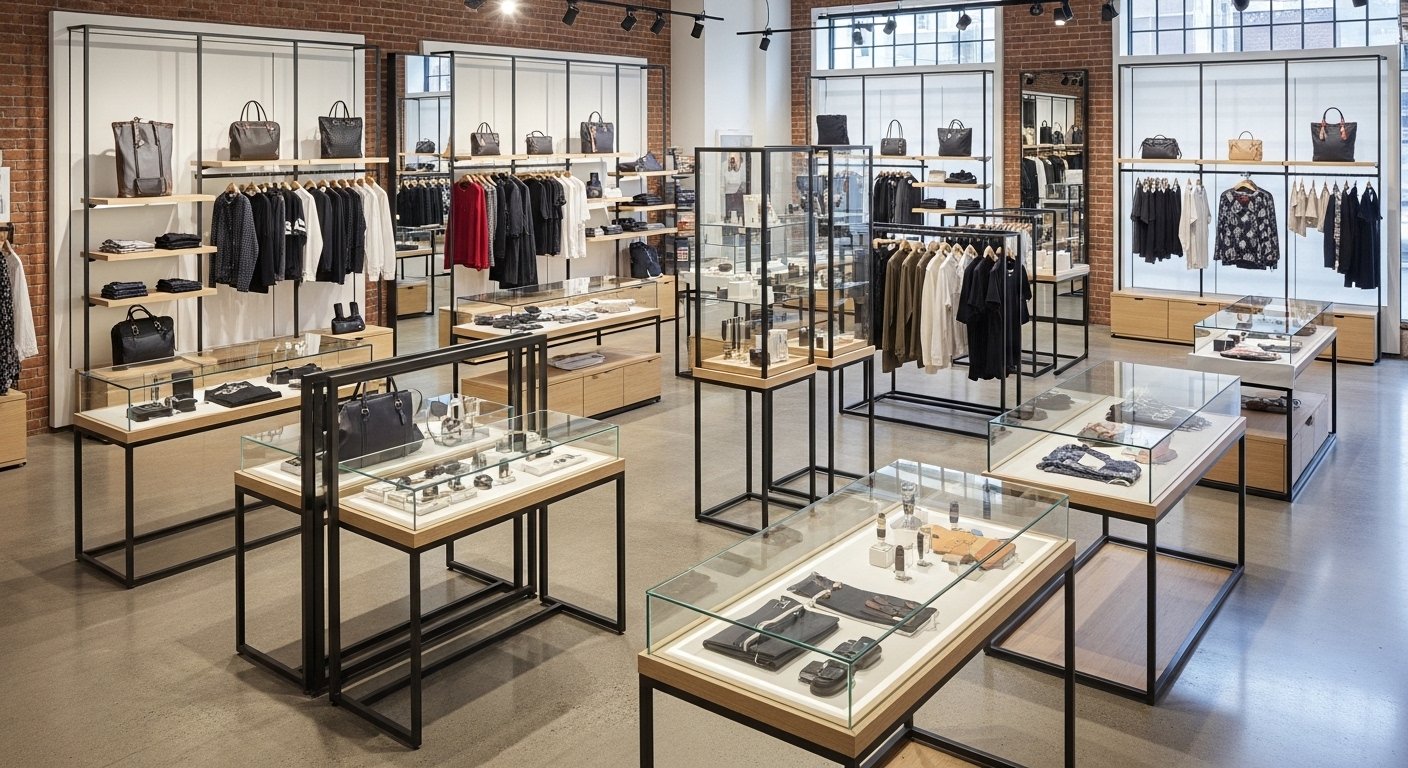
I have learned that the best factory is the one that knows when to use a mold and when to use a laser. For small batches of metal parts, I use laser cutting for pipes and plates because it is faster and cheaper than making a mold [1]. A metal mold can take 15 days to build and cost up to $1,000 [1]. If you only need 50 units, the laser is much smarter.
For very complex shapes, I now offer 3D printing. We can use plastic or even metal like stainless steel and aluminum [1]. This allows us to create unique shapes that traditional machines cannot make. My team also focuses on high-precision powder coating. We use gas or electricity to power our lines and precisely control the thickness of the coating [1]. This is vital because if a part is just 1mm too thick, it might not fit during assembly in your store [6]. We also strictly follow local standards like E0 or P2 for wood to make sure the displays are safe for use in the USA and Europe [1].
| Technique | Material | Best Use Case | Benefit |
|---|---|---|---|
| Laser Cutting | Steel, Aluminum | Small to medium batches [1] | No mold cost, fast delivery |
| 3D Printing | Resin, Metal, ABS | Complex shapes, prototypes [1] | High detail, low MOQ |
| CNC Routing | MDF, Plywood, Wood | Structural panels, shelving [3] | Precision, consistent quality |
| Powder Coating | Metal Fixtures | Surface protection and color [1] | Durability, eco-friendly energy |
How does the strategic use of versatile and modular display fixtures contribute to cost efficiency and faster product delivery?
High shipping costs and slow delivery can ruin a new store launch. If your displays are too heavy or hard to move, you lose money before you even sell a product. Modular systems give you the flexibility and speed you need.
Modular display fixtures reduce shipping volume by 50% to 80% through "knock-down" (KD) designs [1][2]. They use standardized parts like universal posts and shelves that are easy to assemble and replace, which lowers labor costs and speeds up delivery to your stores [2].
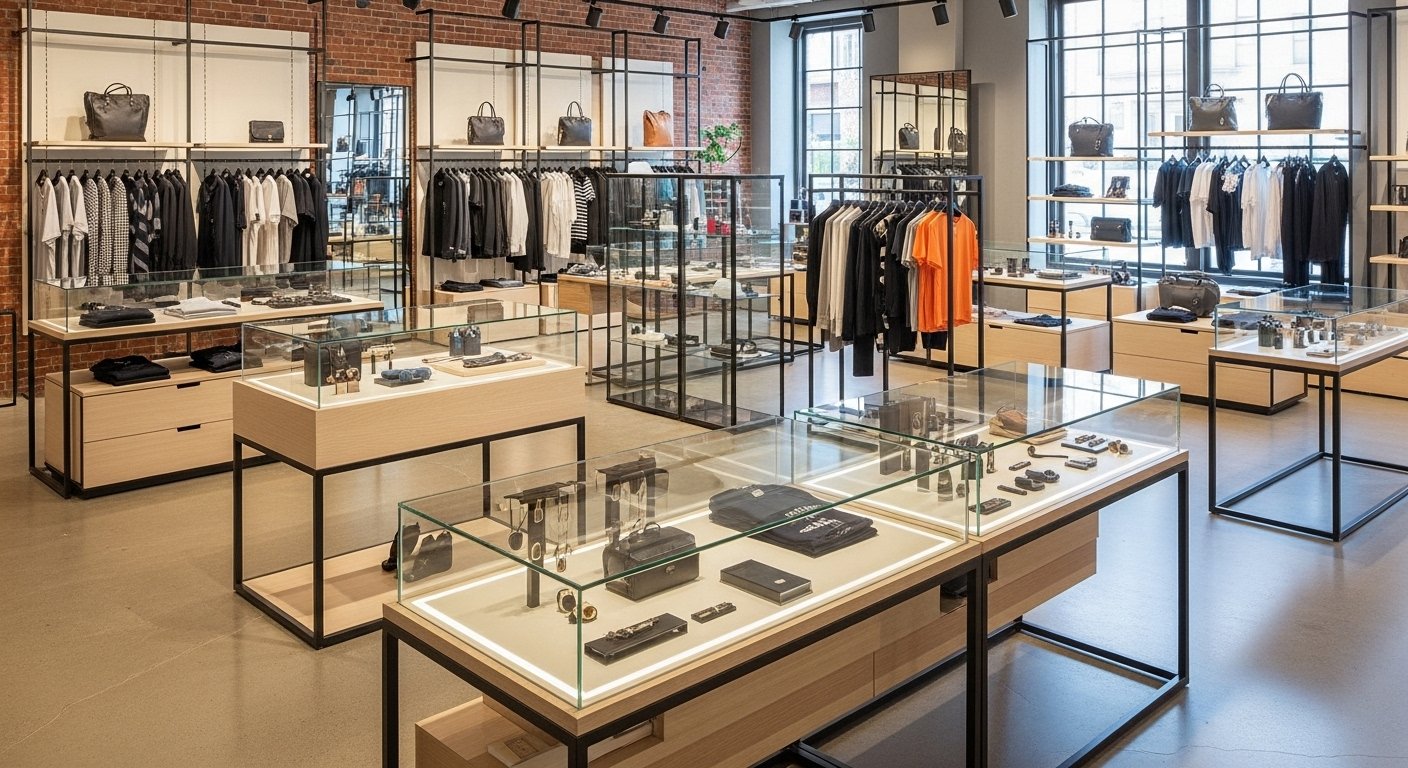
I always tell my clients that the most expensive problem is the one you find too late. Shipping a fully assembled counter from China to the USA is very expensive because you are paying to ship air [2]. That is why I design fixtures that can be taken apart. This "KD" shipping saves a huge amount of container space [1]. In places like Europe or the USA where labor is expensive, I make sure the structures are simple enough that one worker can put them together quickly [2].
Using universal parts is another trick I use to help my clients grow. If we design a standard internal post or shelf bracket, we can keep those in stock [2]. When you need a new display, we don't have to start from zero. This reduces the "lead time" and makes repairs very easy. If a shelf breaks, you just swap it with a standard part from your backroom. This modular approach is also better for the environment because we waste fewer materials and reduce our carbon footprint during transport [1]. It is the perfect balance between custom design and industrial efficiency.
| Shipping Method | Space Saving | Labor Cost | Best For |
|---|---|---|---|
| Fully Assembled | 0% | Low at store | Small, fragile items |
| Knock-Down (KD) | 50% - 80% [1] | Medium at store | Large racks, wall units, counters |
| Modular/Universal | 30% - 60% | Low at store | Chain stores, frequent updates [2] |
Conclusion
Display fixtures and bespoke shopfittings boost sales by enhancing brand tonality, using high-precision manufacturing, and utilizing modular designs to reduce costs and speed up global delivery [1][3].