
Are your retail displays failing to drive sales or breaking during shipping? Poorly made fixtures frustrate customers and waste your budget. I help you create durable, high-impact Display Fixtures and Bespoke Shopfittings [1].
Good display stands, or Display Fixtures and Bespoke Shopfittings, combine manufacturing precision, high-quality finishes, and smart structural design [1]. They must reflect brand identity while being cost-effective to ship and easy to assemble [1][2]. True quality means meeting local safety standards and ensuring zero assembly errors [3][6].
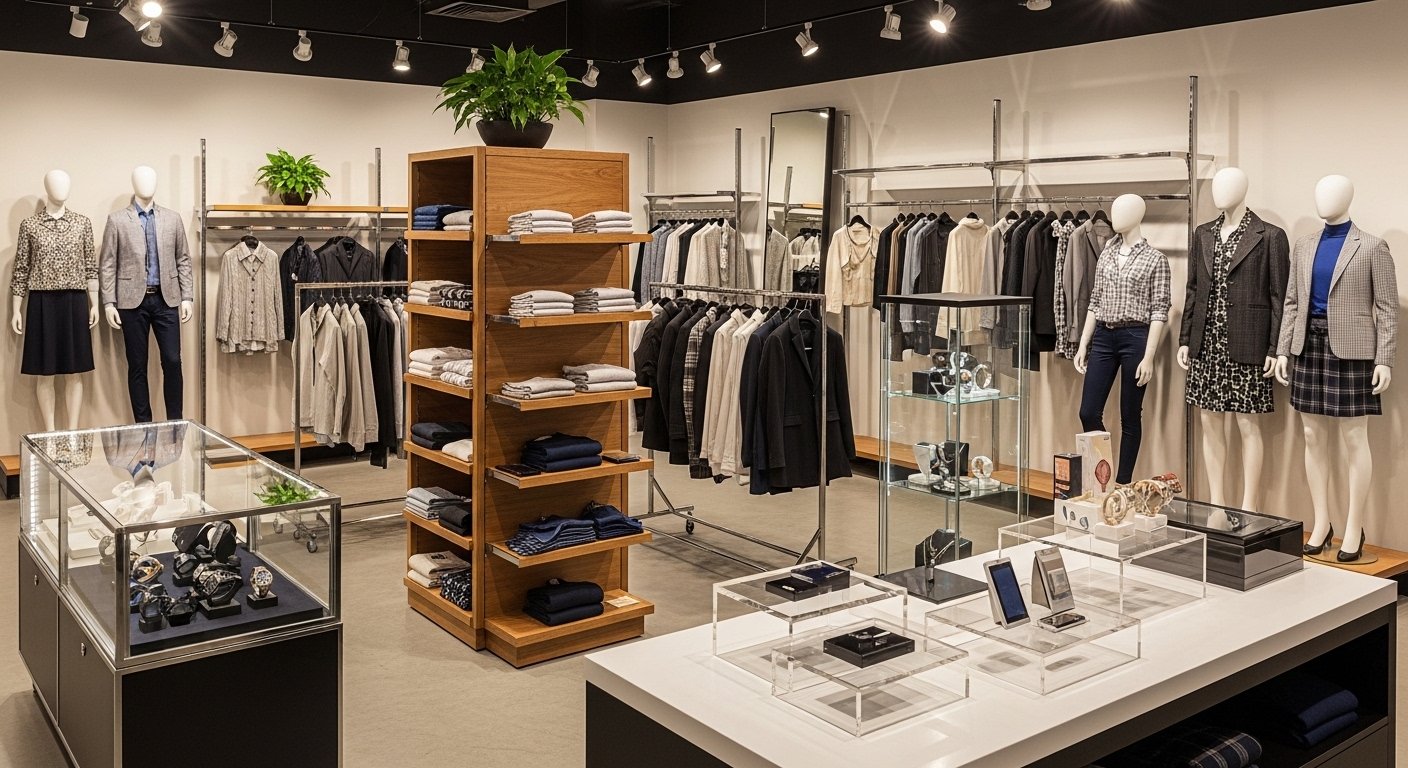
I have spent years on the factory floor and leading a global display company. I know that a great design on paper can easily fail during production if you do not understand the technical details. If you want to avoid expensive mistakes and build a brand that lasts, you need to look closer at how your fixtures are actually made.
How do manufacturing precision and high-quality surface finishes elevate a brand's retail presence?
Does your store look cheap because of uneven joints or peeling paint? Small defects like visible gaps or rough surfaces ruin the luxury experience. Precision manufacturing ensures every fixture looks perfect and feels premium [1][3].
High-quality finishes like PVD coating or multi-layer lacquering create a visual depth that attracts customers [3][6]. Precision in metal and wood processing ensures that all components fit together perfectly. This consistency builds trust with shoppers and reinforces your brand's message of quality and professional standards [1].
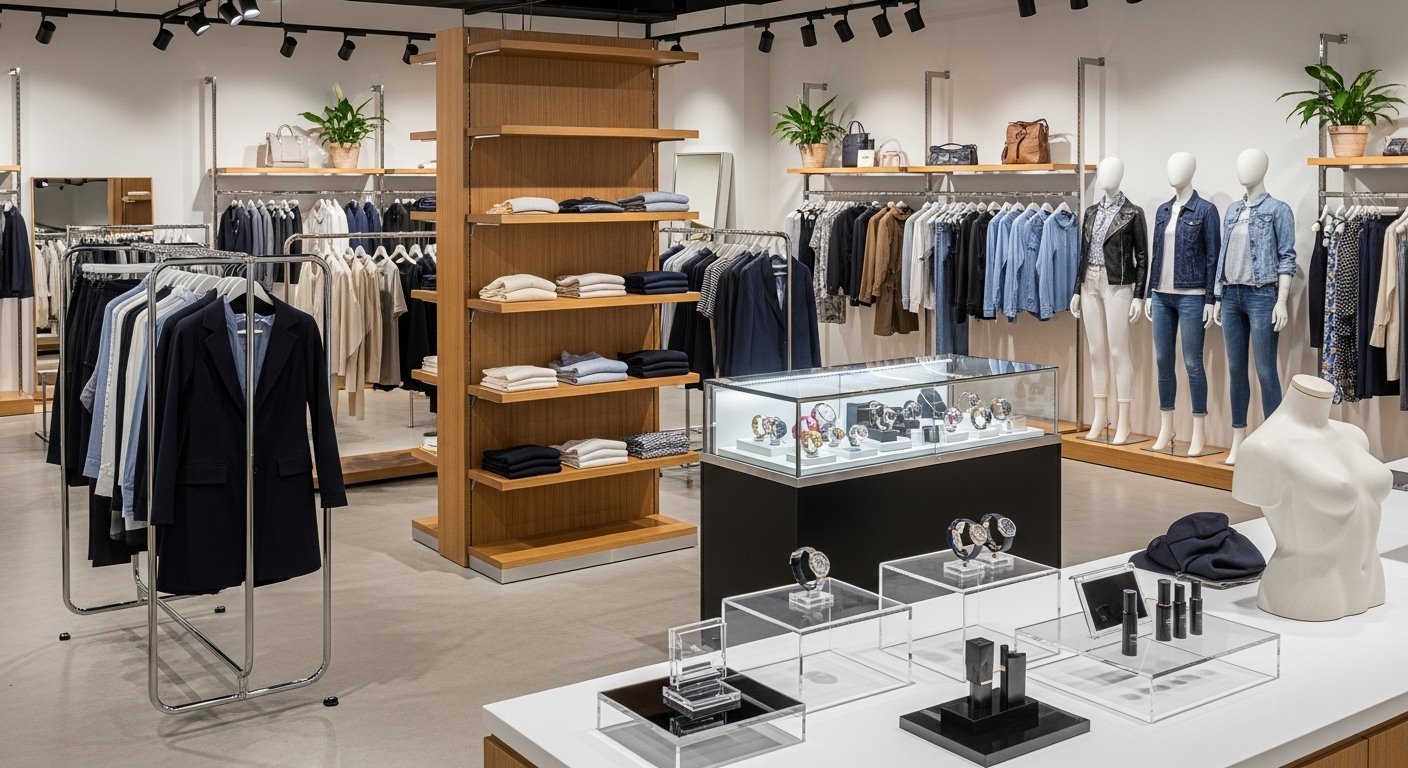
In my experience, the difference between a mass-market shelf and a luxury boutique fixture is the level of detail in the finish. For high-end projects, we use at least two layers of primer and three layers of topcoat [3]. We perform a hardness test using 2H pencils to ensure the surface does not scratch easily [3]. We also use advanced powder coating equipment to keep the surface thickness exact [1]. This precision is vital because even a 1mm error can make the assembly look messy. When parts fit perfectly, the whole store feels more expensive.
We also use PVD coating with anti-fingerprint layers for metal parts [6]. This technology keeps the fixtures looking clean even after many customers touch them. In a busy retail environment, a display that stays clean and shiny always outperforms a dirty one. Manufacturing precision is not just about looks; it is about how long the product stays beautiful in a real store.
| Feature | Mid-Range Retail | Luxury Bespoke Shopfittings |
|---|---|---|
| Paint Layers | 1 primer, 2 topcoats [3] | 2+ primers, 3+ topcoats [3] |
| Surface Hardness | Standard | 2H Pencil Hardness Test [3] |
| Cleaning | Regular maintenance | Anti-fingerprint (AF) coating [6] |
| Tolerance | +/- 2.0mm | +/- 0.5mm [1] |
How can optimized structural design balance cost-efficiency with high-quality global delivery?
Is high shipping cost eating all your profit margins? Huge, fully-assembled fixtures take up too much space in containers. I design smart structures that save you money while protecting your products during global transit [1][2].
Optimized structural design focuses on Knock-Down (KD) structures that reduce shipping volume by 50% to 80% [1]. By using universal components, we lower manufacturing costs and make local repairs faster [2]. This balance allows you to deliver high-quality Display Fixtures and Bespoke Shopfittings anywhere in the world efficiently [1].
When I started my company, I saw many clients lose money because they shipped "air." Shipping fully assembled cabinets is very expensive. Now, we focus on designing parts that a single worker can assemble quickly [2]. This "KD" approach is the best way to balance costs. In places like the USA or Europe, labor is very expensive, so the assembly must be intuitive [2]. We often use 3D printing for complex small parts to avoid high mold costs, especially for small orders under 50 sets [1].
I also manage production in both China and Vietnam to help my clients. For North American clients, Vietnam production can reduce import tariffs significantly [2]. However, China still has a more complete supply chain for complex custom designs [2]. By choosing the right manufacturing location and a smart structural design, we can keep the quality high while keeping the final price competitive. Good design is not just about how it looks; it is about how it travels from the factory to your front door.
| Shipping Method | Container Space Usage | Local Labor Cost | Protection Level |
|---|---|---|---|
| Fully Assembled | 100% (High Volume) | Low (Plug and Play) | Risk of bumping [1] |
| Knock-Down (KD) | 20%-50% (Low Volume) [1] | Higher (Requires assembly) | Better (Flat pack) [1] |
| Modular Design | 50%-70% | Medium | Excellent [2] |
Why is early-stage technical alignment and material selection critical for a successful display project?
Are you tired of projects failing because the final product doesn't match your original drawings? Unclear specifications and wrong material choices lead to expensive reworks and missed deadlines. Early technical alignment stops these problems before they start [6].
Early alignment ensures that the design, cost, and production reality are all in sync [6]. Choosing the right materials, like moisture-resistant MDF or high-density plywood, prevents issues like warping or cracking [2][3]. By confirming these details early, you ensure the factory produces exactly what you need without delays or extra costs [6].
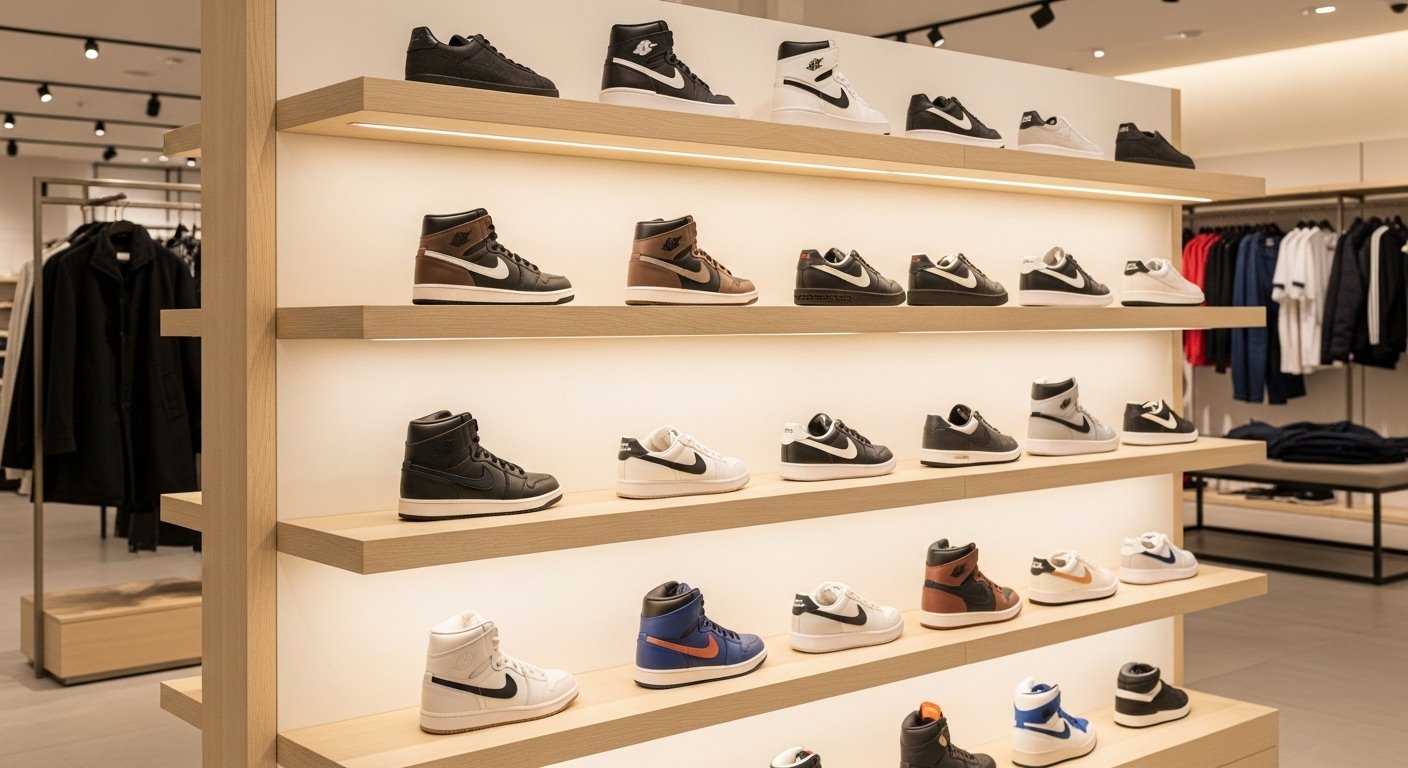
Most mistakes in our industry do not happen on the factory floor; they start at the desk [6]. I have seen many projects fail because the drawings were not clear or the tolerances were not defined [6]. For example, if you use artificial marble on an MDF base without a gap, the different expansion rates will cause the stone to crack [3]. MDF expands 30 times more than stone when humidity changes [3]. If we do not discuss this at the beginning, the client will have a broken display in a month.
We also have to match the materials to local laws, such as E0 or P2 standards for wood [1]. If your supplier does not know these rules, your goods might be rejected by customs. I always insist on a deep communication phase where we check the usage environment, the weight of the products being displayed, and the required certifications [1]. This step takes time, but it is the only way to guarantee a smooth rollout for a global brand.
| Material | Best Use Case | Key Advantage | Potential Risk |
|---|---|---|---|
| MDF | Painting and Veneer [2] | Smooth surface for paint | High moisture expansion [3] |
| Plywood | Structure and Framework [2] | Strong and lightweight | Hard to keep flat for high-gloss [2] |
| Particle Board | Internal structures [2] | Cost-effective; good nail-holding | Cannot be used for paint [2] |
| 3D Printing | Small custom parts [1] | No mold costs; fast [1] | Higher cost for large quantities |
Conclusion
Good display stands require precision, smart shipping design, and expert material choice [1][2]. I use my experience to help you avoid mistakes and grow your business with quality shopfittings [1].