
Retail stores are fighting for attention. If your signage looks cheap or generic, customers walk past. You need a solution that builds trust and drives sales immediately.
The best custom signage aligns with your brand identity while fitting the store's physical constraints. For high-traffic areas, use durable materials like PVD-coated metal or acrylic. For luxury vibes, choose wood veneers or stone. Always prioritize modular structures to reduce shipping costs and simplify installation across different locations.
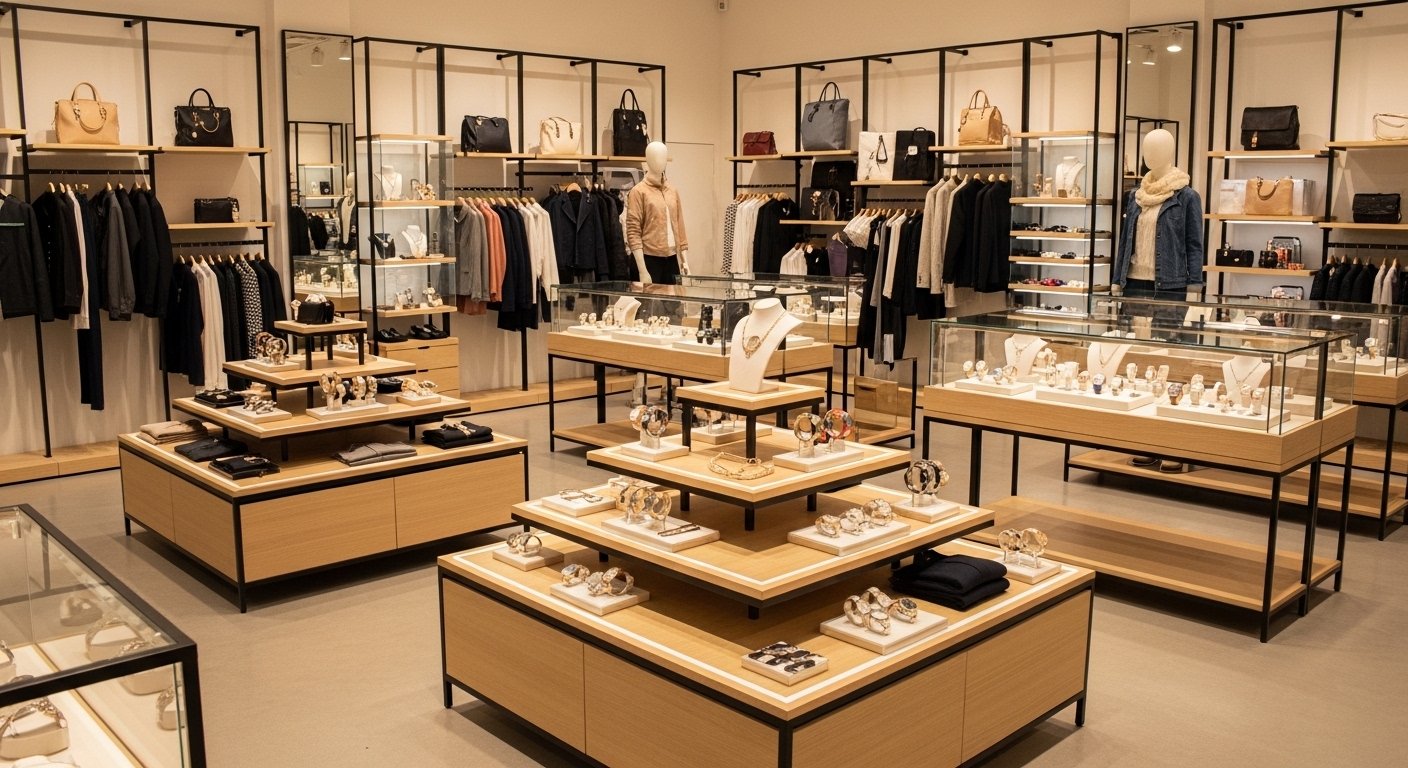
Many brands fail because they focus only on the graphic design. They forget about the engineering, the material durability, and the logistics of getting it to the store. I often see beautiful designs that fall apart after six months or cost a fortune to ship. To avoid these expensive mistakes, you must understand the materials and manufacturing processes behind the fixtures. Here is how I solve these problems for my clients.
How to Choose the Right Materials and Surface Finishes for Your Brand Identity?
Your store looks outdated after just six months. Peeling laminates and chipped paint destroy your brand image. You need materials that withstand daily abuse while looking premium.
Select materials based on traffic and aesthetic goals. Use MDF for high-gloss paint finishes, but plywood for structural strength. For metal, PVD coating prevents fingerprints. Avoid using artificial marble near HVAC vents to prevent cracking. The right finish extends the fixture's lifespan and maintains a premium look.
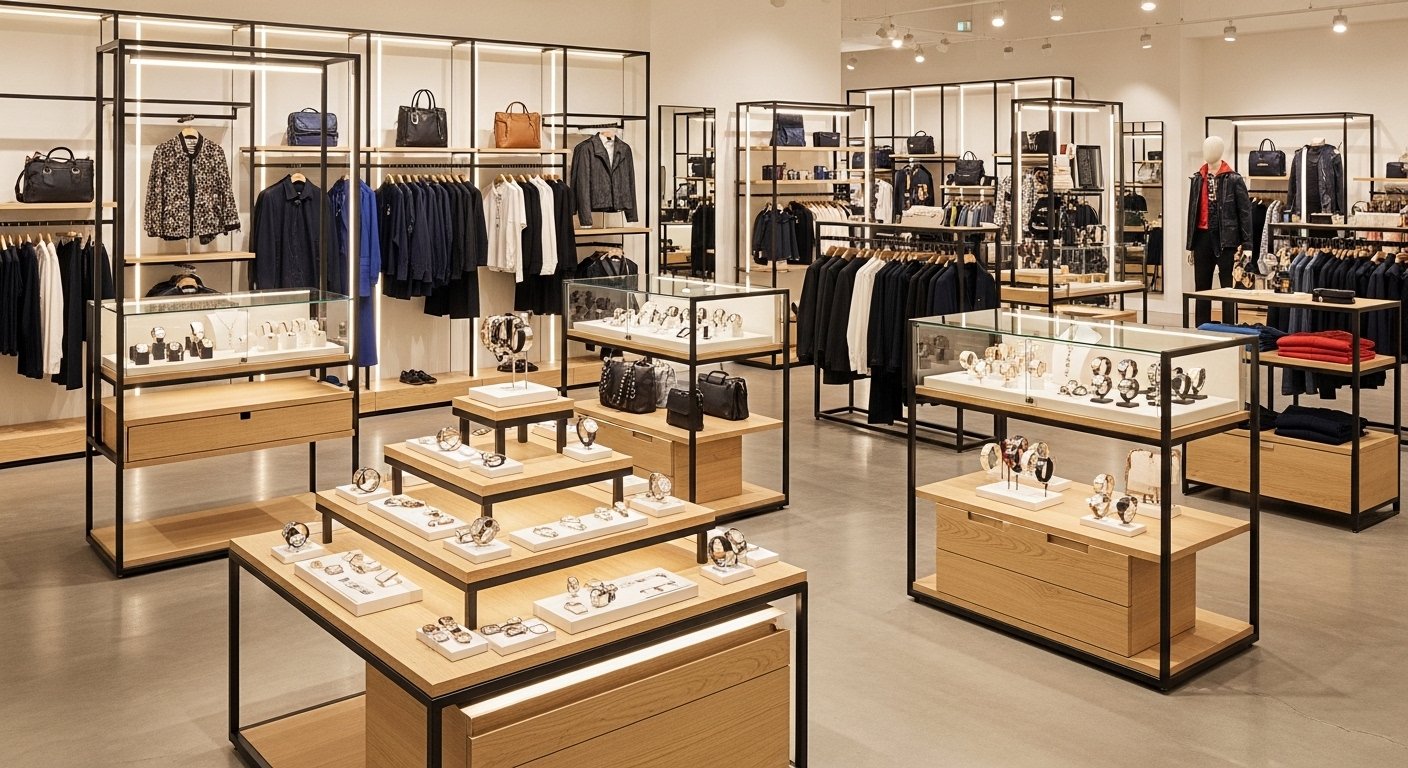
I have spent years in factories in China and Vietnam, and I see how material choices dictate the success of a project. When you choose wood for your display fixtures, you must know the difference between the core materials. Particle board has the lowest density; I only use it for internal structures, not for painted surfaces, though it holds screws reasonably well. Plywood is stronger and lighter, perfect for frames, but its surface is hard to make perfectly smooth for high-gloss paint. For the best paint finish, especially for luxury brands, I always recommend MDF. It allows for a flawless surface.
For painting, standard retail fixtures usually get one base coat and two top coats. However, for my luxury clients, we apply at least two base coats and three top coats. We test these finishes rigorously using a 2H pencil hardness test and alcohol wipes to ensure durability.
A critical issue I often see involves artificial marble. If you place a marble counter near an air conditioning vent or in direct sunlight, it will crack. This is because the thermal expansion coefficient of artificial stone (28~35 ×10⁻⁶ /℃) is ten times higher than that of MDF. When the temperature changes, the stone expands, but the wood underneath does not. To prevent this, we must design gaps for expansion or use moisture-resistant boards.
| Material | Best Use Case | Pros | Cons |
|---|---|---|---|
| MDF | High-gloss paint, veneers | Smooth surface, easy to shape | Heavy, absorbs moisture easily |
| Plywood | Structural frames, load-bearing | Strong, holds screws well, light | Hard to paint smooth, expensive |
| Particle Board | Internal shelving, hidden parts | Cheap, eco-friendly | Weak, rough surface |
| PVD Metal | High-touch handles, frames | Anti-fingerprint, hard coating | Higher cost than powder coating |
Should You Prioritize Bespoke Design or Modular Standardized Signage?
You have 1,000 stores with different floor plans. Forcing a single rigid fixture size into every location creates blocked aisles and awkward customer experiences.
Prioritize a "family of fixtures" approach. Use bespoke designs for flagship elements like checkout counters to create a unique impact. However, use modular, standardized internal structures (like pillars and shelves) for general display. This hybrid approach lowers costs, allows for KD (knock-down) shipping, and fits various store layouts.
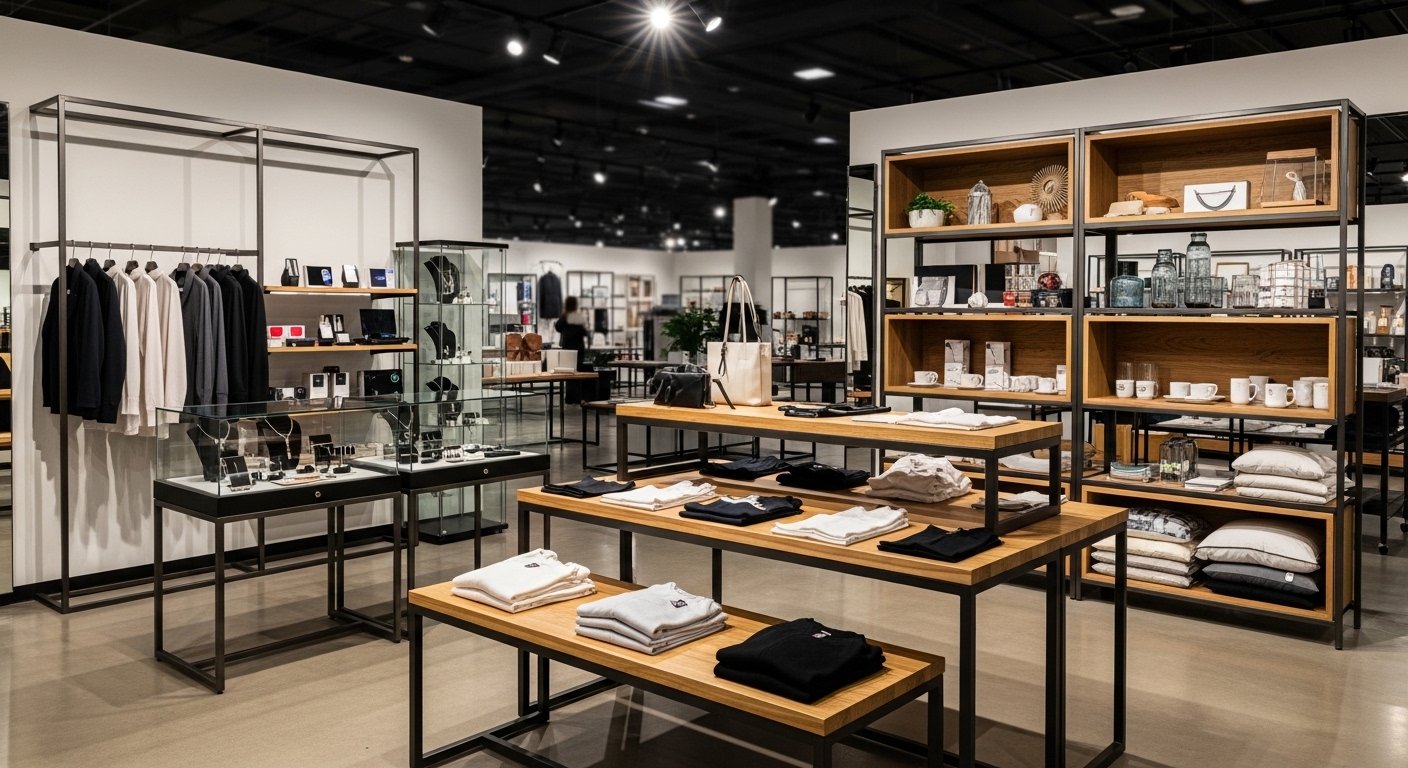
I have seen many brands try to force a "one size fits all" fixture into every store, and it fails. In one store, it blocks an aisle; in another, it looks tiny. The solution is balancing bespoke design with modular engineering. For example, a checkout counter or a window display should be bespoke to carry the brand's soul. But for wall units and gondolas, I design them with standardized internal parts. A pillar or a shelf bracket can be the same across 1,000 stores, even if the outer skin changes.
This approach dramatically impacts shipping. I always recommend KD (Knock Down) or disassembled shipping rather than shipping fully assembled units. Shipping KD saves 50% to 80% of container space. If you ship assembled, you are mostly paying to ship air. While labor costs in the West are high, modern KD designs are easy to install. We design structures that a single skilled worker can assemble quickly.
Furthermore, we must consider the specific function of the display.
- End Caps: These sit at the end of aisles and drive 30% of supermarket sales. They need to be robust.
- Dump Bins: Great for clearance items, but they take up floor space.
- POS Displays: Small countertop units for impulse buys.
- Inline Displays: These must maximize shelf visibility.
By modularizing the hidden parts, we reduce waste, speed up production, and make repairs easier. If a part breaks, you just replace that module, not the whole unit.
How to Balance Customization Quality with Cost-Efficiency in Global Sourcing?
You worry about hidden costs and inconsistent quality when sourcing overseas. A cheap quote often turns into expensive rework or delayed store openings.
Balance quality and cost by choosing the right production region. China offers mature supply chains for complex, high-end fixtures. Vietnam is excellent for tariff savings on simpler, high-volume orders to North America. Always audit the "hidden fees" in freight and insist on physical prototypes before mass production to avoid costly errors.
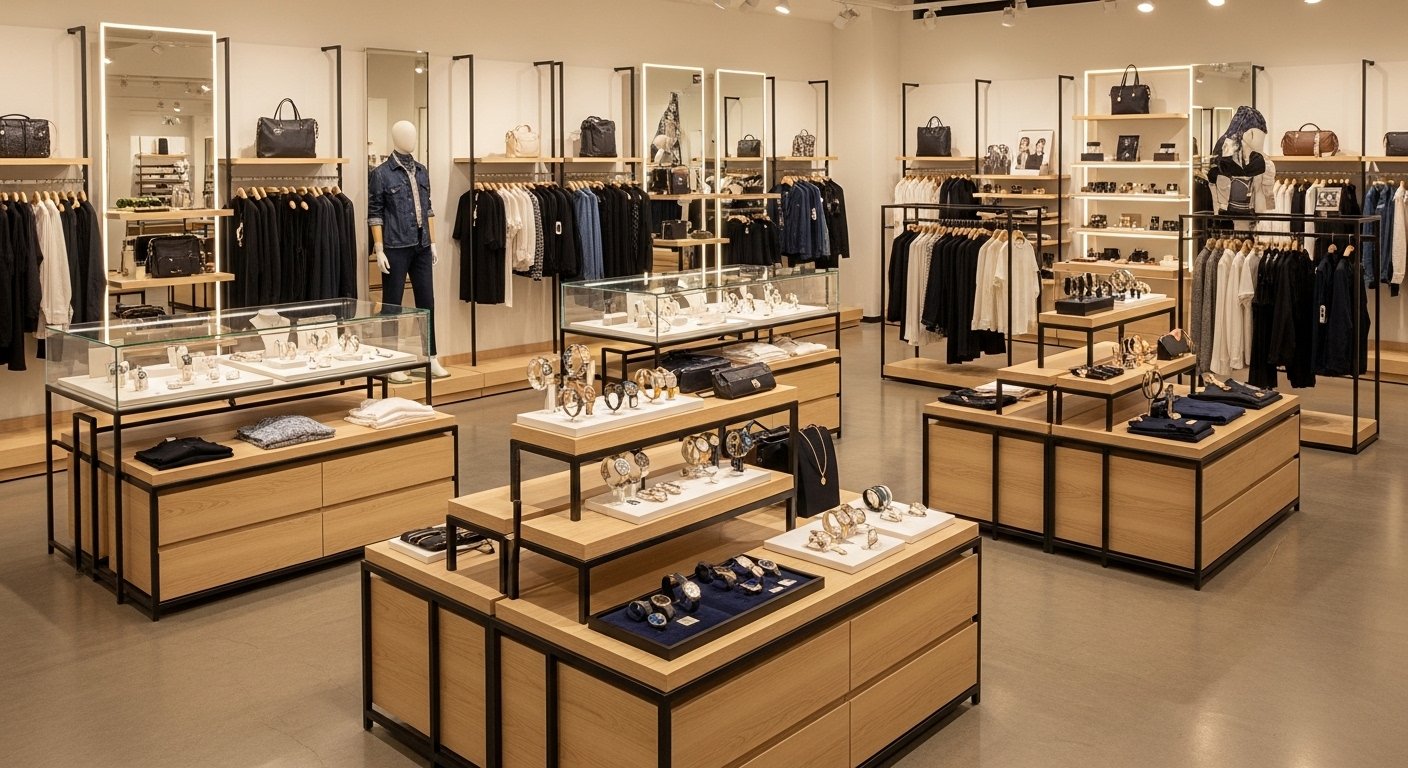
Sourcing is not just about the unit price; it is about the total landed cost and risk. I operate factories in both China and Vietnam, and they serve different purposes. China has a complete supply chain. If I need a specific certified LED driver or a high-end chrome finish, I can find it in China instantly. This makes China the best choice for complex, luxury, or urgent projects.
Vietnam is different. It is ideal for North American buyers avoiding high tariffs. However, the supply chain there is not as mature. We often ship components from China to Vietnam for assembly. To qualify for the lower tariffs (Country of Origin rules), we ensure that a significant portion of the transformation happens in Vietnam.
You must also be smart about tooling. For metal parts, I often advise clients not to open a mold if the order is under 50 sets. Laser cutting is faster and cheaper for small batches. A metal mold costs $100-$1000 and takes 15 days. Why wait? However, for injection molded plastic, molds are necessary, though 3D printing is a great alternative for prototypes.
Finally, watch out for freight forwarder fees. I have seen forwarders charge 1200 RMB for THC (Terminal Handling Charges) when the standard is 850 RMB. They pad bills with "document fees" and "VGM fees." You need to audit these. A good supplier helps you navigate these hidden costs and provides transparent schedules.
Conclusion
Custom signage requires balancing material durability, modular engineering, and smart sourcing. By focusing on these details, I help you build a consistent, high-quality retail experience that lasts.