
You have 1,000 stores and 1,000 different floor plans. Some are big, some are small, some are new, and some are 50 years old. Trying to force a single layout into every space often fails. The brand experience becomes broken and inconsistent. In one store, a fixture blocks an aisle; in another, it looks tiny and lost.
Store layout systems are the strategic arrangement of permanent and semi-permanent fixtures—such as end-caps, inline shelving, and free-standing displays—designed to guide customer flow and maximize product visibility. These systems must balance aesthetic appeal with practical manufacturing constraints, modularity, and installation efficiency.
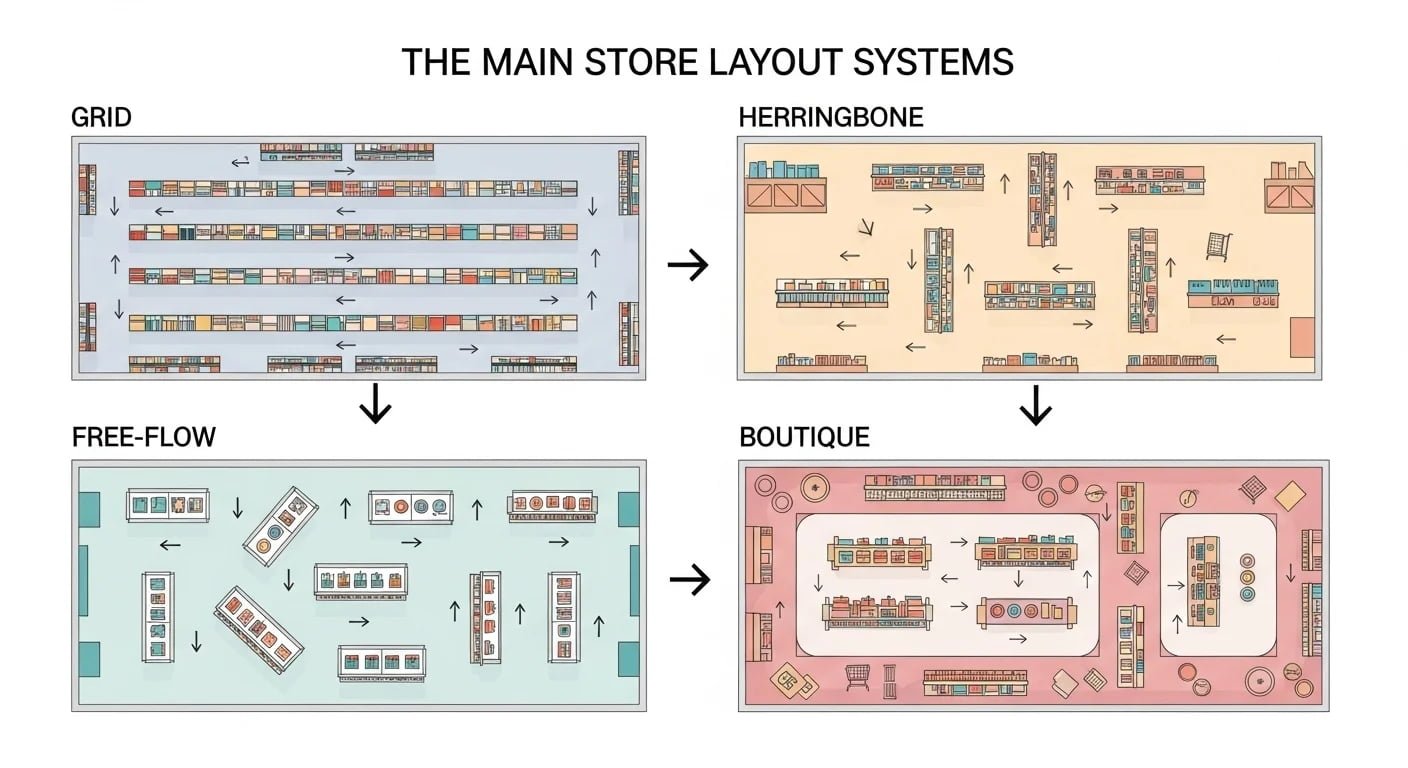
Many people think a store layout is just a drawing on a piece of paper. But as someone who runs a factory, I see it differently. A layout is a physical reality made of metal, wood, and glass. If you design a system that looks good on screen but is impossible to ship or assemble cheaply, you will lose your profit margin. Let's look at the real components that make up these systems.
What are the key display types that define a store's flow?
Every square inch of a retail floor has a specific job. You need to use the right tool for the right zone to turn a browser into a buyer.
The main components of a layout system include end-caps for high traffic, floor displays for brand visibility, countertop units for impulse buys, and inline shelving for high-density inventory storage. Each type serves a distinct role in the customer journey.
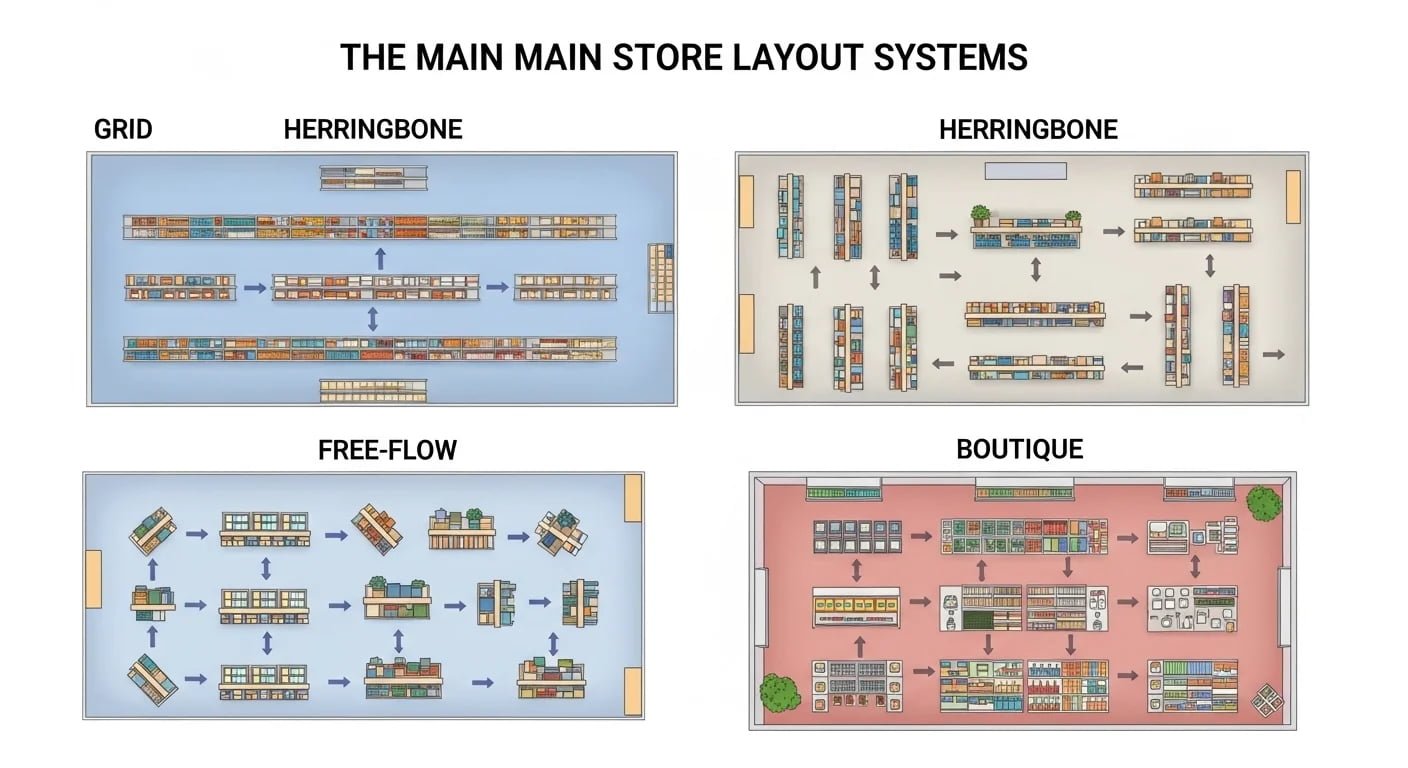
To understand store layout systems, we have to look at the specific "Lego blocks" we use to build them. In my factory, we produce several distinct types. First, you have the End-cap Display. These sit at the end of an aisle. Studies show they can account for about 30% of supermarket sales because they face heavy traffic. They are prime real estate for seasonal items or discounts.
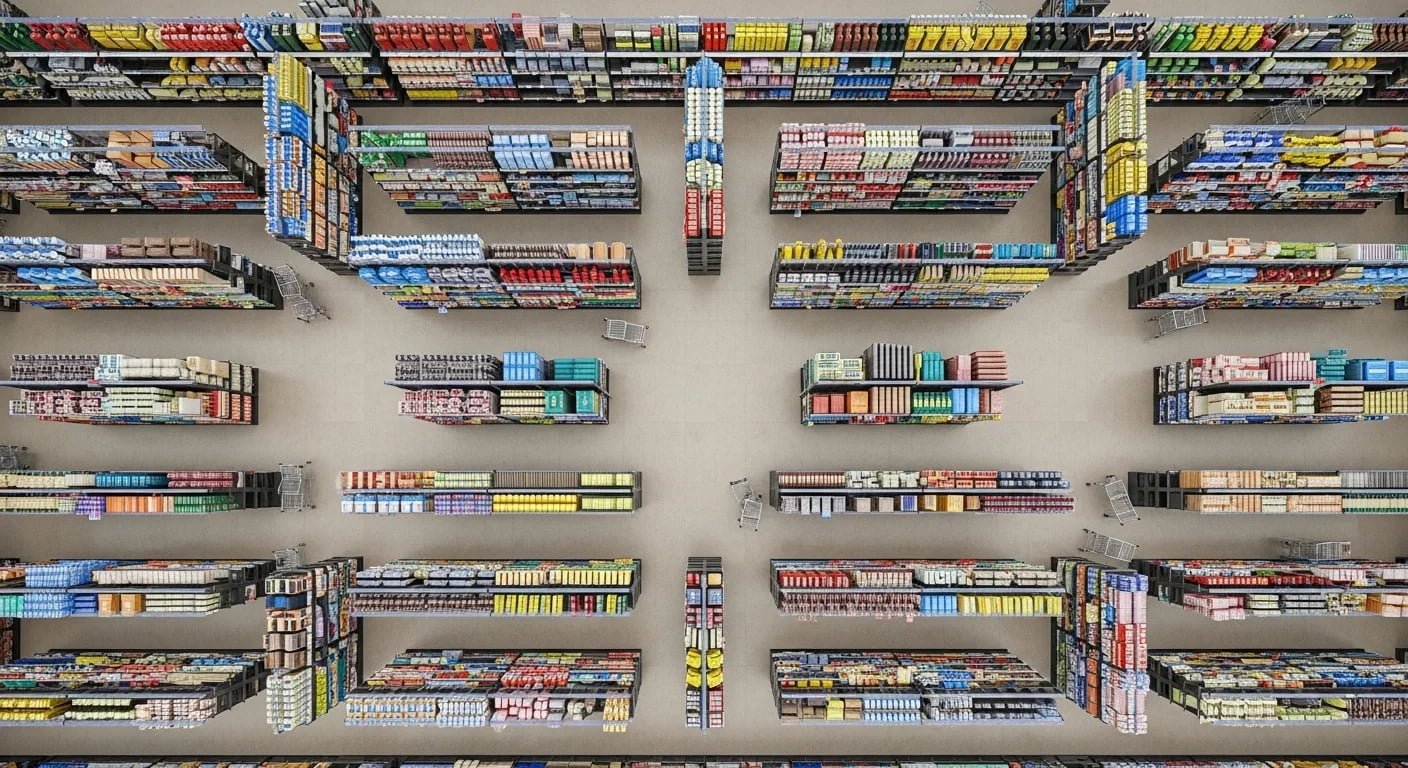
Then there are Floor Displays. These stand away from the shelves, often in the middle of wide walkways. We design them to interrupt the shopper's path gently. They are great for brand awareness because they are usually at eye level. If you have smaller items, you might use a Dump Bin. These are less organized containers used for snacks or plush toys, often seen in large stores like Walmart to clear slow-moving stock.
For the checkout area, we build Countertop Displays. These are small and sit right next to the register to trigger impulse buys. Finally, the backbone of any store is the Inline Display or shelving. This is where the bulk of your product lives. Efficient layout systems use a mix of these. For example, a Sidekick Display can clip onto the side of an end-cap, adding more product density without taking up floor space. When we engineer these, we have to make sure the "family" of fixtures looks consistent, whether it is a giant floor unit or a small counter stand.
How do manufacturing choices impact your layout budget?
A beautiful design is useless if it costs too much to make. You must understand the production process to keep your store rollout affordable.
Smart manufacturing choices, such as using laser cutting instead of expensive molds for small batches or choosing the right wood core for specific climates, can drastically reduce costs without sacrificing the quality of your store fixtures.
When we look at the manufacturing side of store systems, the cost is often hidden in the details. Take metal parts, for example. If you need a unique shape, we have to decide whether to open a mold. A metal mold costs between $100 and $1,000 and takes 5 to 15 days to make. If you only need 50 sets, opening a mold adds too much cost and time. In this case, I always suggest using laser cutting for iron pipes and plates. It is faster and cheaper for small batches. However, for injection molded plastic parts, molds are expensive (over $1,000), so for small numbers, we might use 3D printing instead. It gives a smooth surface and good color without the high startup cost.
Wood is another complex area. We use different materials like MDF, particle board, and plywood. Particle board has the lowest density and is rarely used for painted finishes because it looks rough; it is mostly for internal structures. MDF is best for painting and veneers because it is smooth, but it swells if it gets wet. Plywood is stronger and holds screws better but can warp.
We also have to be careful with stone, like artificial marble. It expands and contracts differently than wood. If you glue stone directly to MDF and the temperature changes, the stone can crack because the wood expands much more than the stone does. As a factory, we have to anticipate these issues. We also have to decide where to produce. We have factories in both China and Vietnam. Vietnam is great for avoiding high tariffs for the North American market, but the supply chain there is not as complete as in China. Complex metal and wood fixtures often require the mature supply chain found in Xiamen to ensure quality.
Why is the assembly method critical for global store rollouts?
Shipping air is the most expensive part of retail logistics. The way a fixture is broken down for transport defines your final landed cost.
Choosing a Knock-Down (KD) design over a fully assembled unit can save 50% to 80% of shipping container space. This approach also reduces packaging costs and minimizes damage caused by vibrations during sea or truck transport.
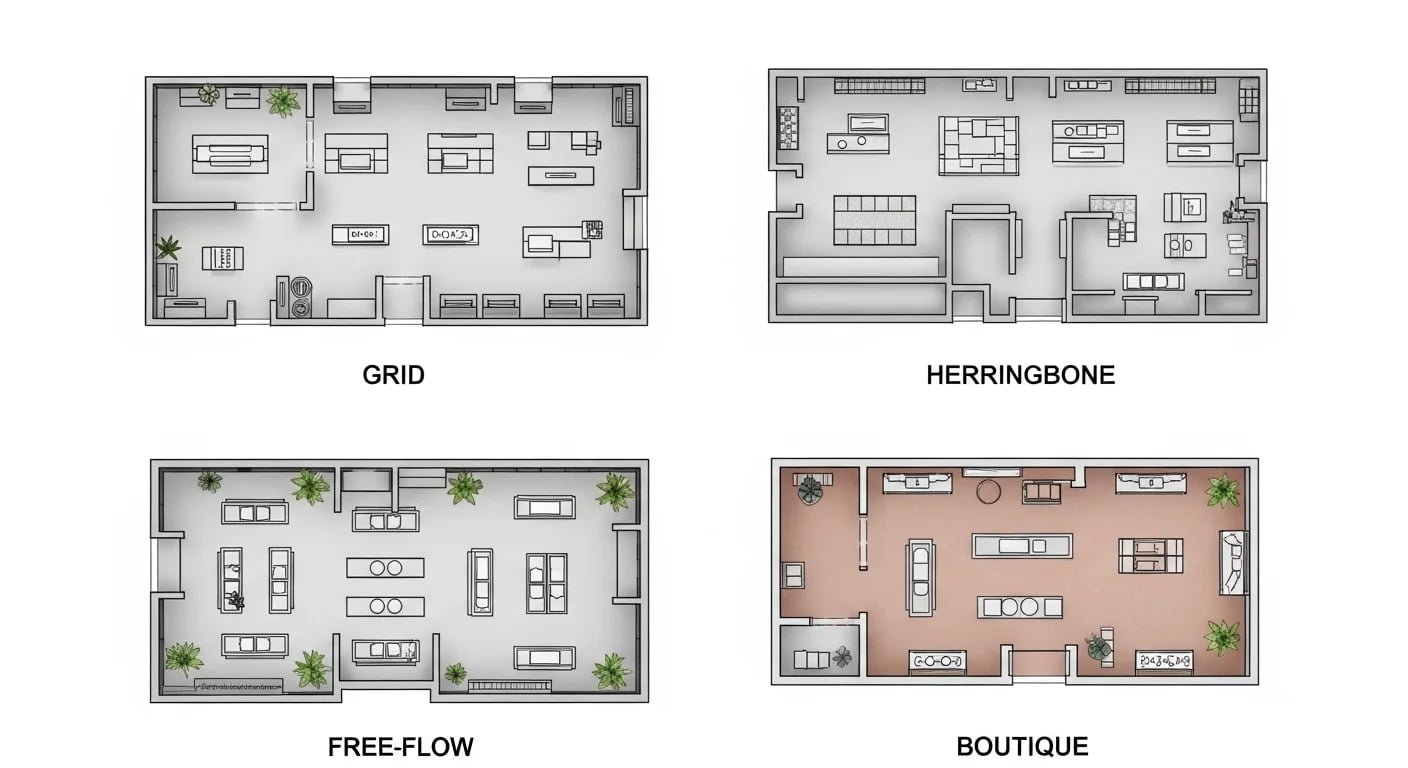
In the world of global retail, logistics is a massive cost center. I have seen projects where the shipping cost was almost as high as the product cost because the design was inefficient. This is why we push for "Knock-Down" (KD) or disassembled designs. Compared to shipping fully assembled units, KD shipping saves a huge amount of container space. If you ship a fully assembled checkout counter, you are mostly paying to ship the empty air inside the cabinet. Plus, assembled units need a lot of expensive packaging material to stop them from breaking when the ship rocks or the truck hits a bump.
However, there is a trade-off. If you ship KD, someone has to assemble it at the store. In China or Vietnam, labor is cheaper than in Europe or North America. Sometimes, if a unit is very complex, it might actually be cheaper to assemble it in our factory in Asia than to pay high hourly wages for assembly crews in London or New York. But recently, more designers are creating "smart structures" that are easy to assemble. They might only need one skilled worker to put them together.
We also have to watch out for hidden logistics fees. Things like Terminal Handling Charges (THC) or heavy weight fees can kill your budget. Some freight forwarders will overcharge for simple things like document releases. By optimizing the packaging size and weight early in the design phase, we can avoid these traps. We also use standard modular parts where possible. If a part breaks in a store in Germany, it is better if they can use a standard replacement part kept in local stock rather than waiting for a custom piece to ship from China.
What are the emerging trends shaping future store environments?
Retail is no longer just about shelves; it is about emotion and interaction. The physical store must offer something the internet cannot.
The future of store layouts lies in modularity, sustainability, and smart interaction. Stores are moving toward flexible systems that can change quickly, using eco-friendly materials and integrating technology to create emotional connections with shoppers.
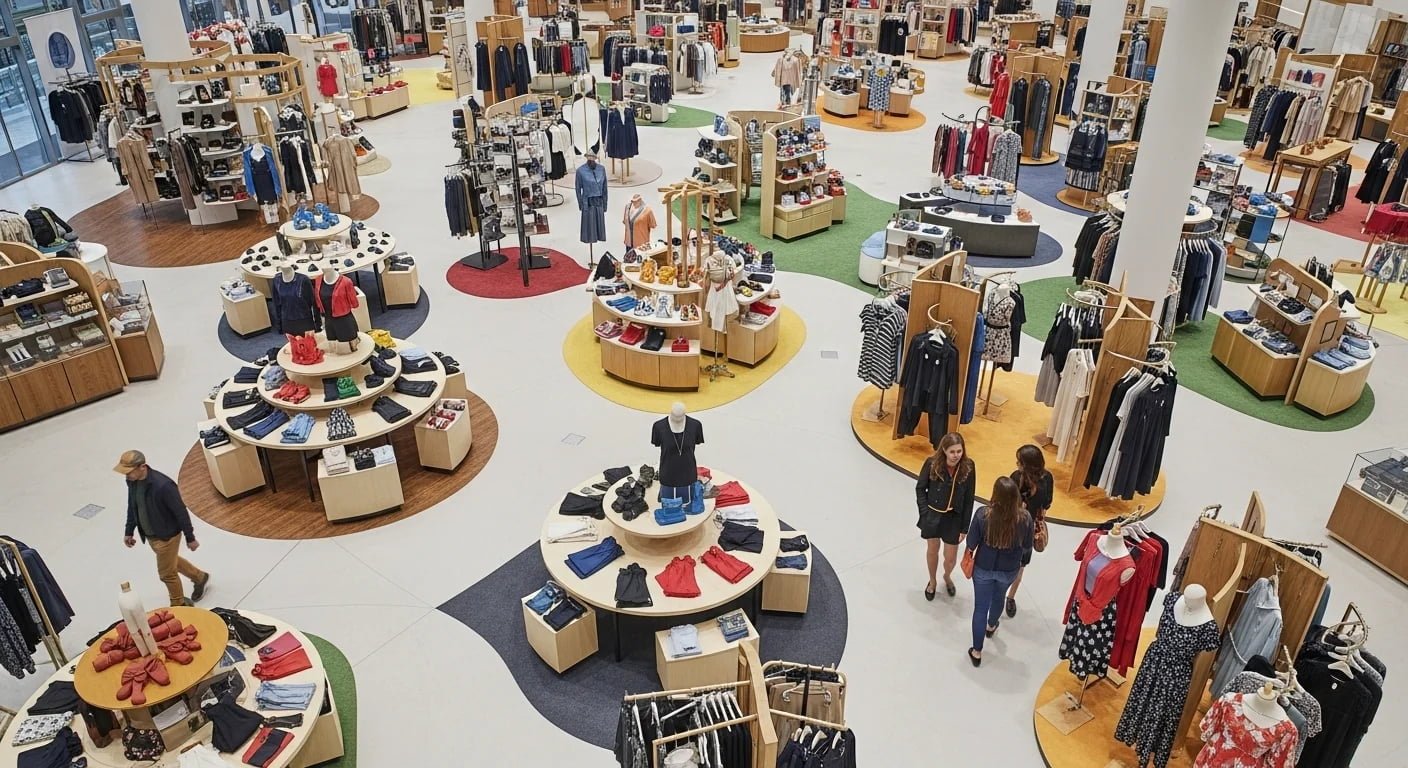
The old way of building a store was to bolt everything to the floor and leave it for ten years. That does not work anymore. Trends change too fast. Now, we see a huge demand for modular systems. These are fixtures that can be taken apart and reconfigured. A wall display might turn into a free-standing unit for a pop-up event. This flexibility lowers the cost of remodeling and extends the life of the props.
Sustainability is also non-negotiable now. Big brands want "zero carbon" footprints. We are seeing a shift toward materials like bamboo, recycled plastics, and biodegradable options. Even in production, we are upgrading our powder coating lines to recycle the powder and reduce waste. It is not just about the material; it is about the process.
Finally, technology is merging with the physical layout. We are integrating "smart" elements into the fixtures. Imagine a clothing rack that knows when a customer picks up a shirt and triggers a video on a nearby screen showing how to style it. Or a makeup counter that uses AR to let you "try on" lipstick without touching it. These aren't just gimmicks; they provide data. Sensors can tell the store manager which areas have the most traffic and which products are being picked up but not bought. This turns the store layout into a living, breathing data machine that helps the brand sell more.
Conclusion
A successful store layout system is a balance of strategic design, smart material choices, and efficient logistics. It requires a partner who understands both the vision and the factory floor.