
What are the primary considerations when selecting between metal, wood, and acrylic for the production of heavy-duty retail fixtures?
Are your retail displays sagging or breaking under the weight of your products? Choosing the wrong material can ruin your store's look and waste your entire budget very quickly.
The primary considerations are structural integrity, maintenance needs, and production efficiency. Metal offers the best weight-bearing capacity. Wood provides a premium aesthetic but requires reinforcement. Acrylic offers high visibility but needs careful thickness planning. You must balance these factors with your total budget and the required production timeline.
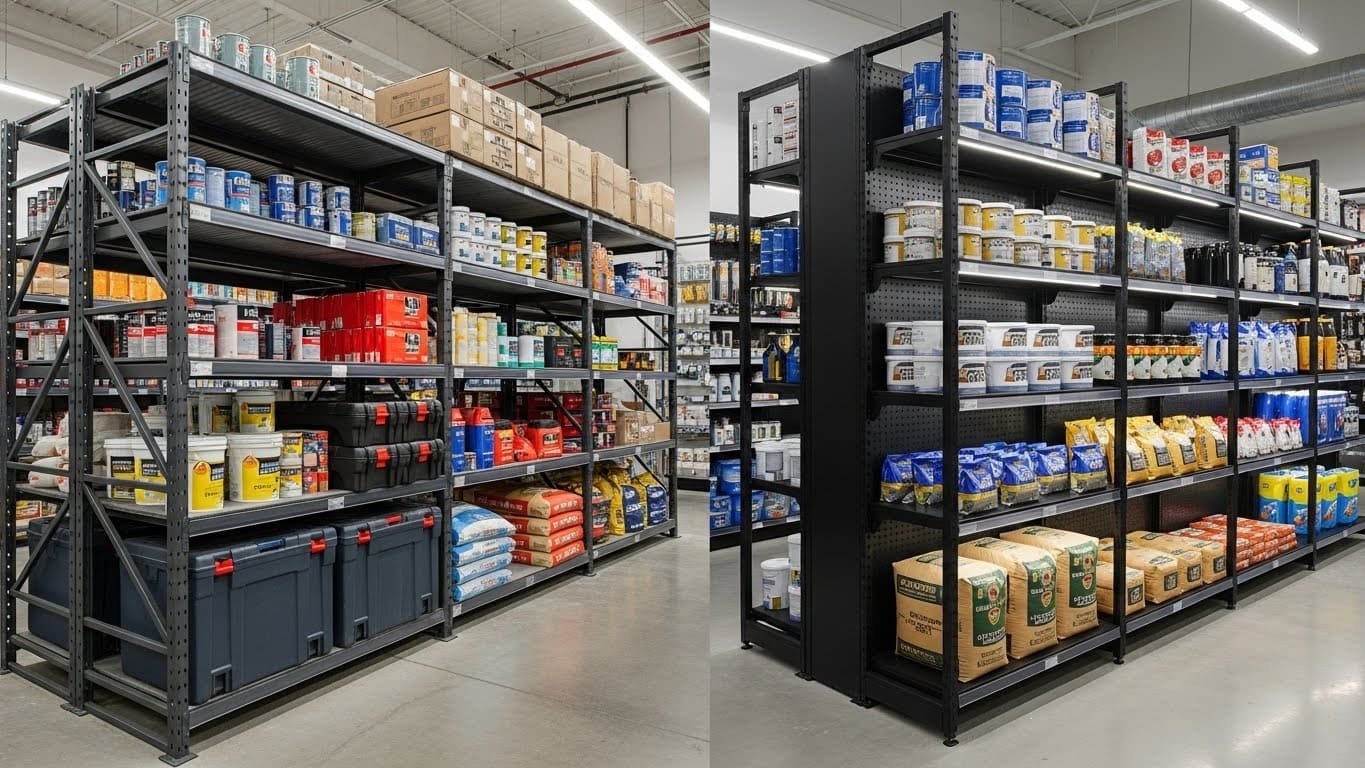
I have spent many years working inside display factories before I started my own company. I have seen many designers struggle to choose the right material for their projects. If you pick the wrong one, the costs for repairs will eat all your profits. This guide will help you make the right choice for your specific store environment.
How do the structural reinforcement techniques differ when designing for heavy weight loads in metal versus wood or reinforced acrylic?
Weight loads can destroy a beautiful design if you do not plan for the right support. I have seen fixtures collapse because the designer did not understand how materials handle stress.
To support heavy weights, metal uses welded joints and internal gussets for maximum rigidity. Wood requires internal steel skeletons or thicker cross-sections with reinforced joinery. Acrylic needs increased sheet thickness and chemical bonding to prevent cracks and bowing under pressure.
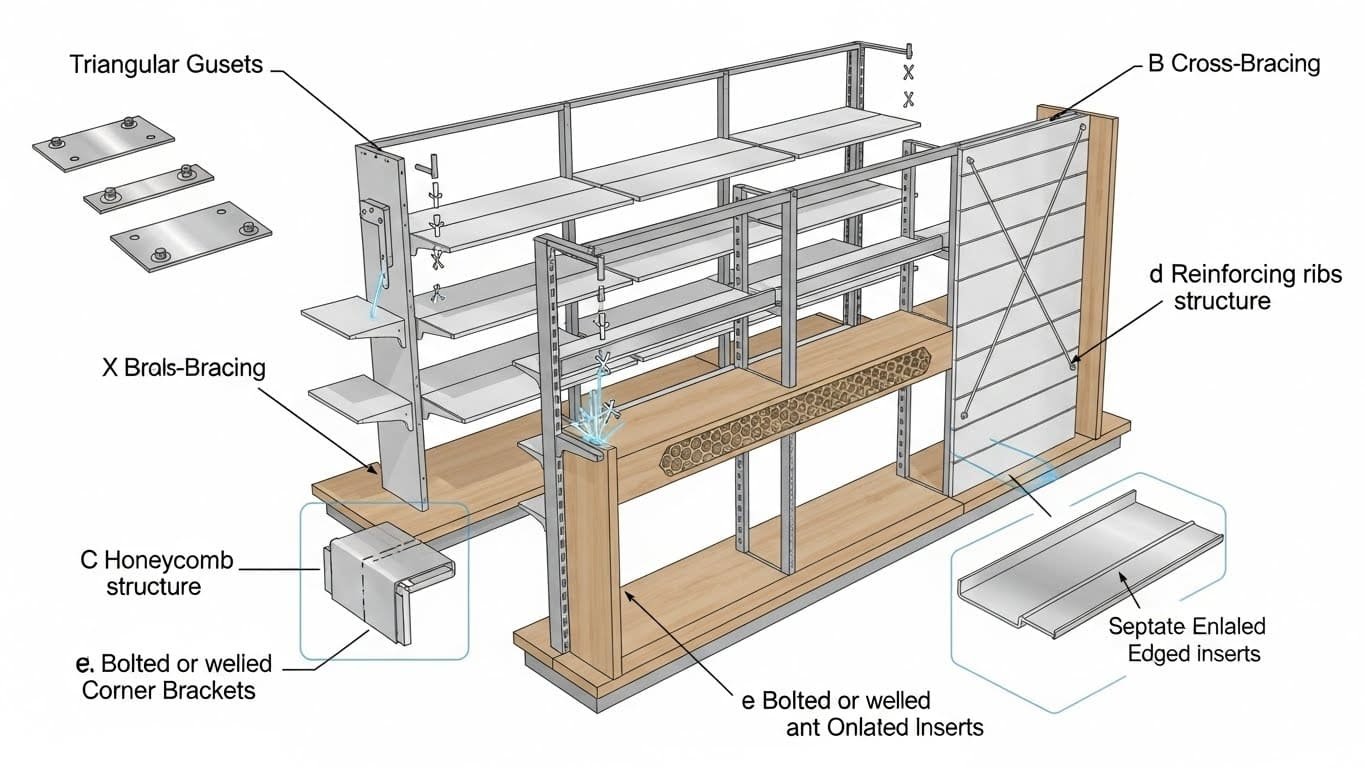
When I design for heavy loads, I always start with the frame. In metal production, we use MIG or TIG welding to create a permanent bond. We often add small triangle plates called gussets in the corners. This prevents the frame from leaning. For wood, the approach is different. Wood is beautiful but it can snap. If a client wants a heavy-duty wood shelf, I often hide a metal tube inside the wood. This gives the look of wood with the strength of steel. Acrylic is the most difficult for heavy loads. We must use cast acrylic instead of extruded acrylic because it is stronger. We also use thicker sheets, usually over 15mm, to stop the material from bending over time.
| Material | Primary Reinforcement Method | Load Capacity | Durability |
|---|---|---|---|
| Metal | Welded joints and gussets | Very High | Excellent |
| Wood | Internal steel frames | Medium-High | Good |
| Acrylic | Thicker sheets & solvent bonding | Medium | Moderate |
In my factory, we always test the prototype with 1.5 times the expected weight. If the fixture shows even a small bend, we change the design. We do this because rework is the biggest enemy of profit. In China and Vietnam, factories like mine operate on a 15% margin. If we have to fix a mistake, we lose all our money on that job.
How do the surface finish vulnerabilities of metal (chipping), wood (warping), and acrylic (scratching) impact the long-term maintenance costs in high-traffic retail environments?
A display that looks old and damaged after one month is a failure for any brand. High-traffic stores are very tough on materials and surfaces will get hit by shopping carts every day.
Metal is durable but the powder coating can chip if it is hit hard. Wood is susceptible to warping if the store humidity changes or if cleaners use too much water. Acrylic scratches very easily and loses its shine over time.
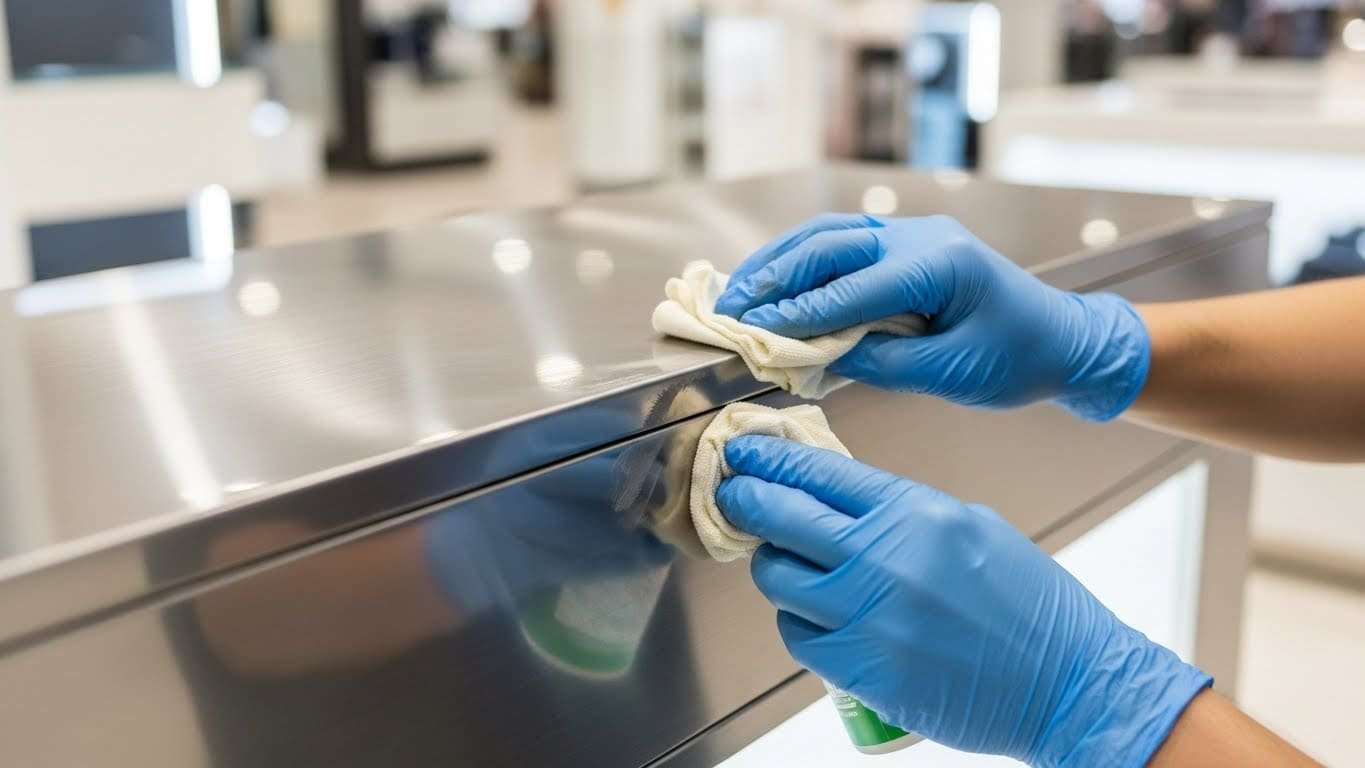
I always tell my clients to think about the "Day 100" look. Metal is usually the winner for long-term costs. If a metal fixture chips, you can often use a touch-up pen to fix it quickly. However, if the powder coating was not done correctly in the factory, it will peel off in large pieces. This is why I supervise the pre-treatment process very closely. Wood looks premium, but it is sensitive. If the store is near an entrance where the air is humid, the wood will expand and contract. This causes doors to stick and joints to open. Acrylic looks great under lights, but it is a magnet for scratches. In a busy store, customers with bags will scratch the surface. You will need to pay for professional polishing every few months to keep it looking clear.
| Material | Common Damage | Repair Difficulty | Maintenance Cost |
|---|---|---|---|
| Metal | Chipping / Scratches | Easy (Touch-up) | Low |
| Wood | Warping / Dents | Hard | Medium |
| Acrylic | Surface Scratches | Moderate (Polishing) | High |
Maintenance costs are often hidden at the start of a project. I suggest using metal for the base of any fixture because that is where the most contact happens. Use wood or acrylic for the higher parts where people only look and do not kick or hit the display with carts.
What are the comparative trade-offs in production lead times and tooling costs when scaling from a prototype to a 1,000-unit run for each material?
Moving from one handmade prototype to a large run of 1,000 units is a big step. Many designers do not realize how much the production process changes when you increase the quantity.
Metal scaling is efficient if you use laser cutting or molds for complex parts. Wood production stays labor-intensive even at high volumes because of sanding and finishing. Acrylic requires precise jigs and cooling time which can slow down the production line.
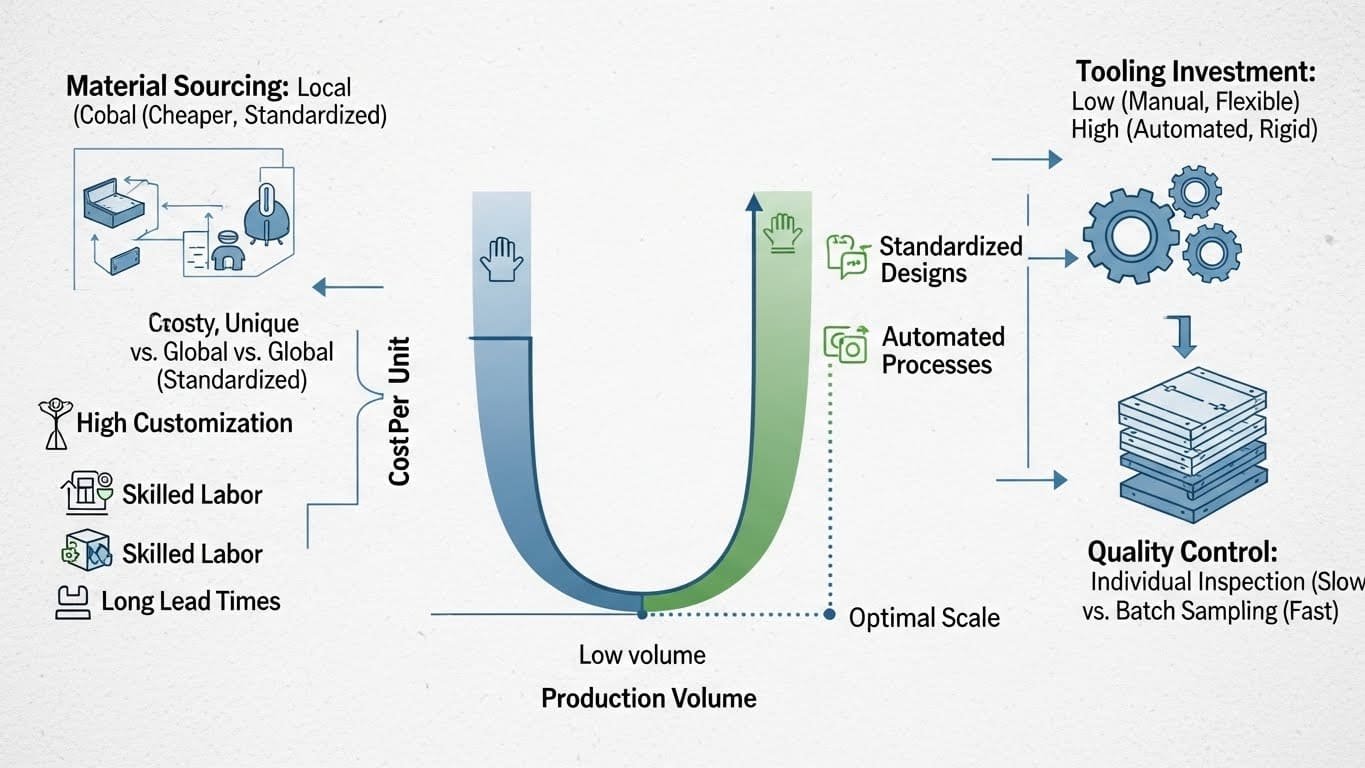
In my experience, metal offers the best flexibility for scaling. For metal parts, we decide whether to make a mold based on the order size. Usually, we do not need molds for standard iron parts unless the shape is very strange. Molds take 3 to 15 days to create. If the order is small, I use a laser cutting machine. It is faster and cheaper for small batches because there is no tooling cost. When we go to 1,000 units, the laser is still very fast, but a stamping mold might save more money per piece. Wood is different. Even with CNC machines, you still need people to sand and spray the lacquer. This takes a lot of time and space. Acrylic needs special care because if you rush the cooling after glueing, the joints will be weak.
| Material | Tooling Cost | Scaling Speed | Labor Intensity |
|---|---|---|---|
| Metal | Low to Medium | Fast | Medium |
| Wood | Low | Slow | High |
| Acrylic | Medium | Moderate | Medium |
My factory focuses on efficiency to keep our 15% margin. We use the best technology to save on labor costs. Sometimes, a client needs a very fast delivery. I have even paid for air shipping myself to make sure the client gets their goods on time. This is how we build long-term trust. When you scale, remember that the most expensive part of production is a delay. Choose the material that your supplier can handle quickly and accurately.
Conclusion
Select metal for strength, wood for style with reinforcement, and acrylic for clarity. Balance these with maintenance costs and production efficiency to ensure your retail project succeeds and stays profitable.