
Retailers often struggle with stagnant sales and rising operational costs. Poorly designed shelves make products look cheap and unappealing to customers. Effective retail displays transform your store into a high-performing sales machine [3].
Effective retail displays increase profit by enhancing brand tonality to drive sales, reducing logistics costs through optimized KD (knock-down) designs, and preventing rework losses via high-precision manufacturing and durable surface treatments [1][3]. This approach ensures both high conversion rates and protected margins [1].
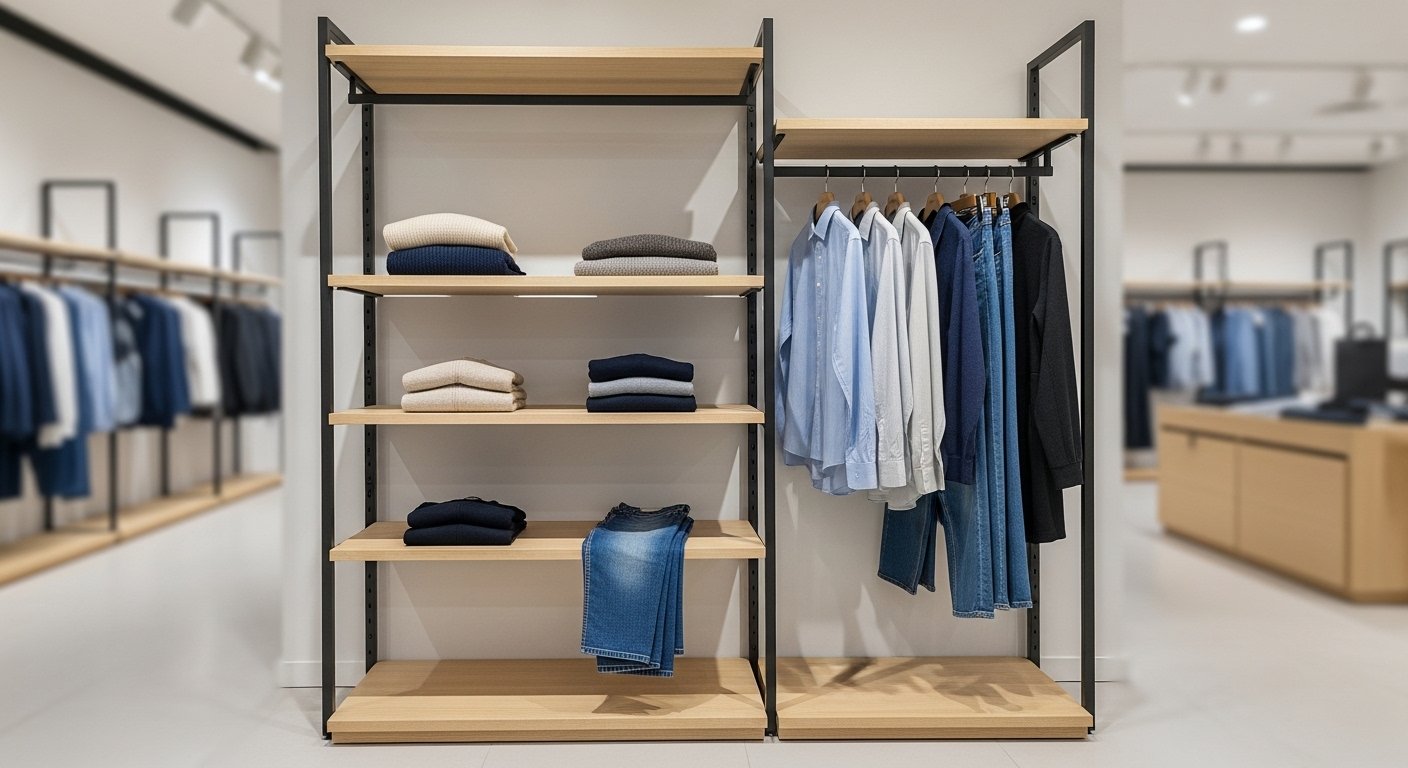
I have spent years in the factory and the boardroom. I know that a display is not just a piece of furniture. It is a tool to make you money. If you get the design and the logistics right, your profit goes up. If you get them wrong, you lose money on shipping and reworks. Let me show you how we balance these factors.
How do custom display fixtures enhance brand tonality and directly drive retail sales growth?
Standard shelves make your brand look like everyone else. Customers feel no connection and walk away without buying. Custom display fixtures and bespoke shopfittings create a unique atmosphere that captures attention and builds trust [3].
Custom fixtures align your physical store with your brand identity. This premium feel justifies higher prices and creates a better shopping experience. When a store looks professional and consistent, conversion rates rise and sales volume grows across all retail sectors [3].
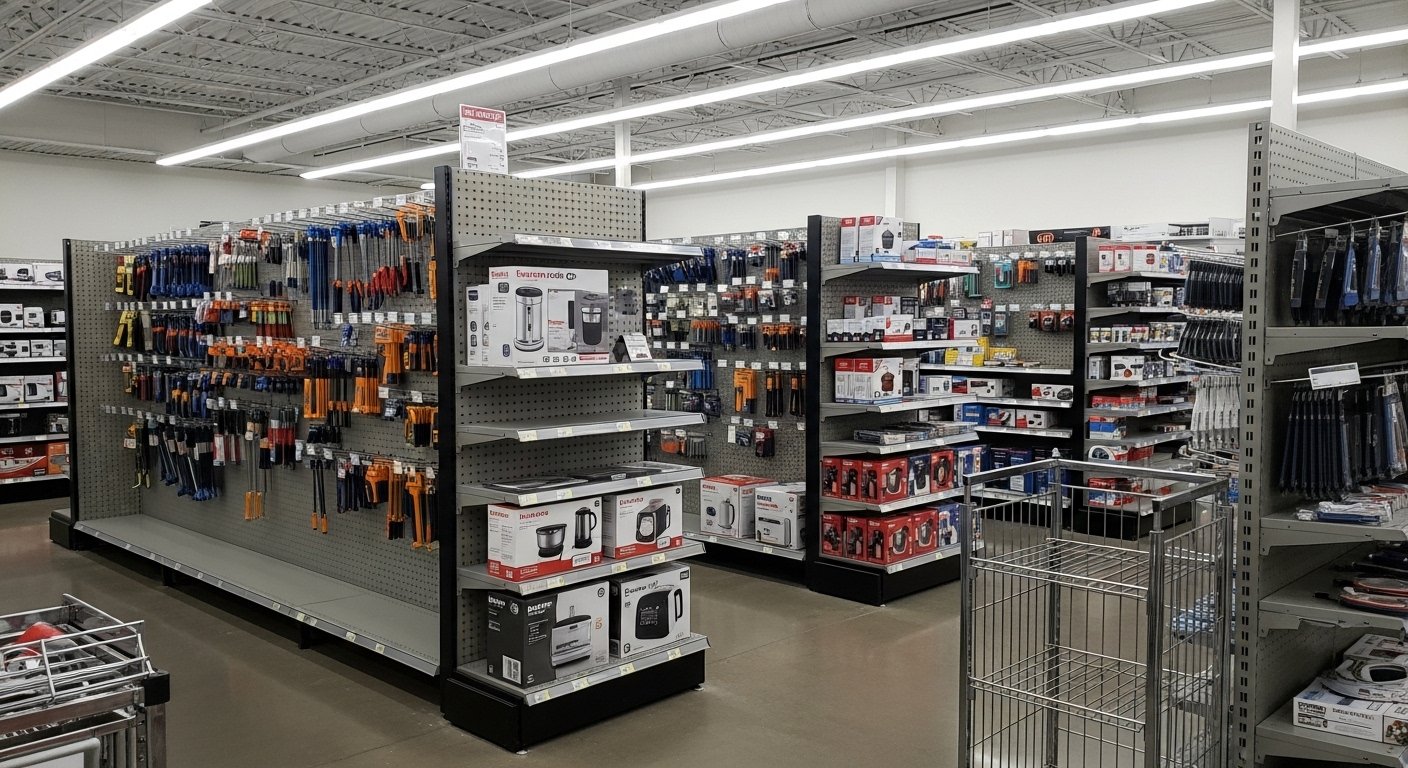
I always tell my clients that "tonality" is the silent salesman. When I started my first factory, I saw how a well-made metal and wood fixture could make a simple pair of shoes look like luxury items. Customization allows us to use specific materials like MDF, solid wood, or high-end acrylic to match the brand’s soul [2][3].
The Impact of Customization on Retail Performance
Customization is not just about looks. It is about function and psychology. We use different materials and finishes to tell a story. For example, a luxury watch brand needs high-gloss lacquering with multiple coats, while a rustic clothing brand might need textured wood [2][3].
| Feature | Standard Fixtures | Bespoke Shopfittings |
|---|---|---|
| Brand Recognition | Low - looks generic | High - matches brand DNA |
| Customer Engagement | Low - passive browsing | High - emotional connection |
| Perceived Value | Average | Premium [3] |
| Sales Conversion | Baseline | Significantly higher [3] |
We can apply these custom solutions to many areas. I have built displays for clothing stores, eyewear shops, and even car showrooms [3]. Each project uses a mix of materials like stainless steel, glass, and LED lighting to make the products pop [2][3]. When the display looks right, the customer feels the product is worth the price. This is how we drive sales growth directly. We focus on one-stop solutions from design to mass production to keep the brand message clear [3].
In what ways can optimized display design and assembly structures (such as KD/knock-down) reduce logistics costs and protect profit margins?
Shipping air is one of the biggest waste of money in retail. Assembled displays take up huge space in containers and are easy to break. You end up paying more for the box than for the product [1][2].
Optimized KD (knock-down) structures reduce shipping volume by 50% to 80% compared to fully assembled units [1]. This massive saving in container space lowers freight costs and reduces transit damage. It protects your profit margins by cutting hidden logistics expenses [1][2].
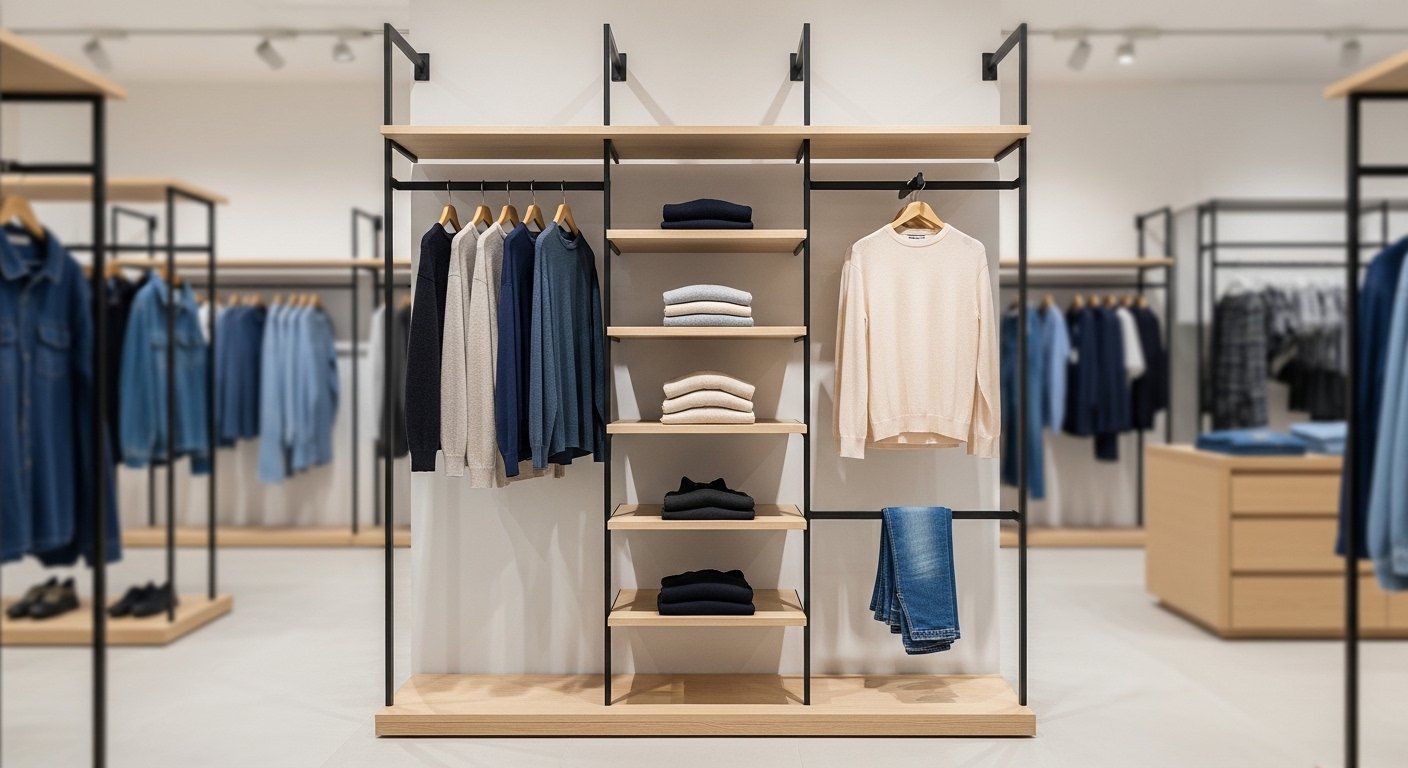
I remember a project where we switched a large checkout counter design to a KD structure. Before the change, the shipping cost was almost higher than the labor cost in Europe [2]. By breaking it down into smart modules, we saved the client thousands of dollars in sea freight [1].
Breaking Down the Logistics Savings
When we design for KD, we look at the whole supply chain. We use modular parts that can be used across different types of displays. This saves money on production and makes it easier for the store staff to replace broken parts later [1][2].
| Logistics Factor | Assembled Shipment | KD (Knock-Down) Shipment |
|---|---|---|
| Shipping Volume | 100% (High) | 20% - 50% (Low) [1] |
| Protection | Hard to pack safely | Flat-packed with less air [1] |
| Container Cost | High per unit | Low per unit [1] |
| Local Assembly | Zero | Requires skilled labor [2] |
In places like the USA or Europe, labor is expensive. So, we find a "best solution" balance [2]. We design fixtures that are easy to put together. This means one worker can do the job quickly [2]. We also calculate the weight and use the right packaging to avoid extra fees like VGM or high terminal charges [4]. My goal is to make sure the money you save on manufacturing in Asia doesn't get lost in the middle of the ocean [1][5].
How does choosing high-precision manufacturing and high-quality surface treatments (like PVD or powder coating) prevent long-term financial losses from reworks and quality claims?
Cheap finishes and bad fits lead to disaster during store installation. If a part is 2mm off, it won't fit. If the paint peels, the customer complains. One big quality claim can kill your entire project profit [1][6].
High-precision manufacturing and quality surface treatments like PVD or powder coating ensure parts fit perfectly every time [1][6]. Durable finishes resist wear and fingerprints. This prevents expensive reworks and quality claims, keeping your financial plan on track and your clients happy [1][3][6].
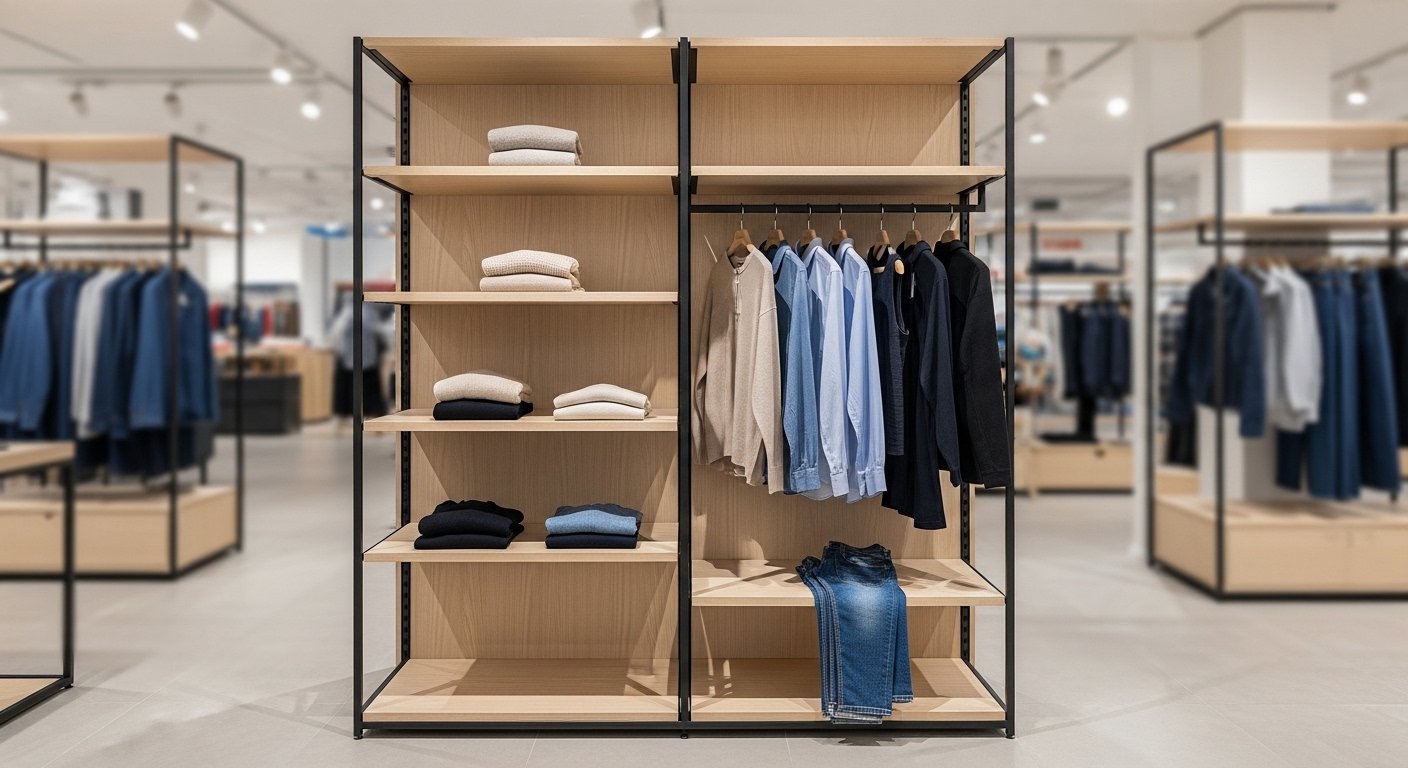
I have seen many projects fail because the specs were not clear at the start [6]. At my factory, we use laser cutting for pipes and plates to get the highest accuracy [1]. We don't just "paint" things. We use advanced powder coating with natural gas or electricity to ensure the thickness is perfect for assembly [1].
Precision and Surface Quality as Profit Protectors
The most expensive mistake is the one you find too late [6]. If a chair is wobbly or a stain is wrong, it is easy to fix in the factory. Once it is in a store in London or New York, it is a nightmare [6]. We use strict testing, like the pencil hardness test for paint, to make sure the finish lasts [3].
- PVD Coating: We use Physical Vapor Deposition to make a thin, hard film. It makes metal parts look beautiful and stay strong against scratches [6].
- Anti-Fingerprint (AF): We add an AF layer to reduce marks. This keeps the store looking clean without constant wiping [6].
- Laser Cutting: We use these machines to cut steel and wood with high speed and zero errors, which is better than using old molds for small orders [1].
By investing in these high-quality steps, we avoid the "hidden costs" of manufacturing. We ensure the big batch matches the sample [1]. We also make sure all materials meet local laws, like E0 or P2 standards for wood [1]. This professional approach means no surprises and no lost money [5].
Conclusion
Effective retail displays and bespoke shopfittings increase profit by driving sales with brand tonality, saving 50-80% on shipping with KD structures, and avoiding costly reworks through high-precision manufacturing [1][3][6].