
Are you tired of display parts that simply will not fit together during the final setup? This tiny error can ruin your project timeline and waste your hard-earned budget. I use precise powder coating thickness control to ensure every component of your Display Fixtures and Bespoke Shopfittings fits perfectly every single time [1].
Precise thickness control in powder coating prevents assembly issues by maintaining strict tolerances between parts. It ensures that interlocking components fit without friction or force. This high-precision production avoids expensive rework, saves on-site labor costs, and keeps the finish uniform across different production batches [1][6].
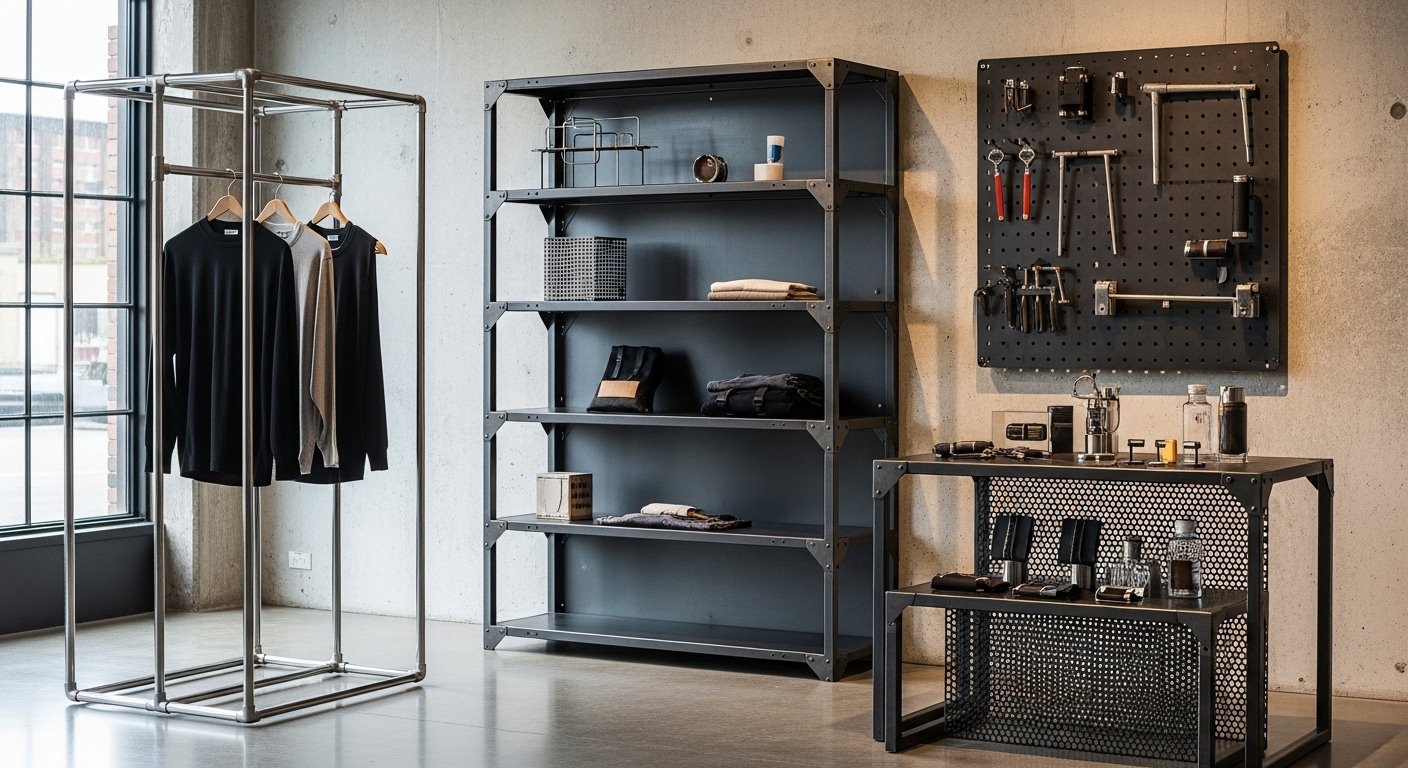
Many designers think a little extra paint is a good thing for protection. But in the world of high-end retail, a few extra microns of coating can turn a beautiful design into a pile of useless metal. I have seen many projects fail because the coating was too thick for the screw holes. You need to understand how we manage this process to keep your projects on track.
How does precise thickness control ensure the seamless assembly of complex display components?
Does your team struggle with metal parts that jam or scratch during assembly? When coatings are uneven, parts that looked perfect on a CAD drawing become impossible to put together on the shop floor. I solve this by using advanced equipment that monitors every micron of powder applied to the surface [1].
Precise thickness control allows metal joints and slots to slide together exactly as the mechanical engineer intended. By keeping the powder layer within a strict range, we ensure that fasteners, brackets, and glass inserts fit into the Display Fixtures and Bespoke Shopfittings without needing extra force [1].
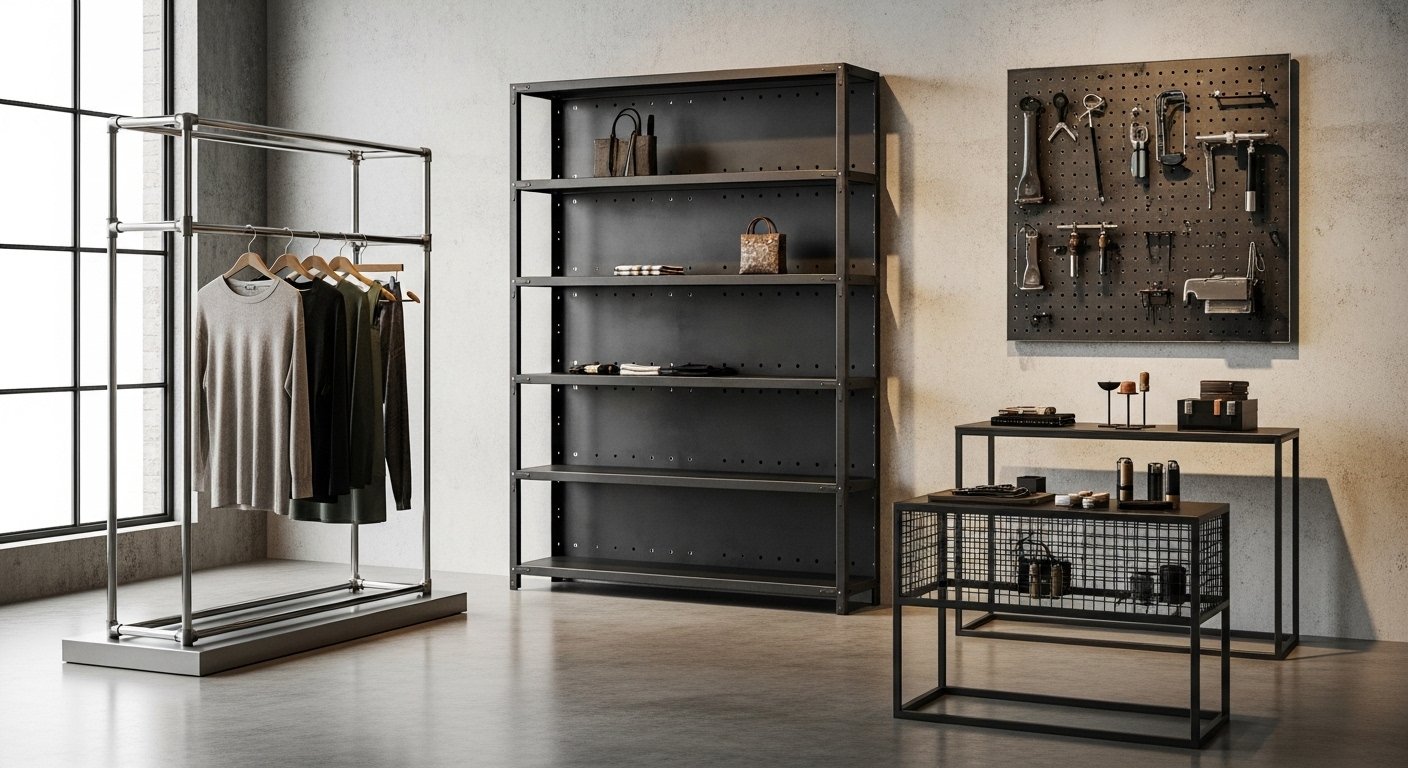
In my experience, the secret to a successful retail rollout is in the details of the "tolerance stack-up." When I work on a project, I treat the powder coating as a measurable part of the component's geometry, not just a color. My factory uses advanced powder coating machines that use natural gas or electricity to provide a stable heat environment [1]. This stability is vital because it prevents the powder from "clumping" or becoming too thick in corners.
If we use laser cutting for our metal tubes and plates, we get very high precision from the start [1]. But if the coating is not controlled, that precision is lost. I always tell my clients that if the coating is even 0.1mm too thick, a drawer slide might stick or a bolt might not go through a hole. We use a structured approach to manage these tolerances, which you can see in the table below:
| Feature Type | Standard Tolerance (Metal) | Post-Coating Tolerance | Assembly Impact |
|---|---|---|---|
| Sliding Joints | +/- 0.05 mm | + 0.08 mm max | Prevents friction and paint scratching |
| Screw Holes | +/- 0.10 mm | + 0.12 mm max | Ensures bolts pass through easily |
| Interlocking Tabs | +/- 0.15 mm | + 0.20 mm max | Allows for "click-in" assembly |
| Decorative Panels | +/- 0.20 mm | + 0.30 mm max | Maintains a flush, high-end look |
By planning for these measurements early, we avoid the "quiet failures" that happen when specs are unclear [6]. I make sure my team aligns the design with the production reality before we ever start the machines. This way, the factory does not just expose problems; it prevents them [6].
Why is coating consistency the key to maintaining brand aesthetics and functional durability?
Is your brand image suffering because the displays in one store look different from the displays in another? Inconsistent coating causes color shifts and different textures that make a luxury brand look cheap. I focus on consistency so that every piece of your bespoke shopfittings looks identical and lasts for years [2][3].
Coating consistency ensures that the color, gloss, and hardness are the same across every square inch of the fixture. This protects the metal from rust and wear while keeping the brand's visual identity perfect in every retail location [2][3].
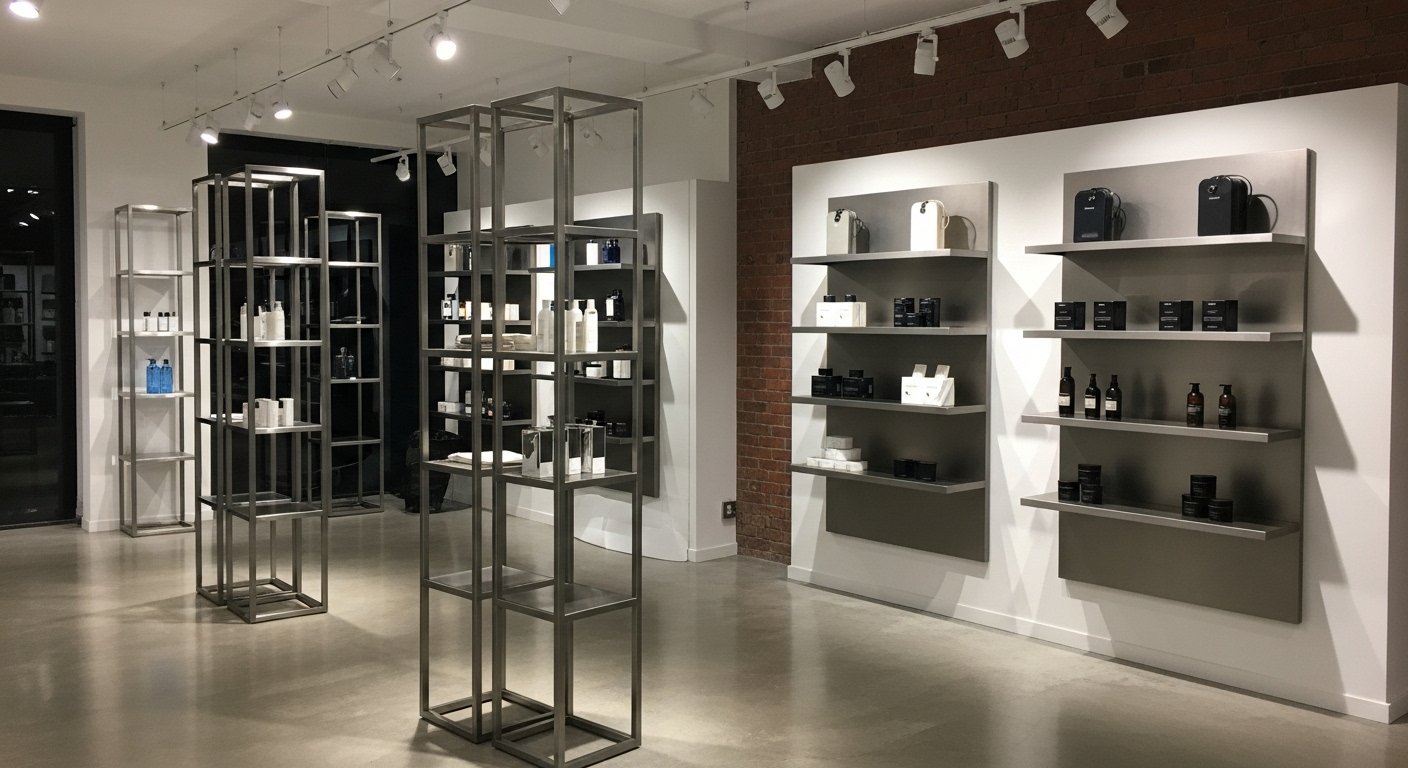
When I work with luxury brands, the surface finish is everything. For these high-end projects, we do not just spray once. We might use two coats of base and three coats of top paint to get a perfect look [3]. If there is even a tiny bit of "orange peel" or a small bubble, we sand it down and do it again [3]. We also test the hardness of our coatings using a pencil test. Usually, we aim for a 2H hardness to make sure the surface does not scratch easily when customers touch it [3].
I also use PVD coating with an Anti-Fingerprint (AF) layer for some specific metal parts [6]. This technology creates a very thin film that makes the metal much harder and resistant to fingerprints. This is very important for shopfittings that people touch all day long. In my factory, we calculate exactly how much powder each order needs [1]. This helps us maintain the same mixture and the same look from the first piece to the last piece. If you change the mixture or the temperature mid-way through, the color will change. I avoid this by using a fixed team that understands the importance of these standards and follows them for every batch [1].
How can advanced powder coating technology reduce production rework and total logistics costs?
Are you losing your profit margins because of high shipping costs or fixing broken parts? Rework is the biggest killer of profit in a factory [1]. I use precision coating technology to make sure we get it right the first time, which also allows us to ship more efficiently.
Advanced coating machines reduce waste and ensure parts fit perfectly for "Knock-Down" (KD) shipping. When parts are coated precisely, they can be packed flat and assembled on-site, which saves 50% to 80% on sea freight space [1][2].
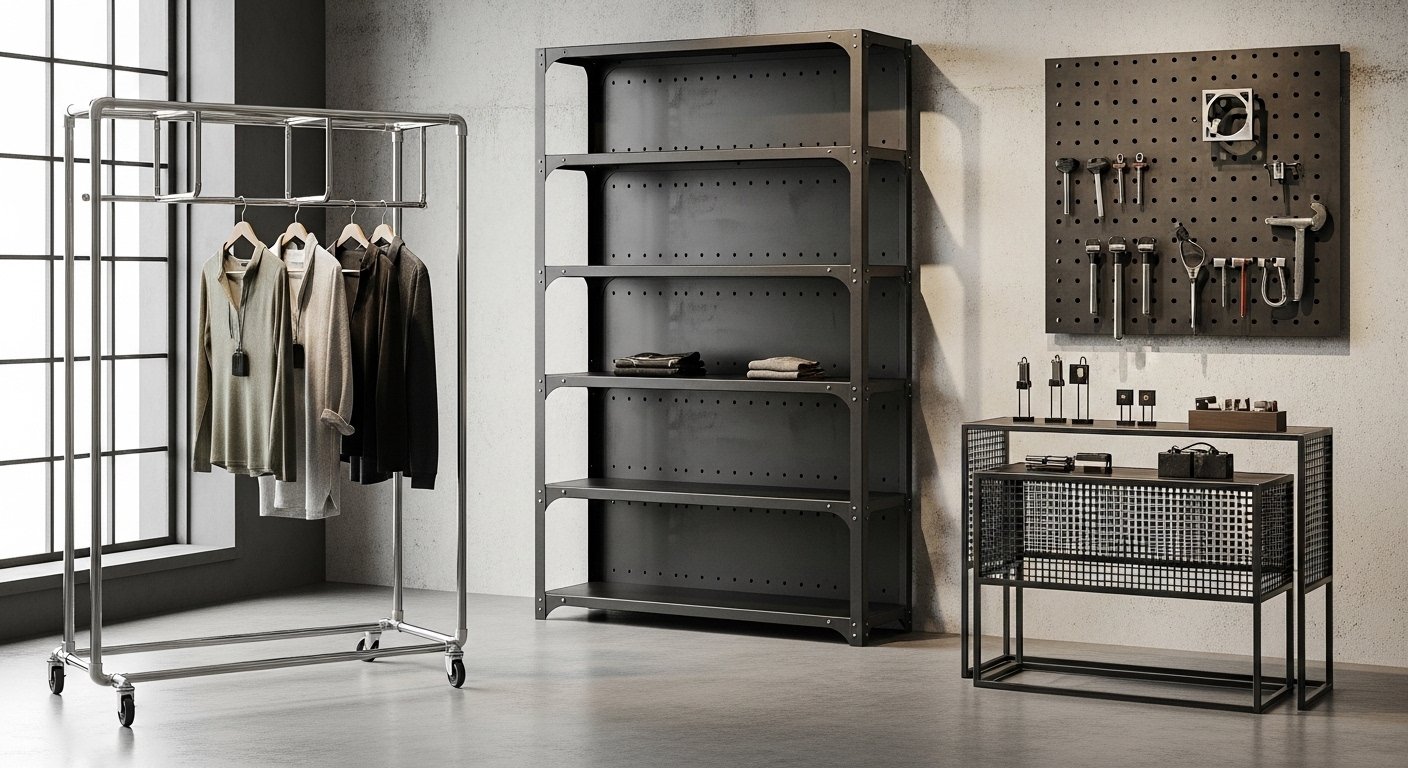
I always look for ways to help my clients grow their business by saving them money on things they don't see, like logistics. If our powder coating is precise, we can design our Display Fixtures and Bespoke Shopfittings to be modular [1]. This means we can ship them in smaller boxes instead of big, heavy crates. Shipping "KD" (knock-down) is a huge advantage. It saves a lot of money in a shipping container because you are not paying to ship air [1][2].
But you can only do this if the parts fit perfectly. If the coating is too thick, the person at the store cannot put the display together. Then, you have to pay for an expensive technician to fix it. That is why precision in the factory saves you money in the port. Also, using better technology means we use less powder and less energy [1]. In my factories in China and Vietnam, we use natural gas and high-efficiency spray guns to reduce waste [1]. This is better for the environment and it keeps the costs lower for you. I also manage the supply chain very carefully to avoid hidden fees like high terminal charges or document fees [4]. By combining smart engineering with precise manufacturing, I provide a low-cost, high-quality solution that arrives on time [3].
Conclusion
Precision in powder coating is the secret to perfect assembly. By controlling thickness, I ensure your Display Fixtures and Bespoke Shopfittings fit perfectly, look beautiful, and save you money on shipping [1][2][3].