
Retailers face tight deadlines and high costs while demanding perfect quality. Design flaws often delay store openings. Advanced automation like CNC machining and robotic welding solves these production headaches fast.
CNC machining and robotic welding improve precision by removing human error and eliminating time-consuming molds [1]. These technologies reduce lead times from weeks to days, allowing for faster small-batch customization and consistent quality across global multi-store rollouts [1][3].
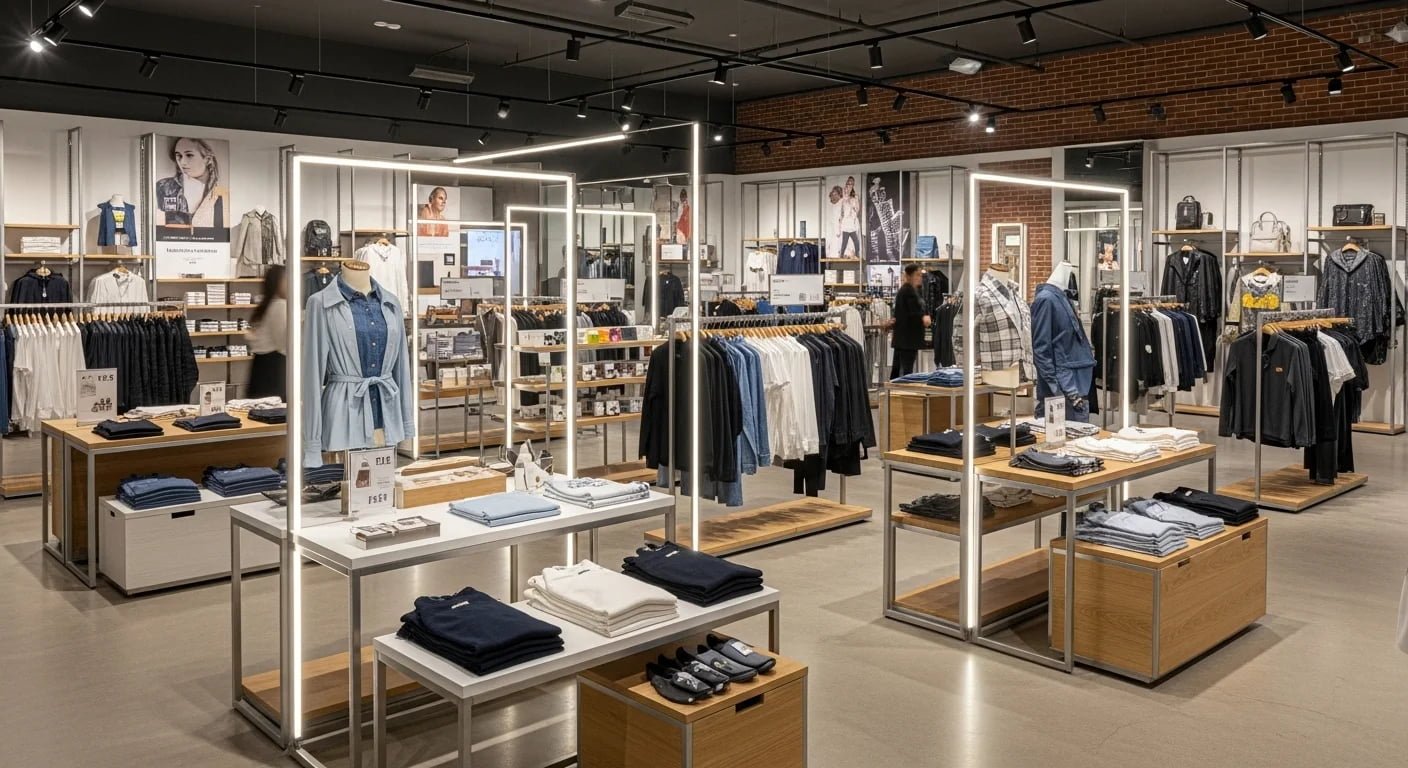
I have spent years in the factory and as a company founder. I have seen how technology changes everything. Before these machines, we relied only on hand tools. Mistakes happened often. Now, I use these tools to make sure your Display Fixtures and Bespoke Shopfittings are perfect. If you want to know how this helps your projects, keep reading below.
How does high-precision CNC machining eliminate the need for traditional molds and reduce lead times in small-batch bespoke production?
Traditional molds take weeks to build and cost thousands of dollars. This kills your budget for small, custom orders. High-precision CNC and laser cutting offer a faster, cheaper path for bespoke shopfittings.
Laser cutting for metal plates and tubes is more cost-effective than making molds for orders under 50 sets [1]. CNC eliminates the 5-15 day mold-making period, cutting production costs and speeding up the delivery of unique display fixtures [1].
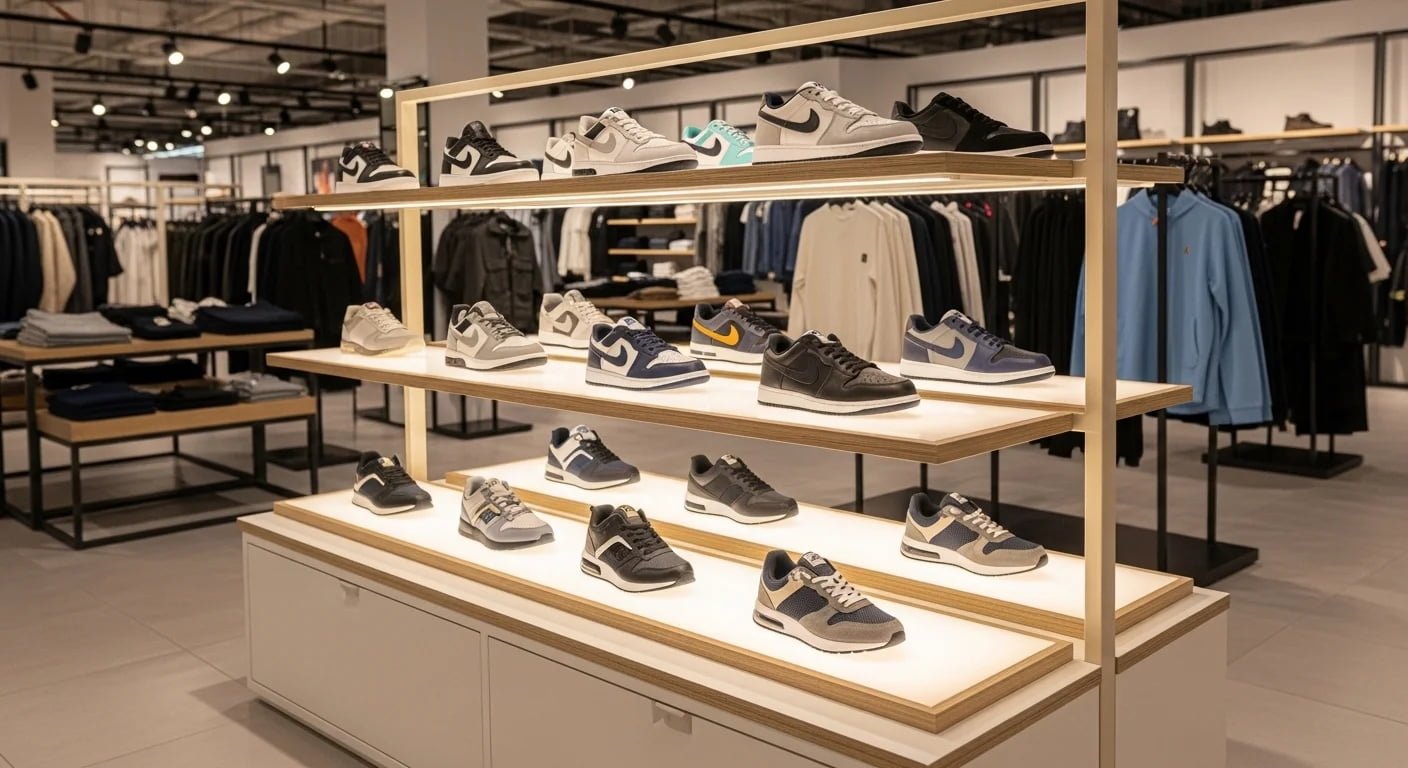
In my experience, I always evaluate if a project needs a mold. For iron parts, we almost never need them unless the shape is very strange [1]. Making a metal mold usually takes 5 to 15 days and costs between $100 and $1,000 [1]. If your order is small, this adds a lot of cost and time. Instead, I use laser machines to cut metal tubes and plates. This is much faster. For very complex parts, I even use 3D printing. Metal 3D printing using steel or aluminum can finish a part in 12 to 36 hours [1]. This allows me to give you a sample or a small batch almost immediately. Using digital files instead of physical molds means I can change the design quickly without wasting money.
| Method | Lead Time | Cost for Small Batch | Flexibility |
|---|---|---|---|
| Traditional Mold | 5-15 Days | High ($100-$1000+) | Low |
| CNC / Laser Cutting | 1-2 Days | Low | High |
| 3D Printing (Metal) | 12-36 Hours | Medium | Very High |
I find that this flexibility is what modern retail brands need. You can test a new store design without waiting a month for the factory to start. By using CNC tools, I ensure the first piece is the same as the fifty-first piece [1].
In what ways does automated processing ensure consistency across diverse materials like metal, wood, and acrylic for multi-store rollouts?
Brands need identical displays in New York and Paris. Mixing wood, metal, and acrylic often leads to size mismatches. Automated processing ensures every part fits perfectly every single time across every store.
Automated CNC tools and laser machines provide exact tolerances across metal, wood, and acrylic [1][3]. This consistency is vital for multi-store rollouts, ensuring that standardized display fixtures maintain brand identity and fit together easily during on-site assembly [1][2].
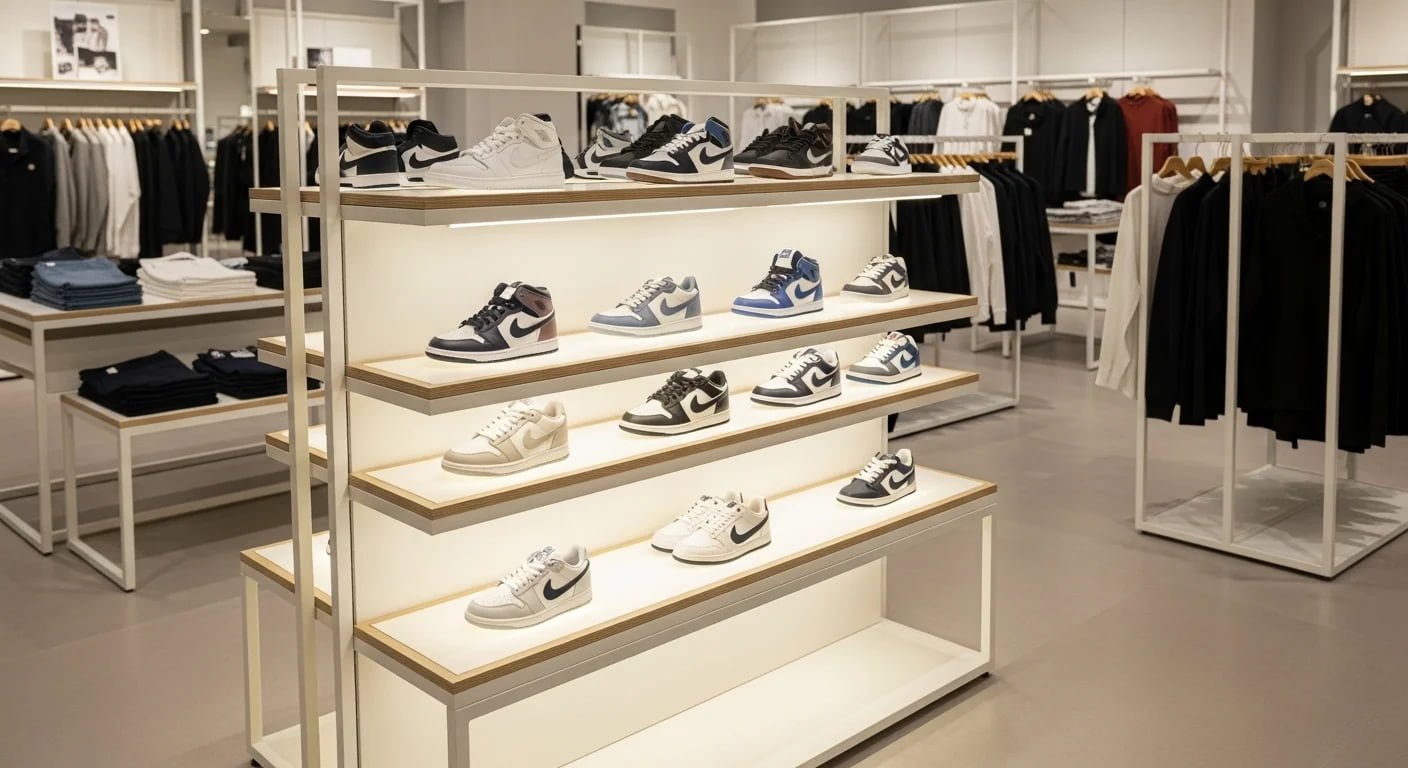
When I work on a multi-store rollout, I focus on standardization. Brands often have a unified image for all their shops [1]. I use CNC engraving machines for wood and laser machines for metal to make sure every hole and edge is exact [3]. If a metal post and a wooden shelf do not fit, the whole project stops. I also use advanced powder coating machines. These machines control the thickness of the finish precisely [1]. This is important because many parts have tight tolerances. If the paint is too thick, the parts will not assemble correctly [1]. I also design internal structures like uprights and shelves to be universal [1]. This means you can use the same parts for different displays. It saves money and makes shipping faster. It also helps the environment because we waste fewer materials [1]. I make sure my team in China and Vietnam uses the same engineering standards so the quality stays high no matter where we produce [5].
| Material | Automated Process | Benefit for Rollouts |
|---|---|---|
| Metal | Laser Cutting / Robotic Welding | Precise assembly and strength [3] |
| Wood (MDF/Plywood) | CNC Routing / Edge Banding | Smooth finish and exact sizing [3] |
| Acrylic | Laser Cutting / Polishing | Crystal clear and consistent shape [3] |
| All Materials | Precision Coating | Uniform color and thickness [1] |
How does the integration of advanced manufacturing technologies mitigate the risks of rework and "quiet failures" in complex supply chains?
One tiny error in a drawing can ruin an entire production run. These "quiet failures" stay hidden until shipping. Advanced tech and better planning stop these costly mistakes before they happen.
Advanced manufacturing reduces rework by aligning digital designs directly with machine execution [1][6]. Precision tools catch tolerance issues early, preventing "quiet failures" where parts don't fit, which otherwise leads to expensive air freight or lost project margins [1][6].
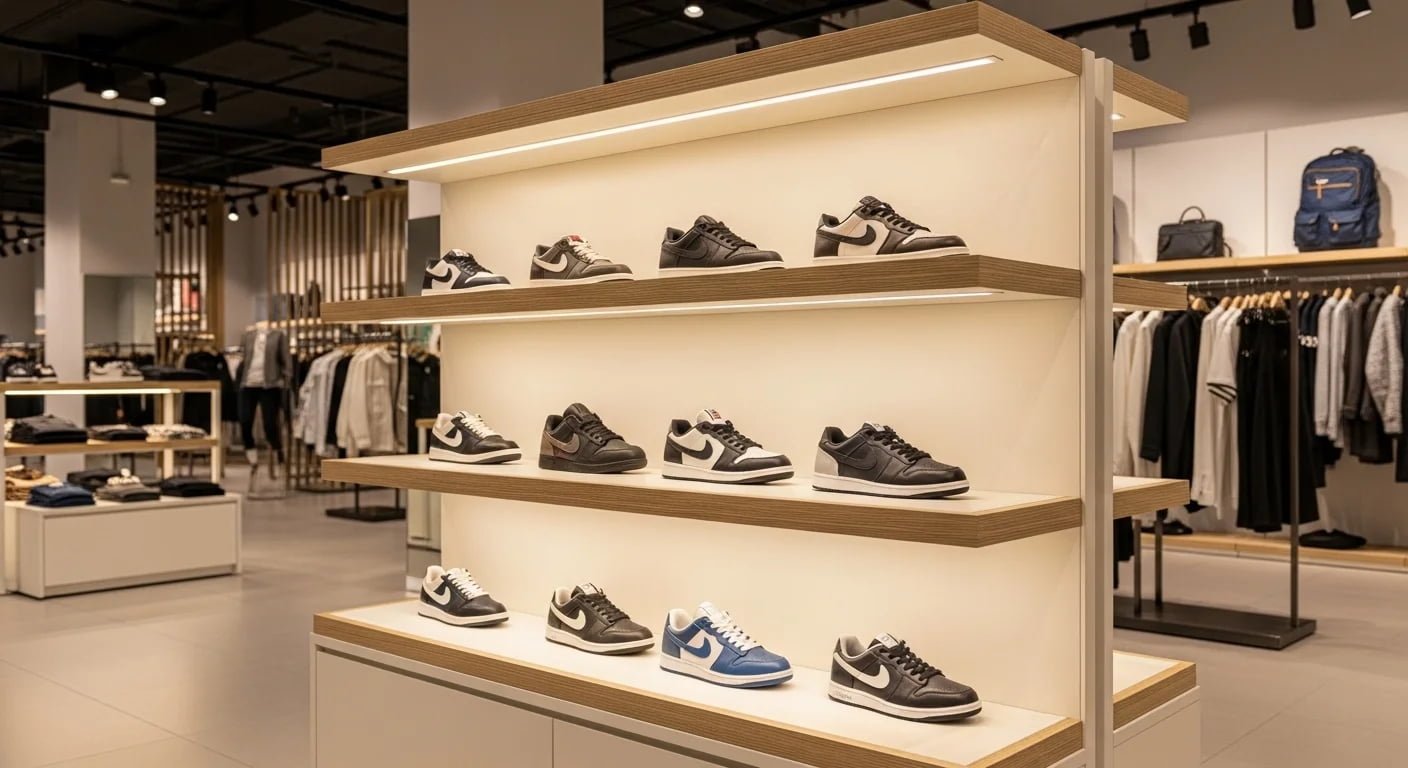
I have learned that the most expensive problem is the one you find too late [6]. If a mistake is caught after shipping, it is a total loss of trust and money [6]. Most problems do not start on the factory floor. They start at the desk with unclear drawings or bad specs [6]. I use a professional management system to make sure the design matches the production [3]. When we use CNC machines, the risk of "quiet failures" goes down because the machine follows the digital file exactly. I also make sure we test everything early. For example, if a chair is slightly off-level, it is a five-minute fix if we find it early [6]. If we find it after it reaches your store in the USA or Europe, it is a disaster. Sometimes, I even pay for air freight myself to keep a deadline, but I prefer to avoid mistakes entirely [1]. My factory in Vietnam now uses the same engineering discipline as my Xiamen plant [5]. This means we check raw materials, processing, and coating at every step [1]. We talk to you deeply about how you will use the product so we can choose the right materials and avoid any surprises [1].
| Failure Type | Cause | Prevention Method |
|---|---|---|
| Loud Failure | Machine breakdown | Regular maintenance |
| Quiet Failure | Unclear specs / Human error | CNC automation & Clear drawings [6] |
| Rework | Parts don't fit | High-precision assembly testing [1] |
| Late Delivery | Production errors | Real-time monitoring & automation |
I believe that being a good supplier means being transparent. I want you to know exactly how your project is moving. By using advanced machines, I remove the guesswork. This helps me deliver your Display Fixtures and Bespoke Shopfittings on time and with the quality you expect.
Conclusion
CNC machining and robotic welding make display fixtures faster and more precise. These tools help me deliver high-quality bespoke shopfittings while keeping costs low and meeting your tight deadlines.