
You want unique store fixtures, but high costs and poor quality often ruin the vision. Finding a balance between design precision and manufacturing efficiency is harder than it looks.
Boutique display fixtures require a blend of skilled craftsmanship and smart engineering. The best approach combines precise metalwork, high-quality finishes like PVD or powder coating, and durable wood materials. Success lies in choosing the right manufacturing method—like laser cutting over expensive molds for small batches—to ensure quality without breaking the bank.
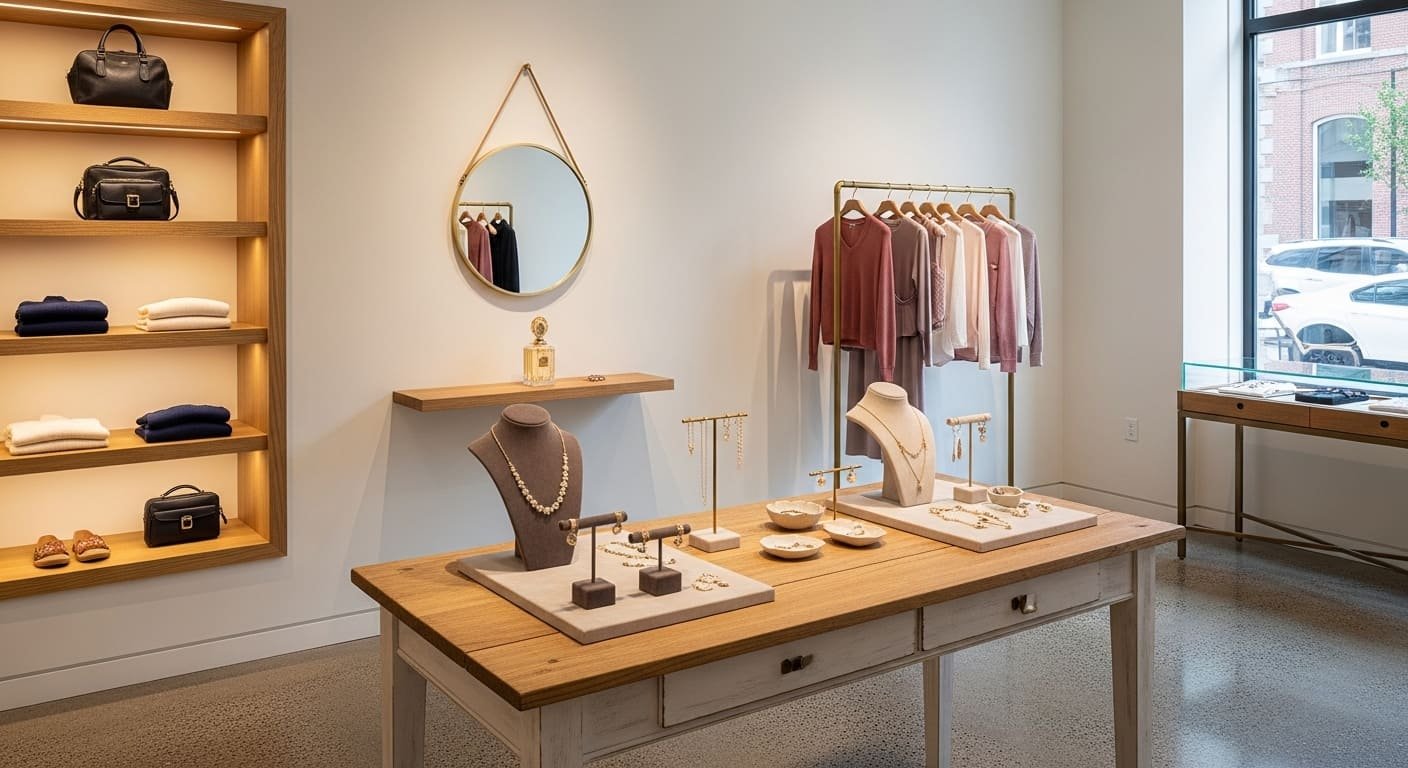
Many brands assume that great design automatically leads to a great product, but the reality on the factory floor is different. This gap between the drawing board and the final installation is where budgets blow up and timelines fail. Let me explain how we turn a concept into a durable reality without unnecessary waste.
Do you really need expensive molds for your boutique fixtures?
Mold costs can eat up your budget before production even starts. Is there a smarter way to handle low-volume orders without sacrificing the precision your brand needs?
For small batches under 50 sets, we usually avoid molds. We use laser cutting for metal and 3D printing for complex parts. This saves time and keeps costs low while maintaining high precision.
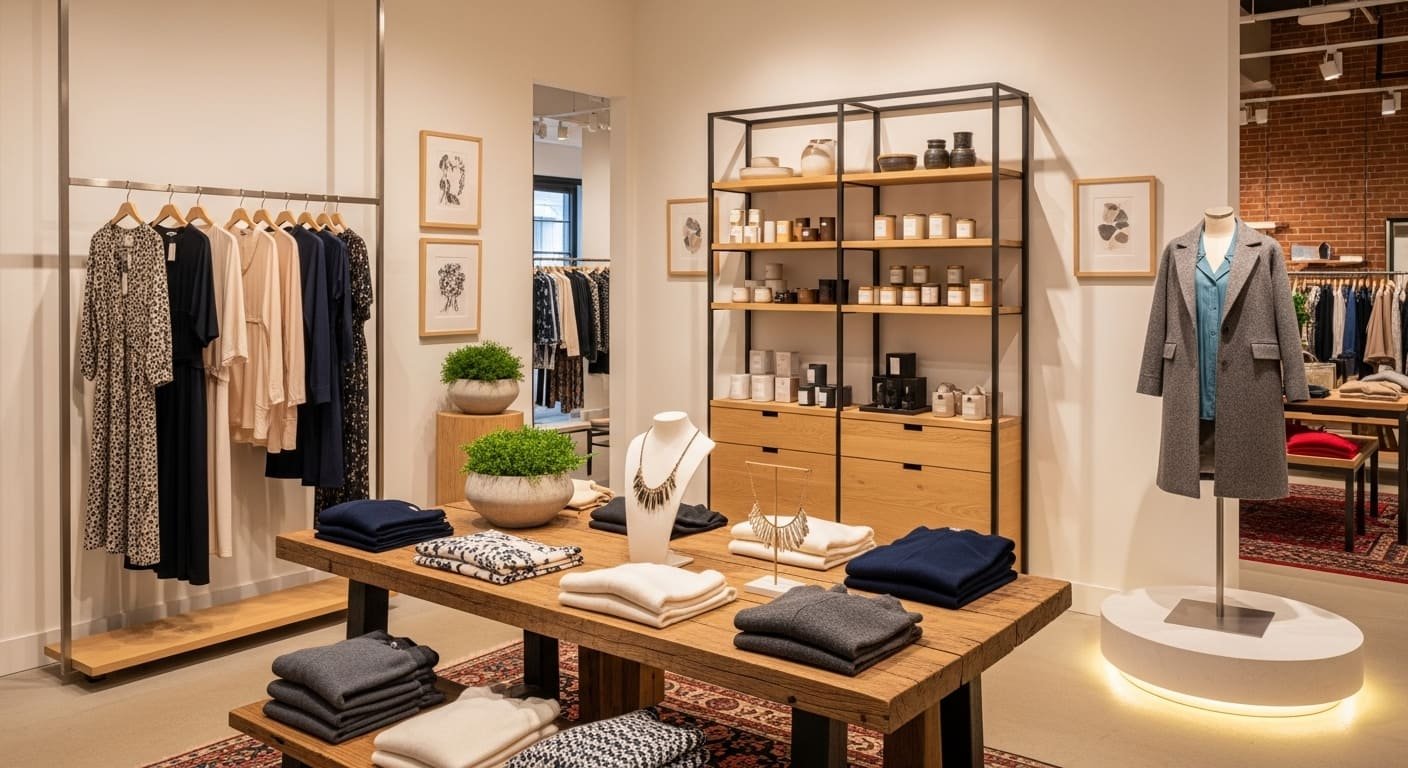
When we look at metal parts, we always evaluate the order size first. If you are ordering fewer than 50 sets, opening a mold is rarely worth it. A metal mold typically costs between $100 and $1,000 and takes 5 to 15 days to create. This adds unnecessary cost and delay to your project. Instead, we use laser machines to cut iron pipes and plates. For small-batch customization, this method is faster and cheaper than traditional molding.
However, if you have a part with a very strange shape, we might look at other options. For complex structures, we can use metal 3D printing. We print in iron, stainless steel, or aluminum alloy, and the delivery time is incredibly fast—often between 12 and 36 hours. For plastic parts, if the volume is low, we avoid injection molds that cost over $1,000. Instead, we use 3D printing to create parts with smooth surfaces and great colors. The goal is always to maximize efficiency. We only recommend molds when the volume is high enough to justify the investment, ensuring you aren't paying for tools you don't need.
Is manufacturing in Vietnam a viable alternative to China?
Everyone talks about moving production to Vietnam to save on tariffs. But does the quality match the established standards found in China's mature manufacturing hubs?
Vietnam is great for simple, high-volume orders, especially for the North American market. However, China still holds the advantage for complex, custom boutique fixtures due to a mature supply chain and skilled labor.
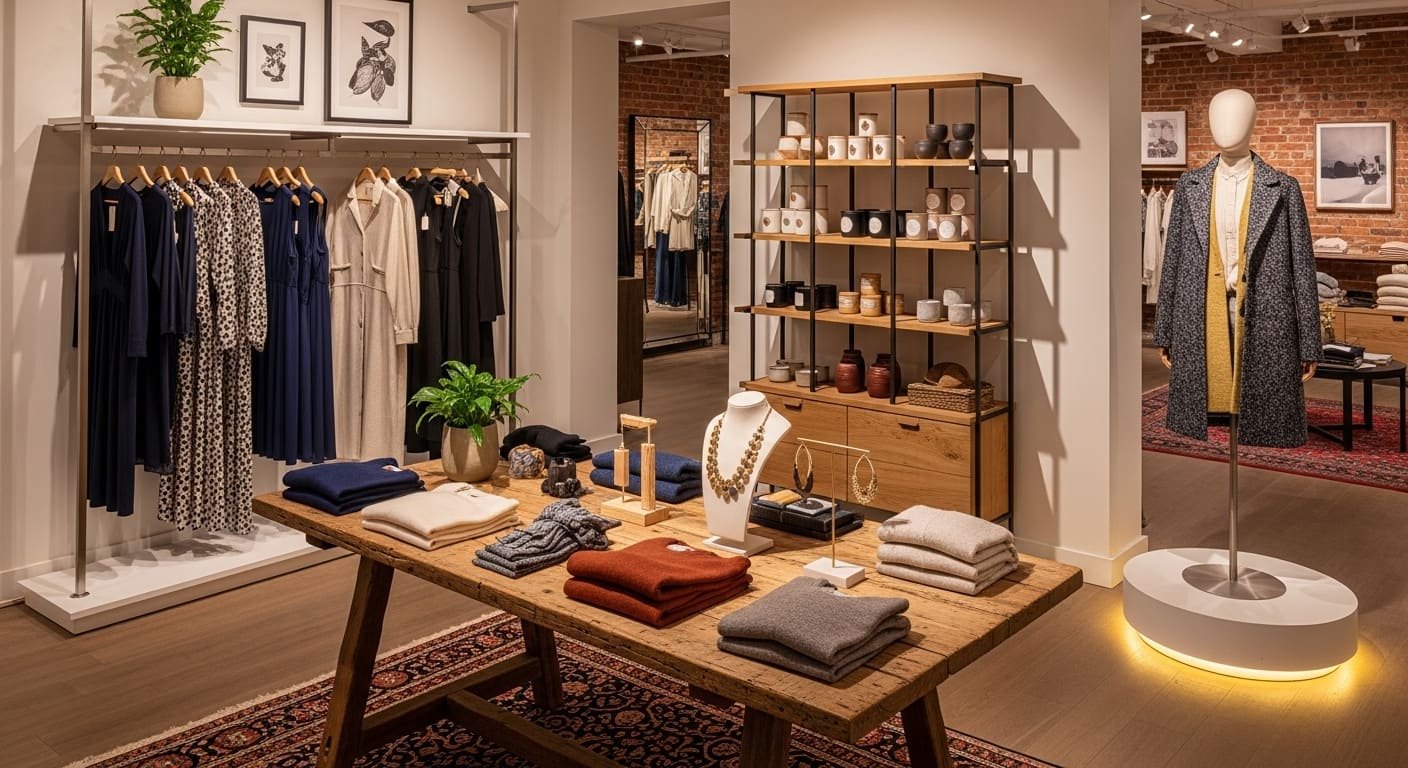
We have production capabilities in both China and Vietnam, so I see the differences daily. Vietnam is currently very suitable for the North American market because of tariff benefits. If the value of imported materials is less than 40% of the total, the product meets origin standards. For example, we can ship metal parts from China, add glass or acrylic in Vietnam, and export it as a Vietnamese product.
However, Vietnam's local supply chain is not as complete as China's. Many accessories still need to be shipped from China to Vietnam for assembly. In China, we have industrial belts where competition drives better prices and higher quality. In Vietnam, options are fewer, and if you are not careful, quality can suffer. Transport is also slower; moving around to get things done takes time due to traffic conditions. For complex, high-end boutique fixtures requiring intricate finishes like specific powder coating or complex joinery, China remains the superior choice. The workers there are more experienced with the "OEM mindset" needed for custom projects. We are working hard to bring our Vietnam team up to Xiamen standards, but for now, complex luxury items are often safer in China.
How do we ensure the finish looks premium and lasts long?
A scratched surface or peeling paint can destroy a luxury brand's image instantly. Durability matters just as much as aesthetics when customers interact with your displays.
We use advanced powder coating and PVD finishes to prevent wear. We also strictly test paints for hardness and adhesion to ensure they withstand the daily abuse of a retail environment.
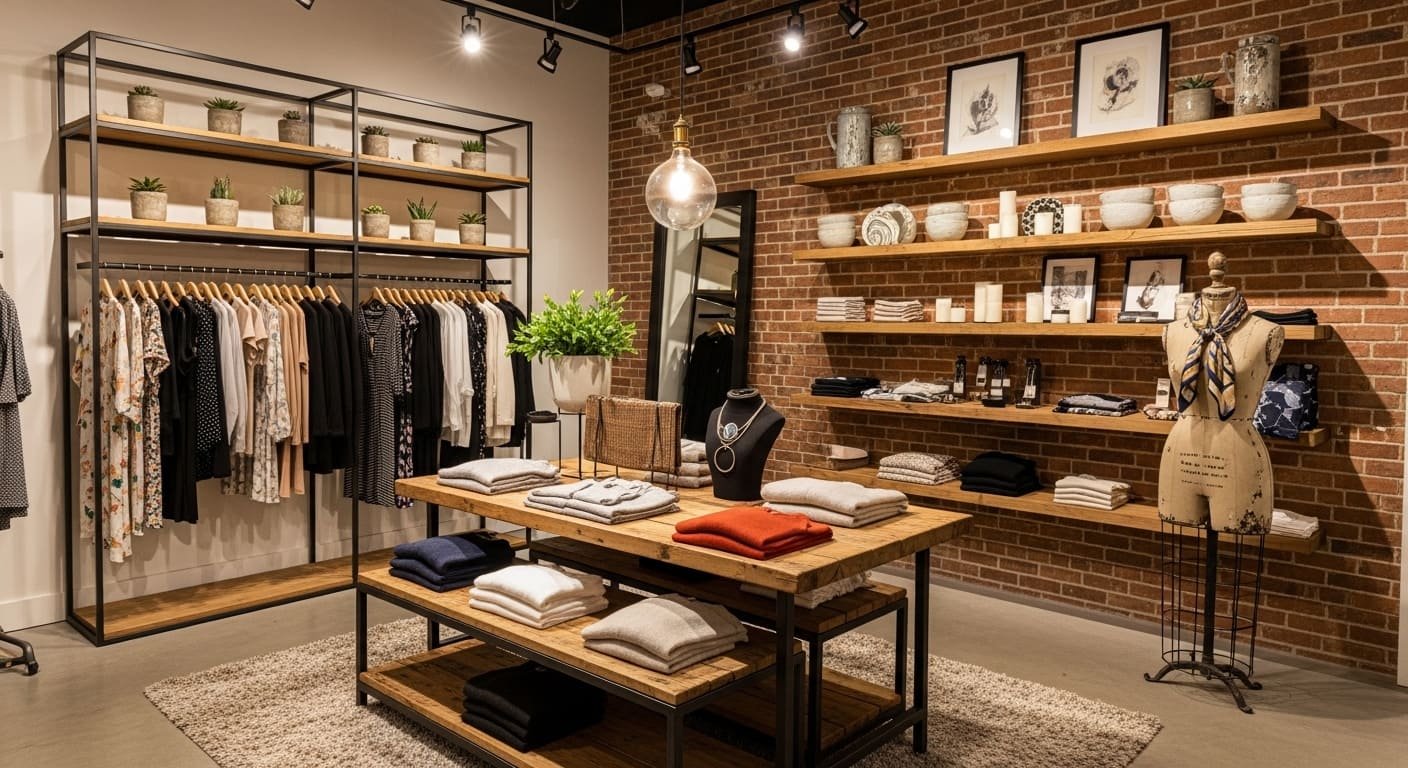
The finish is what your customer touches, so it cannot fail. For metal, we use powder coating and PVD (Physical Vapor Deposition). PVD is excellent for creating metallic colors that are hard and resistant to corrosion. We often combine this with an Anti-Fingerprint (AF) layer, which is crucial for high-end stores where you don't want greasy marks on your gold or chrome fixtures.
For wood and painted surfaces, quality control is strict. We test paint adhesion by wiping it with 75% alcohol ten times to ensure no color comes off. We also test hardness using pencils ranging from 9B to 9H; a standard good hardness is usually 2H.
We also have to be careful with mixed materials. For example, wrapping a counter in artificial stone looks beautiful, but it can crack. Why? Because stone and the MDF board underneath expand differently. Stone expands about ten times more than MDF when the temperature changes. However, MDF expands 30 times more than stone when humidity changes. If we don't account for this by using moisture-proof boards and leaving expansion gaps, the fixture will crack in your store. We analyze these factors before we build to avoid these failures.
Should you ship fully assembled or flat-packed fixtures?
Shipping air is the most expensive mistake you can make in retail logistics. The volume of your packaging dictates your final landed cost and impacts your budget significantly.
Shipping Knock-Down (KD) saves 50% to 80% of container space. While assembly requires labor, the freight savings usually outweigh the local setup costs, especially for modular designs.
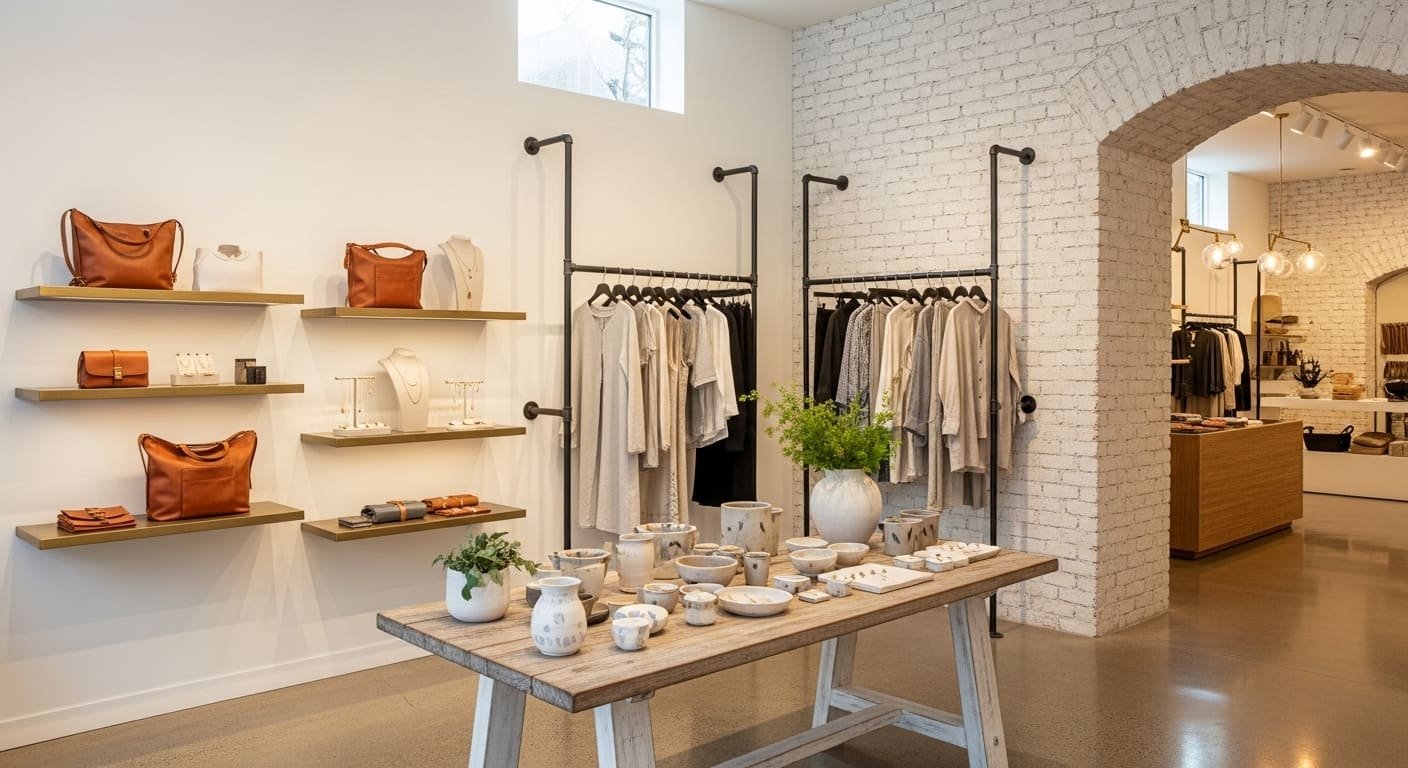
When we ship products "Knocked Down" (KD) or disassembled, we can save you 50% to 80% on ocean freight space. This also reduces the cost of packaging materials. If we ship fully assembled units, we have to fill the empty spaces in the boxes with expensive padding to stop the unit from breaking when the ship or truck moves. This adds cost and waste.
I know some clients worry about assembly costs in Europe or North America. It is true that labor there is more expensive than in China or Vietnam. However, for most items, the cost of shipping a huge, empty box is higher than paying a skilled worker to assemble a flat-packed unit on site. We are seeing more designers create fixtures that are easy to assemble—sometimes needing just one person. We can also design parts to be modular. A standard upright or shelf can be used in different configurations. This saves money on future store updates and reduces waste. It is the best balance between shipping costs and installation ease.
What are the future trends for boutique retail displays?
Retail is no longer just about shelves; it is about interaction and experience. Static displays are quickly becoming a thing of the past as technology integrates into physical spaces.
The future lies in smart, modular fixtures. We are seeing a shift toward displays integrated with AI, smart lighting, and flexible structures that allow brands to change layouts quickly without buying new furniture.
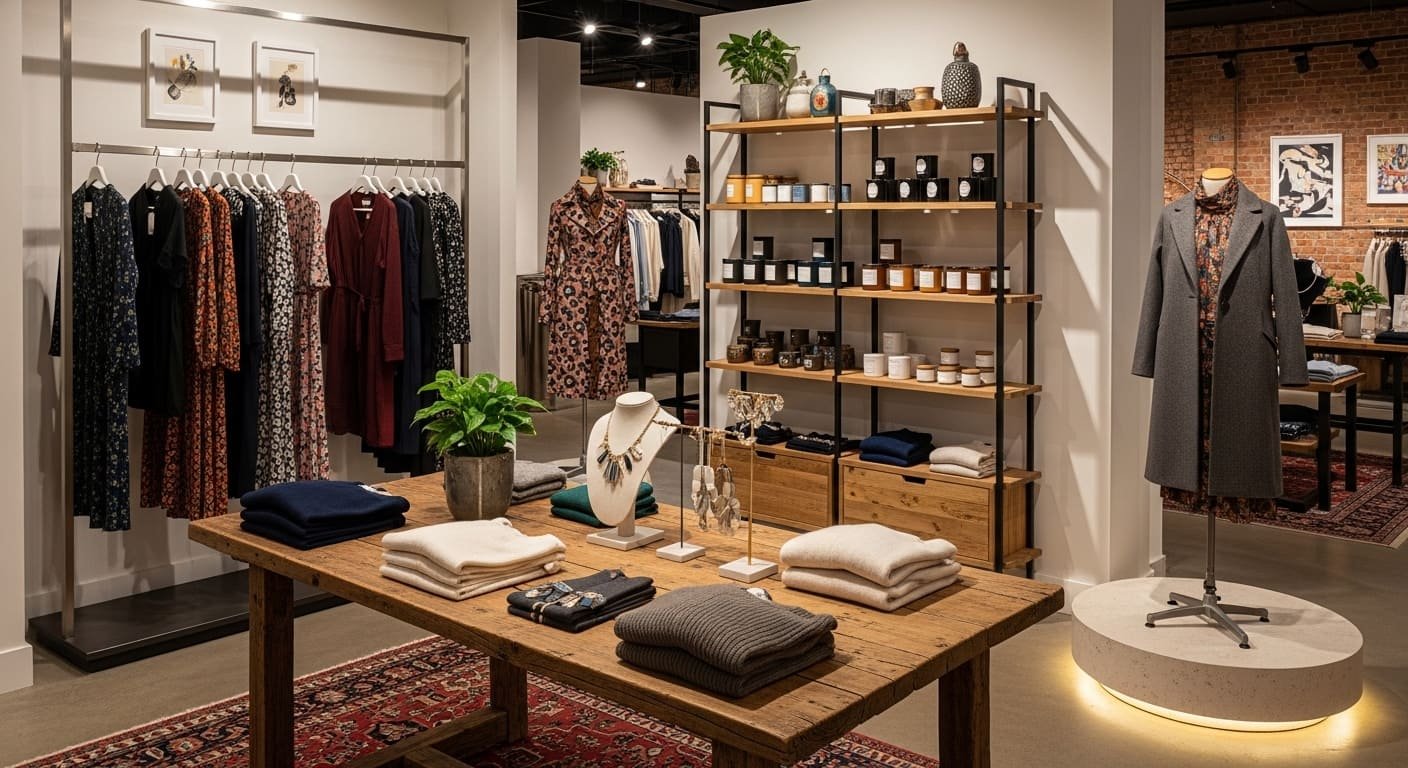
The role of the display fixture is changing from a passive tool to an active participant in the sale. We see five major trends. First is intelligent interaction. Fixtures now have built-in screens or AI assistants that talk to customers or phones. Second is modular design. Brands want to change their store layout for pop-up events without buying new props. We build systems with standard interfaces so you can swap out a shelf for a screen or a hook easily.
Third is sustainability. It is not just a buzzword. We are using more recycled plastics and exploring bio-materials. Fourth is emotional design. We are integrating lighting, scent, and sound into the fixtures to create a "vibe," not just a shelf. Finally, we see a focus on localization. Designs are adapting to local cultures, mixing modern materials with traditional crafts like bamboo or lacquer. As a factory, we are adapting our tech to support these trends, ensuring we can build the complex, tech-heavy, and eco-friendly fixtures the future demands.
Conclusion
Manufacturing boutique fixtures requires balancing custom design with smart engineering, choosing the right location, and managing logistics to deliver a high-quality brand experience without overspending.