
You want your store to look premium, but you also worry about shipping costs and safety. Choosing the wrong material can ruin your budget and hurt your brand image.
Glass offers unmatched clarity and scratch resistance for high-end luxury items, while acrylic provides a lightweight, shatter-resistant alternative that is cheaper to ship. The best choice depends on your specific budget, your logistics strategy, and the level of customer interaction in your retail environment.
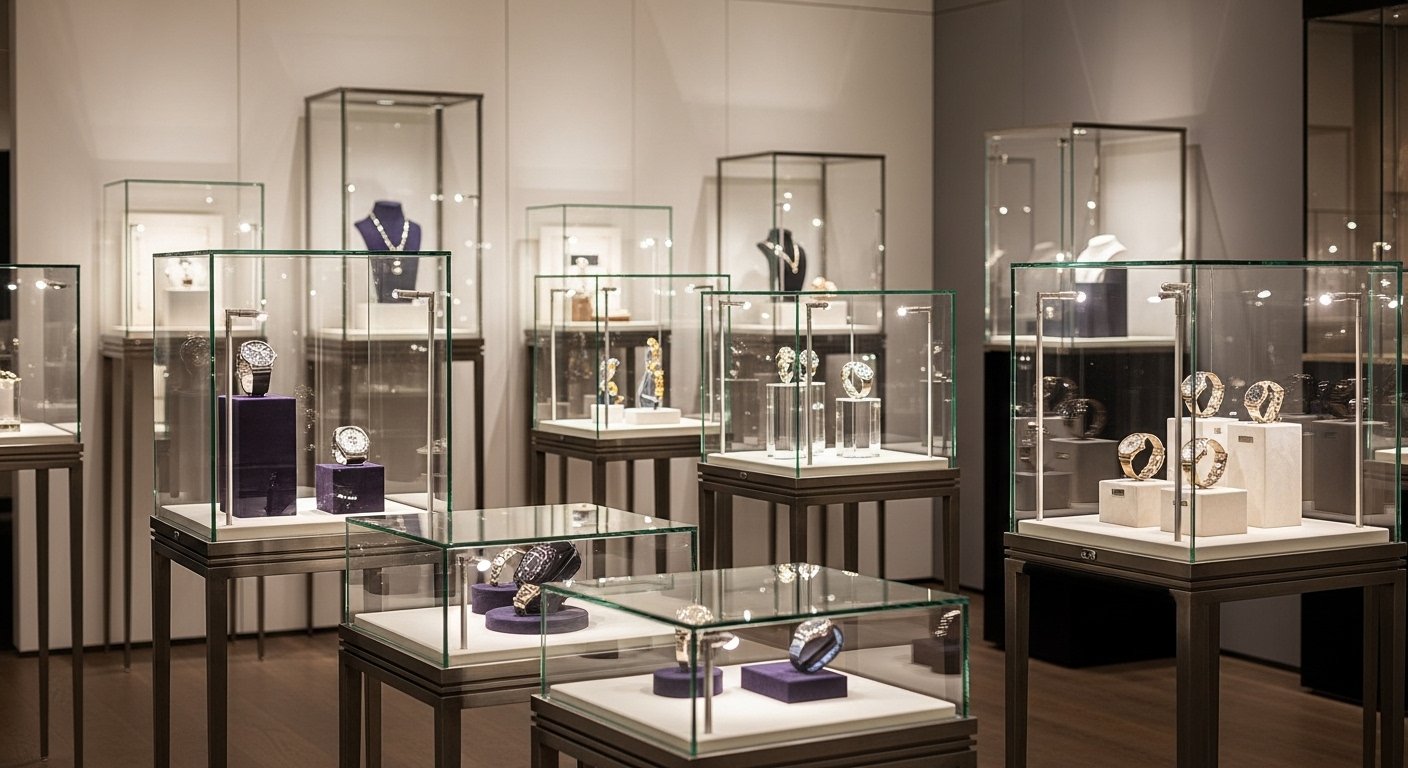
I have seen many designers fall in love with a rendering. They see a beautiful, transparent case and they approve the design immediately. But they do not ask the hard questions about how we will build it or how we will ship it. Later, the logistics manager screams about the freight cost, or the store manager complains about scratches after one week. I want to help you avoid these fights. We need to look at the real differences between these materials.
Will the material break when your customers touch it?
Broken displays create safety hazards and make your store look neglected. You cannot afford to have dangerous shards on your sales floor or scratched surfaces that look cheap.
Acrylic is impact-resistant and much safer for high-traffic areas, making it ideal for open shelving where customers handle goods. Glass is brittle and can shatter, but it is much harder than plastic, meaning it resists scratches from cleaning and daily wear far better than acrylic.
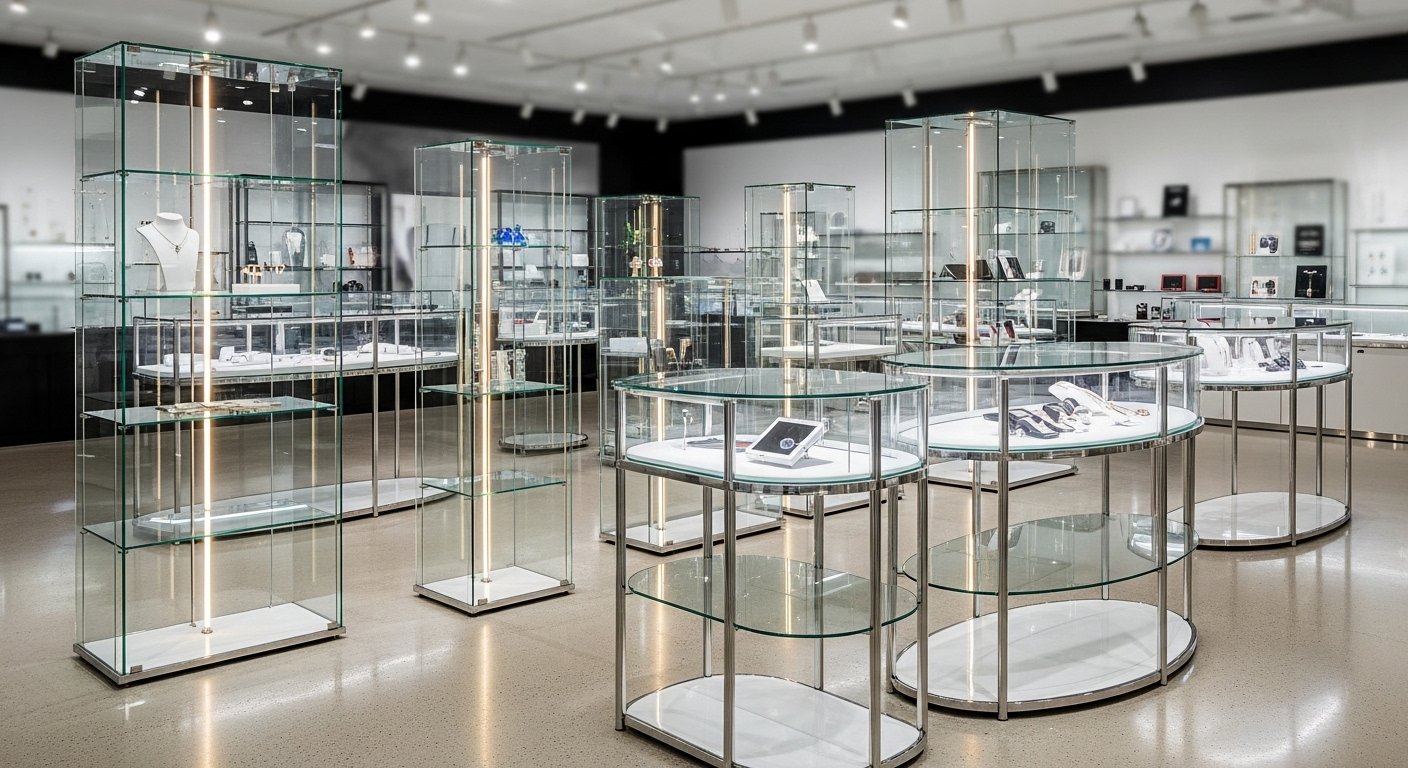
We need to think about the daily life of a store fixture. In a busy supermarket or a clothing store, people bump into things. Shopping carts hit the bottom of displays. Children touch everything. In these environments, safety is the number one priority. If a glass shelf breaks, it is a disaster. It creates a liability for the store owner. For these high-traffic zones, I almost always recommend acrylic (or other plastics like PC or PETG). It might crack if you hit it with a hammer, but it will not explode into dangerous shards like standard glass.
However, acrylic has a weakness. It is soft. If your cleaning staff uses a rough cloth, they will leave micro-scratches. Over six months, a clear acrylic box can start to look cloudy or "foggy." Glass does not have this problem. You can wipe glass thousands of times, and it remains crystal clear. In my factory, we test paint hardness with pencils (from 9B to 9H). Glass is harder than almost anything in a normal store environment. If you are selling high-end cosmetics or jewelry where the customer does not touch the display, glass is the superior choice for longevity. If you choose acrylic, you must accept that it will age faster than glass.
| Feature | Tempered Glass | Acrylic (PMMA) |
|---|---|---|
| Impact Resistance | Low (Shatters) | High (Bounces/Cracks) |
| Scratch Resistance | Excellent | Poor (Scratches easily) |
| Safety | Low (unless laminated) | High |
| Cleaning | Easy, any cleaner | Needs special care |
| Lifespan | Long (decades) | Medium (3-5 years) |
Does the material match your brand’s price point?
A cheap-looking display makes your expensive product look cheap. You struggle to justify premium pricing if your fixtures look cloudy, warped, or plasticky under the lights.
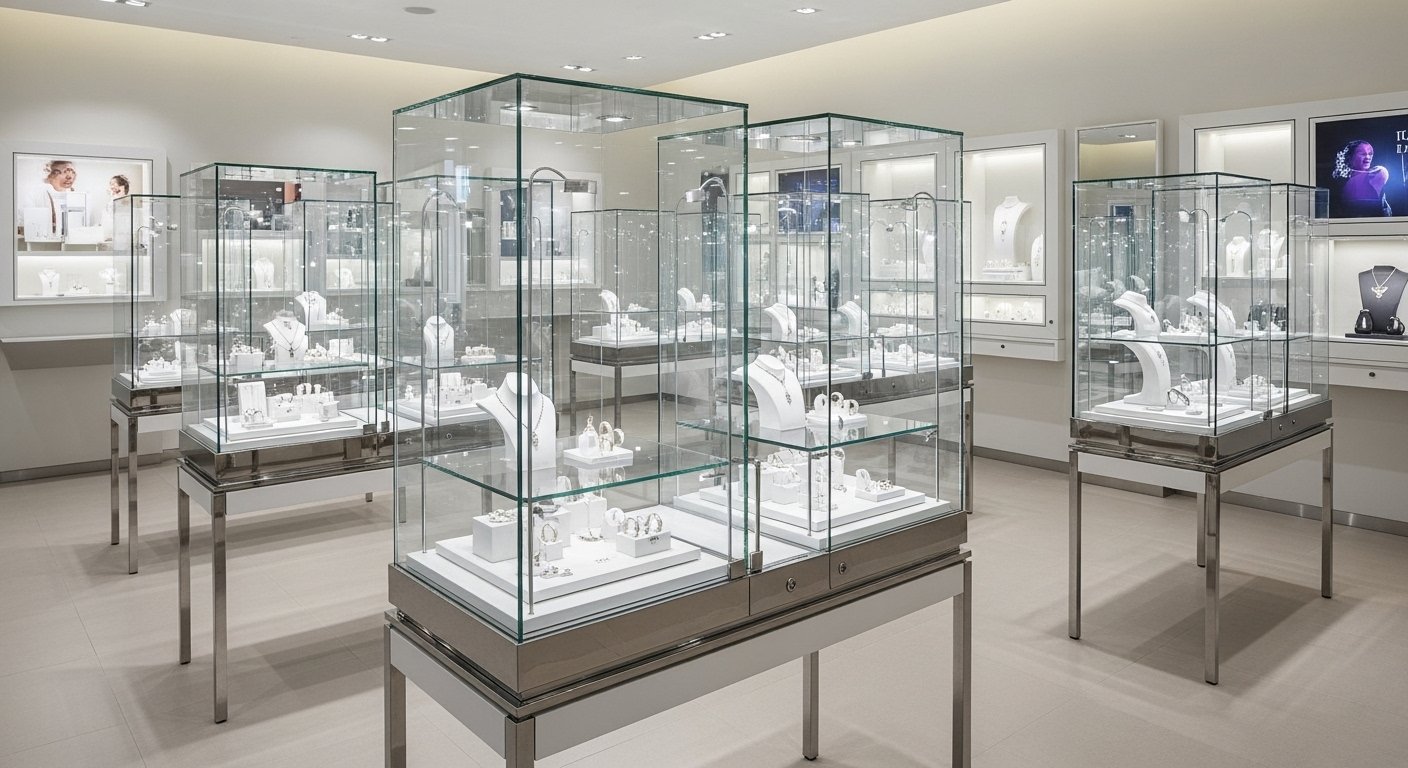
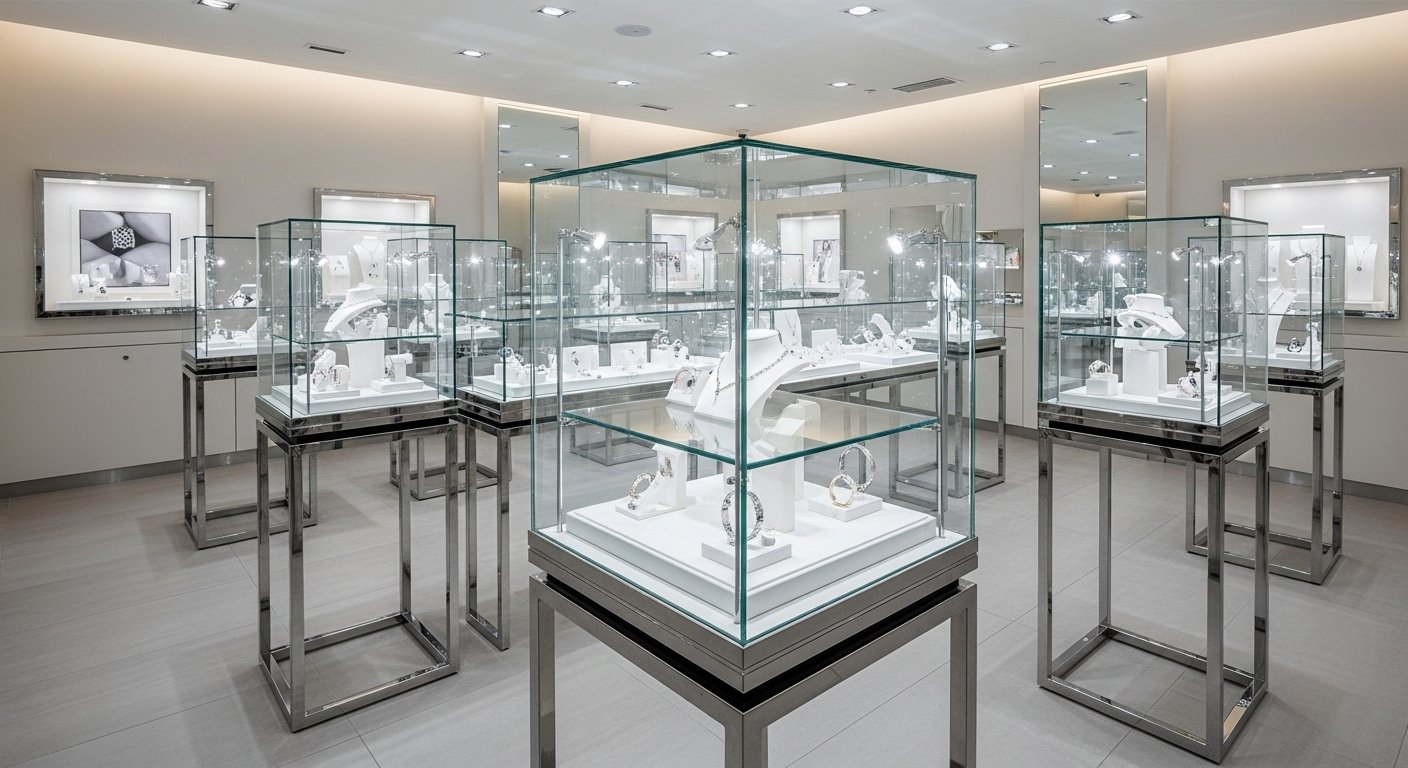
Glass is the standard for luxury retail because it provides high transparency and a premium, cool touch. Acrylic can mimic glass, but it often feels "warmer" and softer, which works well for modern, colorful, or pop-up retail concepts but may not suit high-end jewelry or watches.
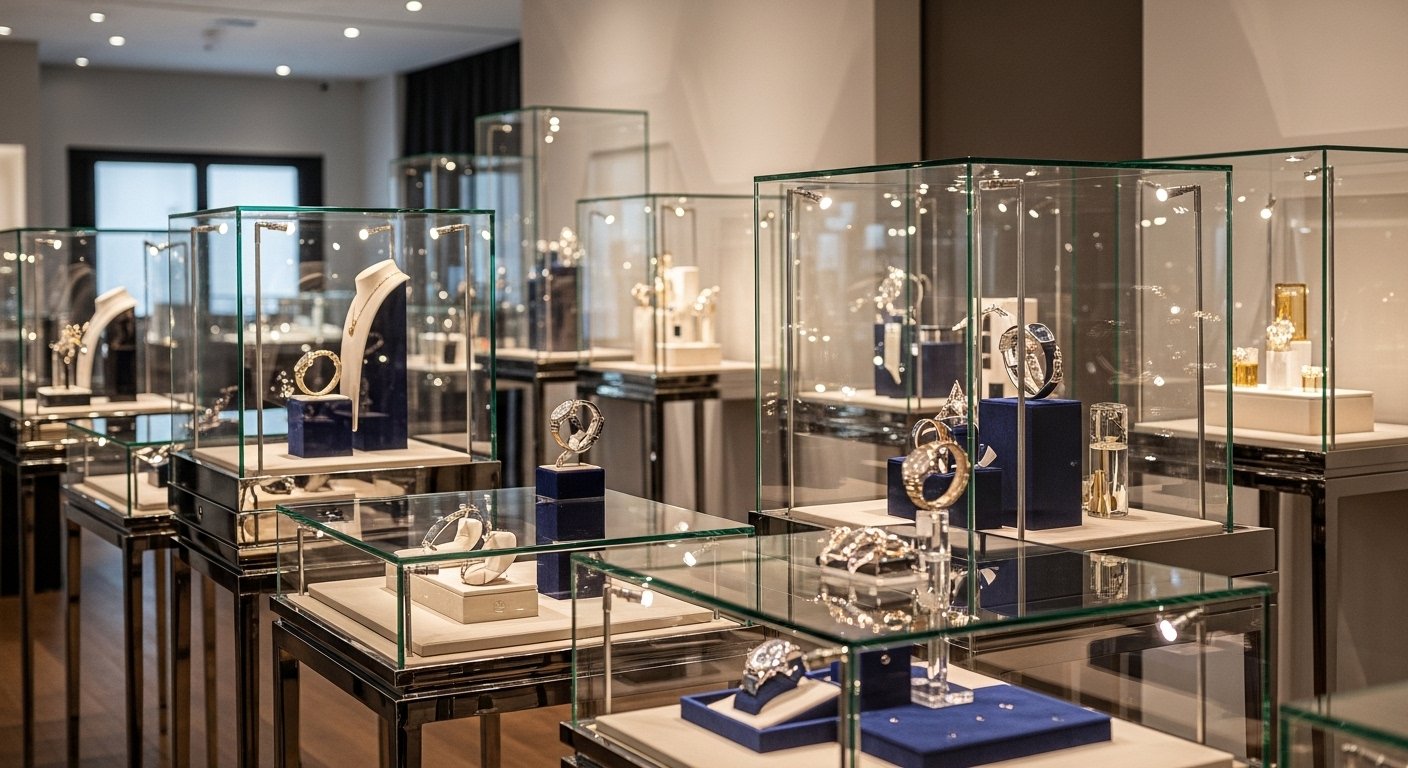
I have worked with many luxury brands. For example, when we make a window display for a high-end watch brand, there is no compromise. They often want stainless steel with PVD gold coating paired with ultra-clear glass. Why? Because glass has a high refractive index. It sparkles. It feels cold and heavy when you touch it. This sensory experience tells the customer: "This product is expensive." You cannot replicate this feeling with plastic. Even the best acrylic feels like plastic.
However, acrylic has its own style. It is not just a "cheap substitute." It is excellent for modern, vibrant brands. We can easily print on acrylic, or use colored acrylic to create neon effects. It fits very well with "fast fashion" or cosmetic brands that want a fun, energetic vibe. Also, consider the lighting. Display fixtures often include LED strips. Glass transmits light beautifully, but the edges can sometimes look green (unless you pay for low-iron glass). Acrylic edges can glow brightly when lit from the side, creating a very cool outline effect.
But you must be careful with quality. In China, we see many grades of materials. Low-quality acrylic will turn yellow after a year of exposure to UV light from store windows. High-quality acrylic stays clear. We always ensure we source materials that meet international standards, just like we ensure our wood meets E0 or P2 environmental standards. Do not just ask for "acrylic"; ask for non-yellowing, high-grade cast acrylic.
How much will shipping kill your budget?
Shipping heavy, fragile items destroys your profit margins. You might end up paying more for the freight and packaging than for the actual display fixture itself.
Acrylic is roughly half the weight of glass, which significantly reduces air and sea freight costs. Glass requires heavy wooden crating and extra padding to prevent breakage, which increases both the volume and the weight of your shipment.
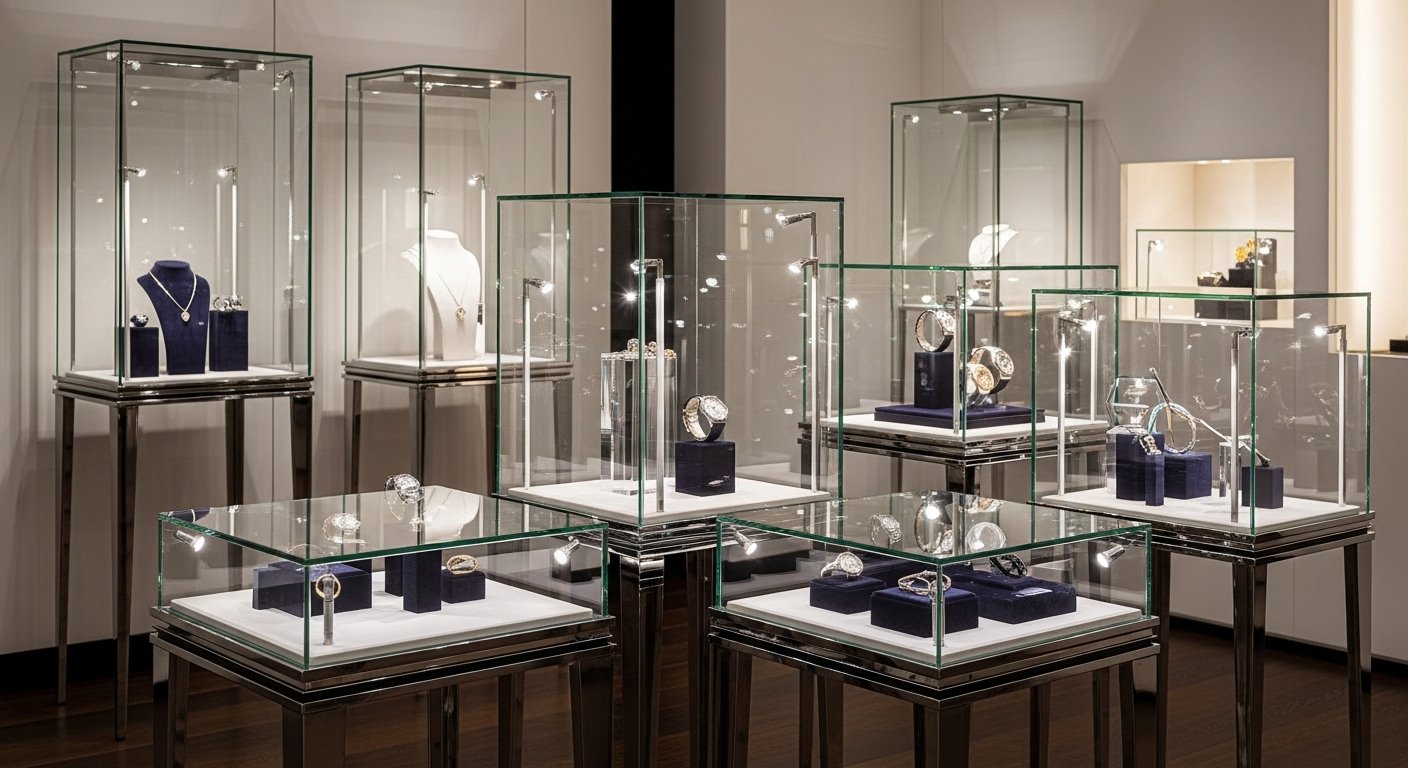
This is where the reality of business hits the design concept. I often tell my clients: "Design for logistics." If you ship a fully assembled glass counter from China to the USA, you are shipping a lot of air and a lot of heavy wood. Glass is heavy. A standard checkout counter with glass fronts is a nightmare to move. You need a forklift. You need a team of people to install it.
Acrylic is much lighter. You can ship more units in one container. Also, glass is fragile. To ship glass safely, we have to build very strong wooden crates. We have to fill the empty space with foam. This increases the volume of the package. In logistics, volume often costs as much as weight.
We try to use "Knock Down" (KD) structures whenever possible. This means we ship the parts flat, and you assemble them in the store. KD shipping can save 50% to 80% of container space. Acrylic is very friendly for KD designs. We can make flat acrylic panels that slot into metal grooves. Glass is harder to do this with because if a store employee drops a glass panel during assembly, it breaks. If they drop an acrylic panel, it usually survives. If your budget is tight, switching from glass to acrylic can save you thousands of dollars in sea freight and local trucking fees.
| Logistics Factor | Glass Fixture | Acrylic Fixture |
|---|---|---|
| Material Weight | Heavy (2.5 g/cm³) | Light (1.19 g/cm³) |
| Packaging | Heavy Crates + Foam | Cardboard + Light Foam |
| Freight Cost | High | Low |
| Breakage Risk | High | Low |
| Assembly | Professional required | DIY possible |
Can we create unique shapes without high mold costs?
Custom shapes often require expensive tooling that delays your launch. You need a unique look for your brand without waiting weeks for a mold to be cut.
Acrylic is easier to heat bend, laser cut, and bond into complex shapes without expensive molds. Glass requires specialized processing like tempering and UV bonding, which is often slower, more expensive, and less flexible for highly customized designs.
In our factory, we look at efficiency. For metal parts, we sometimes use molds if the quantity is high. But for small runs (under 50 sets), we use laser cutters because molds cost $100-$1000 and take time. The same logic applies to clear materials.
Acrylic is a dream for customization. We can heat it and bend it into curves. We can laser cut it into logos or intricate patterns in minutes. We can glue it together seamlessly. We can even use 3D printing for complex plastic connectors if needed. You do not need a mold for most acrylic display fixtures; we just fabricate it.
Glass is stubborn. You cannot just cut it and bend it easily. To make curved glass, you need an expensive thermal process. To make holes in glass for screws, we have to drill it carefully before tempering. Once glass is tempered, you cannot cut it again or it will explode. This means if the design changes by 1mm, the glass is trash. With acrylic, we can sometimes trim it or modify it. If you have a "unique brand installation" or a weird shape, acrylic is the flexible friend. Glass is the rigid, expensive aristocrat.
Where should you source these materials for the best value?
Sourcing from the wrong region leads to delays and quality issues. You might face high tariffs or material shortages if you do not know the local supply chain.
China has a mature supply chain for both high-grade glass and acrylic. Vietnam is improving but often imports raw acrylic materials from China, which can increase costs and lead times for complex plastic fixtures manufactured there.
I operate factories in both China and Vietnam, so I see the difference every day. China has a massive, complete supply chain. If I need a specific thickness of acrylic or a special type of low-iron glass, I can get it in Xiamen very quickly. The ecosystem is there.
Vietnam is different. It is great for metal and wood. But for materials like acrylic, the local supply chain is not as mature. Often, we have to buy the acrylic sheets in China and ship them to our Vietnam factory to assemble. This adds time. If you are a US buyer, you might want to buy from Vietnam to avoid high tariffs. This works well if the product is mostly metal (Made in Vietnam).
But you must understand the "Rules of Origin." To be considered "Made in Vietnam," a certain percentage of the value must be added in Vietnam. If we just import a finished acrylic box from China and repack it in Vietnam, that is cheating. It does not qualify. But if we import the sheet, cut it, polish it, and assemble it with a metal frame made in Vietnam, the value added is high enough. This is why we ship components from Xiamen to Ho Chi Minh City every month. We combine the raw material strengths of China with the tariff advantages of Vietnam. You need a supplier who understands this game, or you will get stuck in customs.
| Supply Chain Factor | China Manufacturing | Vietnam Manufacturing |
|---|---|---|
| Acrylic Availability | High / Immediate | Low / Imported |
| Glass Processing | Advanced / Fast | Growing / Slower |
| Cost of Materials | Lower | Higher (due to logistics) |
| Tariff to USA | High | Low (if rules met) |
| Best For | Complex, rapid orders | Large, planned orders |
Conclusion
Glass is the winner for luxury and longevity, while acrylic wins on safety, shipping costs, and design flexibility. Choose glass for high-end cases, and acrylic for shelves and high-traffic bins.