
You want customers to walk in, but harsh glare sends them running. Finding the balance between inviting brightness and aggressive illumination is a constant struggle for retail designers and brand managers.
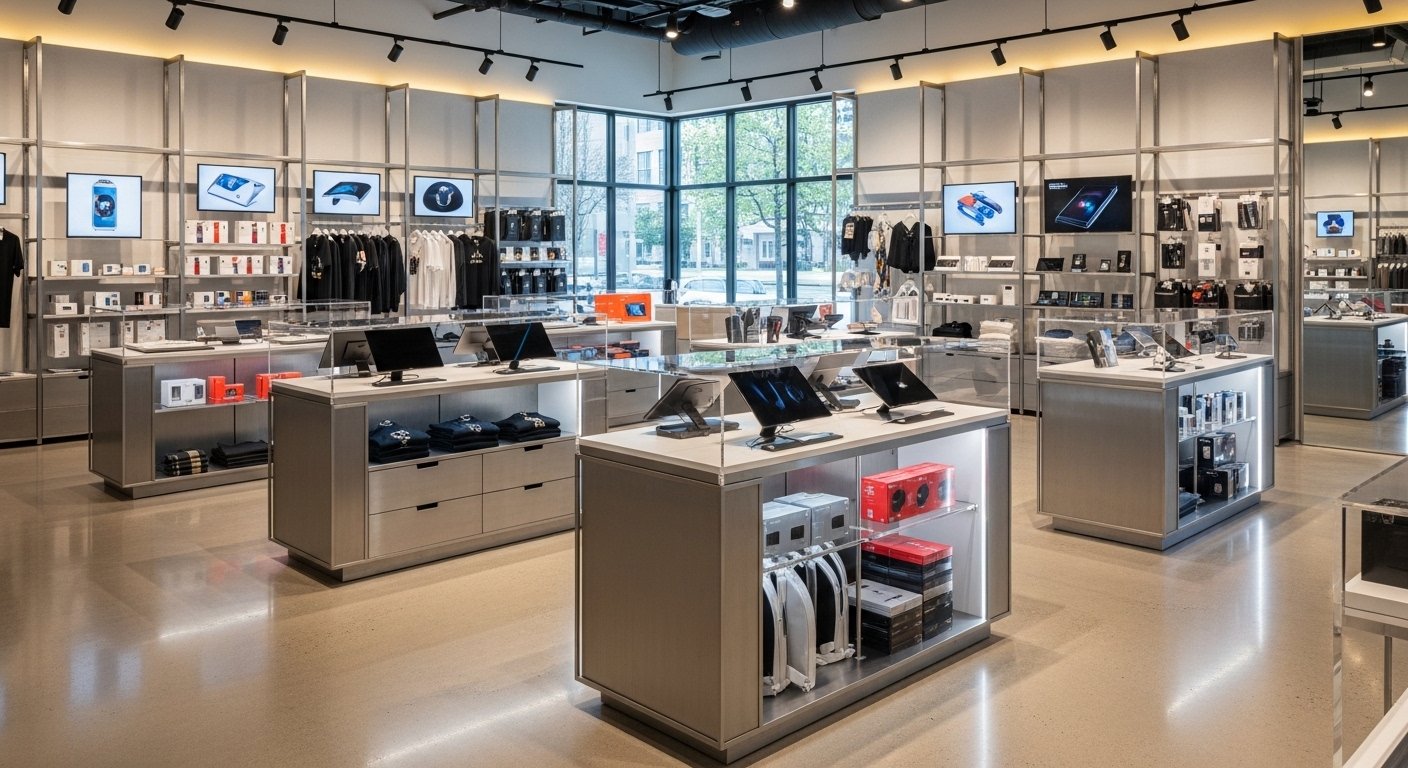
Bright lighting attracts prospects when paired with the right non-reflective finishes and warm textures. It repels them when it creates glare on cheap materials. The key isn't just the bulb, but how your display fixtures—wood, metal, or stone—absorb or reflect that light to create a welcoming atmosphere.
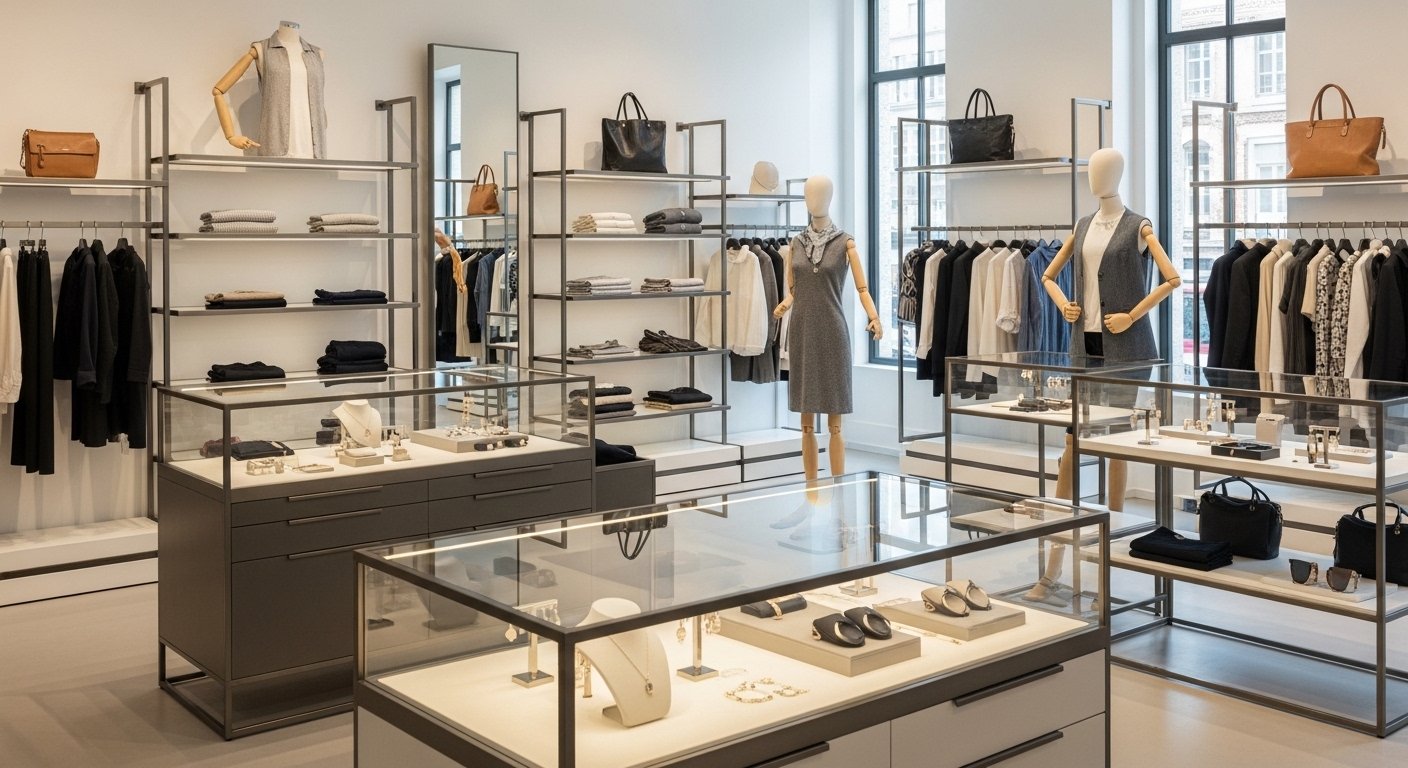
Many brands spend thousands on lighting design only to fail because their fixtures clash with the illumination. The wrong surface finish can turn a spotlight into a blinding mirror, while poor manufacturing quality becomes painfully obvious under bright LEDs. If you want your lighting to pull people in, you must look at what that light is shining on. Here is how to ensure your fixtures work with your lighting, not against it.
How does material selection impact lighting performance?
Glare on a display case ruins the product view. It frustrates shoppers trying to see details and makes the entire store feel cheap and uncomfortable to the eyes.
Matte finishes like powder coating or specific wood veneers absorb excess light, while polished chrome reflects it. Choosing the right material finish, such as PVD coating with anti-fingerprint technology, ensures your bright lighting highlights the product, not the smudge marks on the fixture.
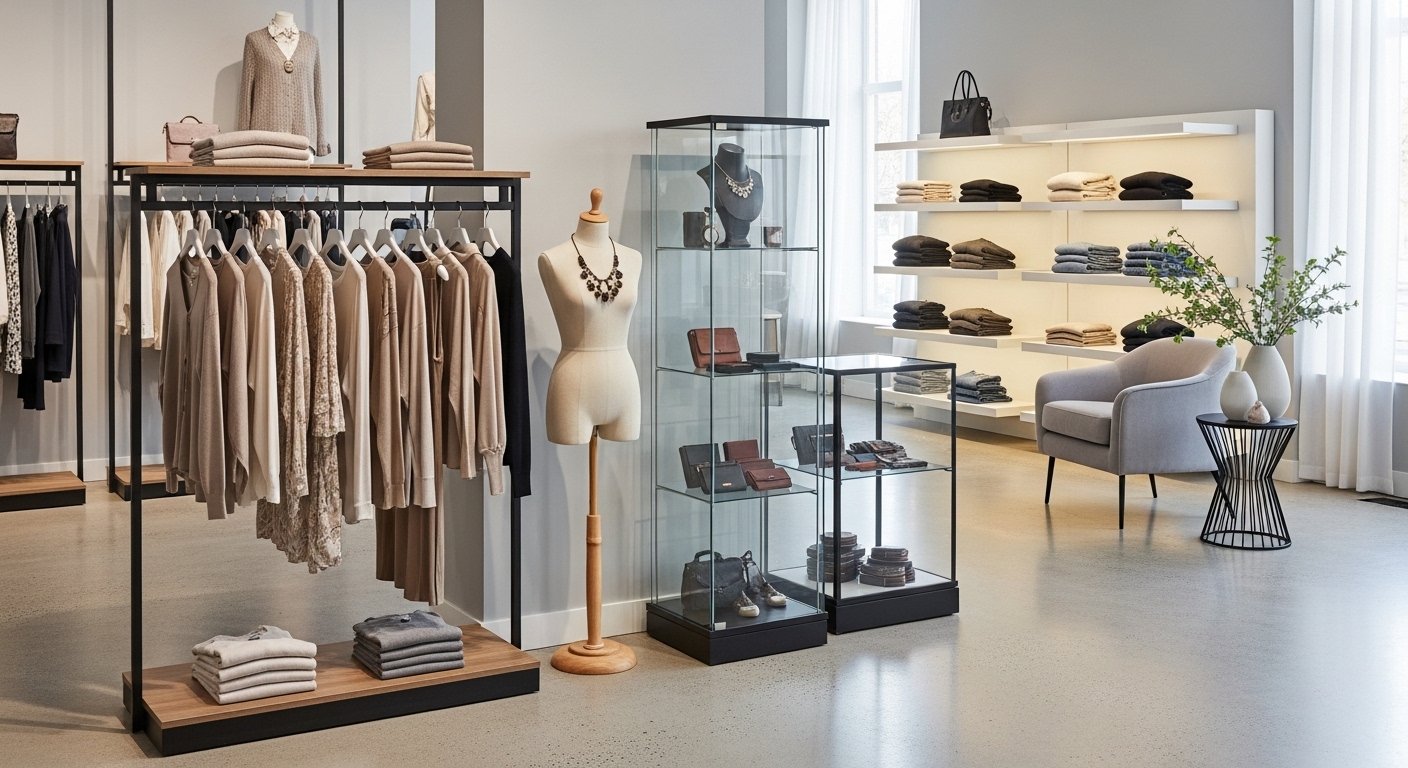
When you use bright lighting, the surface of your display fixture matters more than ever. If you use stainless steel, fingerprints become very visible under strong light. We now use a technology called PVD (Physical Vapor Deposition) combined with an Anti-Fingerprint (AF) layer. This is common in car interiors and phone screens, but we apply it to retail fixtures. It keeps the metal looking clean even after hundreds of customers touch it.
For wood and painted surfaces, the quality of the paint job is critical. Under dim light, a cheap paint job looks fine. Under bright retail lighting, you can see "orange peel" textures or dust particles. For luxury projects, we cannot use the standard "one base, two surface" paint method used for lower-end retail. We must apply at least two base coats and three surface coats. We also have to use a dust-free painting room with negative pressure. If there are any bumps or bubbles, we sand it down and start over.
Different wood bases also react differently. Particle board is rough and is best for hidden parts. MDF (Medium Density Fiberboard) is smooth and perfect for high-gloss paint that reflects light evenly. Plywood is strong but the grain can show through, so we often use it for structural support or cover it with veneer. Your material choice dictates how the light behaves.
Can custom fixture design enhance your lighting strategy?
Standard shelves often cast shadows on products. This makes merchandise look dull and unappealing, wasting the potential of your expensive overhead lighting system.
Custom fixtures with integrated LED channels and modular designs eliminate dark spots. By using smart retail trends and specific structures like end-caps or illuminated islands, you ensure light hits the product directly, increasing visibility and sales conversion rates significantly.
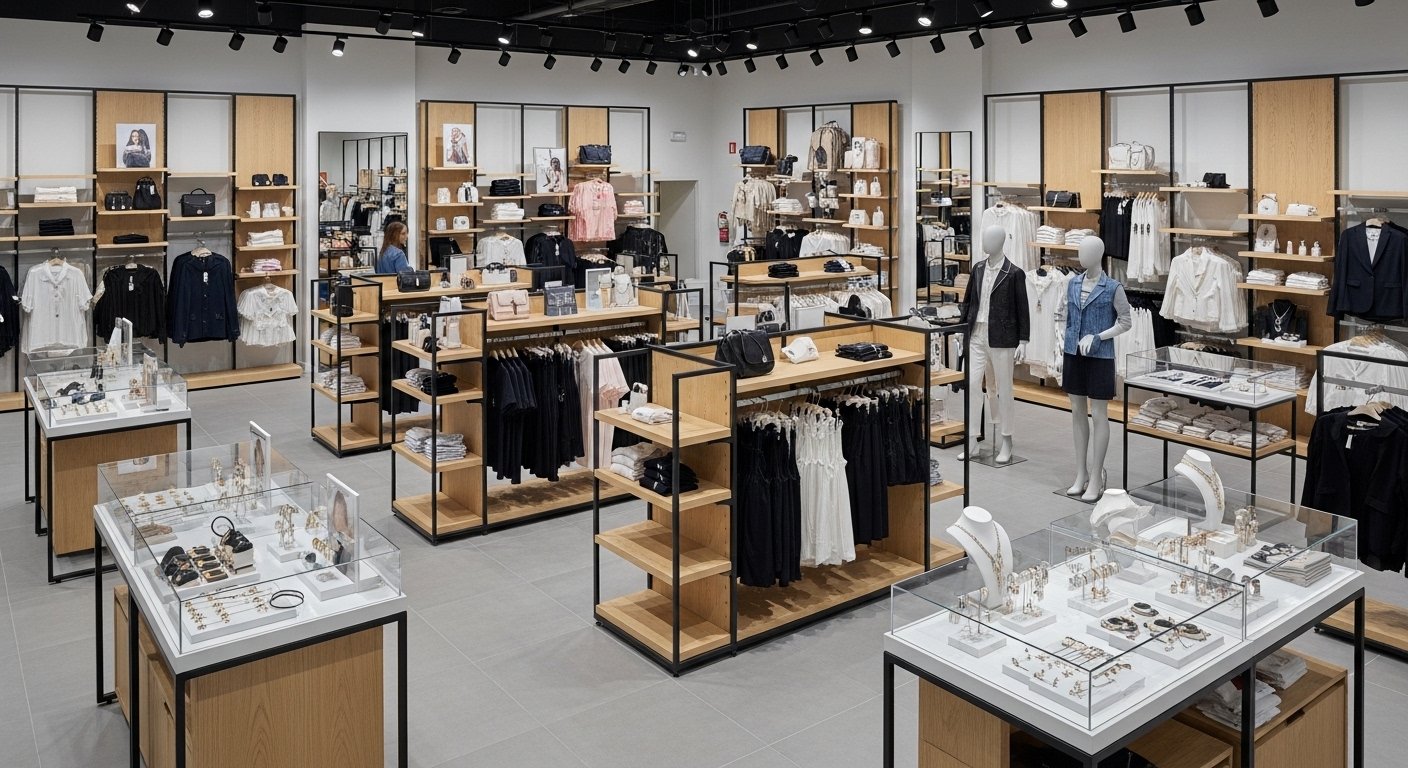
Lighting is not just about the ceiling; it is about the fixture itself. We are seeing a huge trend toward "Smart Interaction." Imagine a display case that brightens when a customer walks near it, or a mirror that lets you virtually try on clothes. These require fixtures designed to hold sensors and wires invisibly.
We produce various types of units like End Caps (at the end of aisles), Dump Bins for loose items, and Checkout Counters. Each needs a different lighting approach. An End Cap accounts for about 30% of supermarket sales, so it needs integrated lighting to stand out. A Dump Bin usually relies on ambient light, so its position is key.
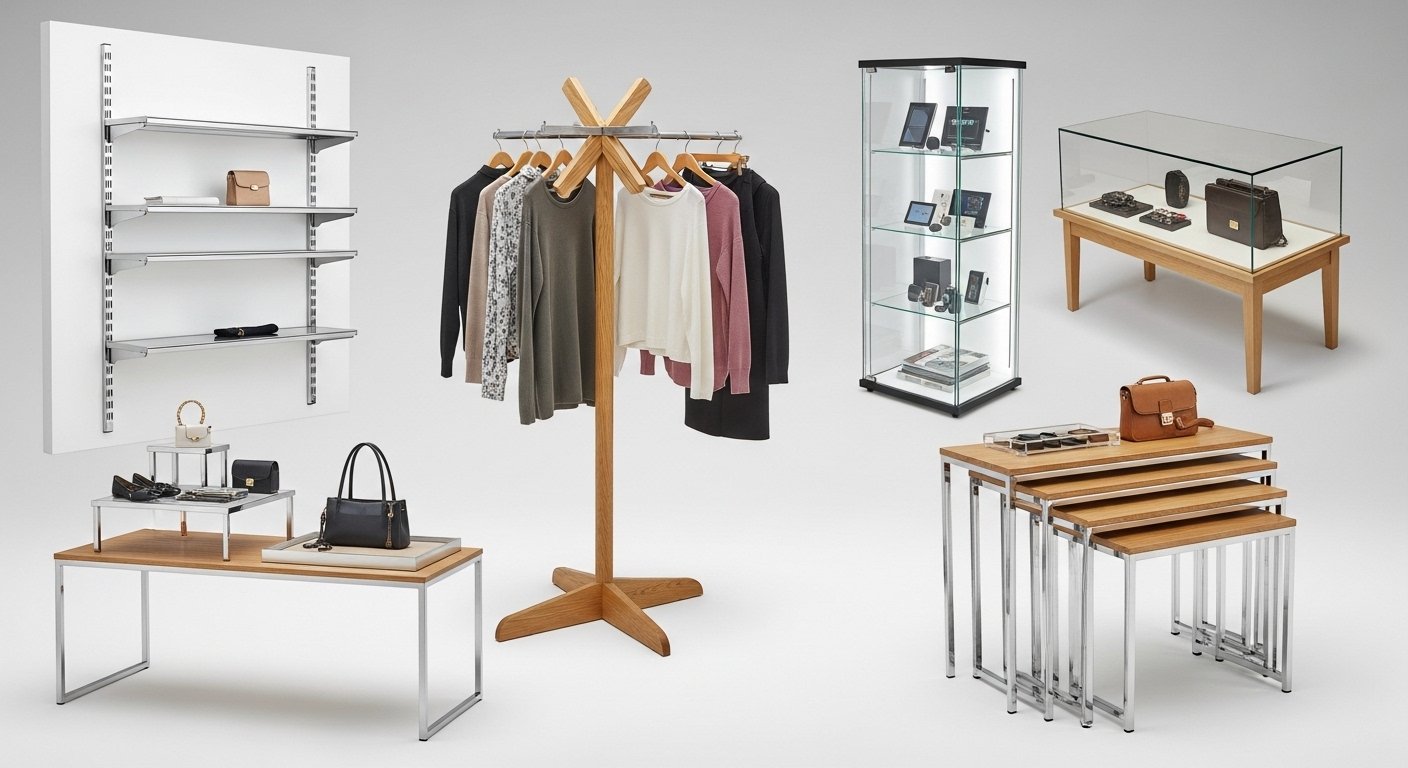
Standardization is important for keeping costs down, but "one size fits all" often fails in lighting. A tall shelf might block the light for a short shelf next to it. We suggest a "kit of parts" approach. We design modular parts—like universal uprights and brackets—that can be assembled in different ways. This allows you to adapt the display to the specific lighting conditions of each store layout, whether it is a small boutique or a large department store. This flexibility ensures your products are always well-lit.
Why is manufacturing precision critical for lighted displays?
Bright lights expose every flaw. A tiny gap, a scratch, or a crack becomes a glaring defect under high-intensity LEDs, destroying the premium feel of your brand.
High-end lighting requires high-precision manufacturing. Seamless welding, perfect stone joints, and accurate metal cutting are essential. If the manufacturing quality is low, bright lighting will only highlight defects like cracking stone or uneven metal surfaces, damaging your brand image.
I often see issues with artificial stone or marble counters cracking in stores. Bright light makes these cracks look terrible. Why does this happen? It is usually physics. Artificial stone expands when it gets hot (like under hot lights or near HVAC vents) much more than the wood underneath it does.
The expansion coefficient of artificial stone is about 10 times higher than MDF wood. If the factory glues the stone directly to the wood without leaving a gap for expansion, the stone will crack when the temperature changes. Also, MDF expands with humidity. If we do not seal the wood properly, it swells and breaks the stone.
To fix this, we use seamless splicing for stone in the factory to make it look perfect. For metal, we use laser cutting instead of stamping molds for small orders. Molds are great for efficiency if you make 10,000 pieces, but for 50 custom stores, laser cutting is more precise and flexible. It avoids the rough edges that catch the light. We also use 3D printing for complex corners to ensure a smooth, unified look that stands up to close inspection under bright store lights.
How do you balance cost and quality in high-end retail environments?
High-quality fixtures are expensive. But cutting costs on materials often leads to disastrous visual results that ruin your store's atmosphere and customer experience.
Sourcing from experienced manufacturers in China or Vietnam can balance cost and quality. By optimizing logistics (KD shipping) and understanding supply chain strengths, you can afford the premium finishes required to make your lighting strategy effective without breaking the bank.
To afford the high-quality finishes that look good under bright lights, you need to save money elsewhere. One huge area is shipping. We recommend "Knock Down" (KD) designs. This means we ship the fixtures flat, not assembled. This saves 50% to 80% of space in the shipping container.
In the past, people worried about assembly costs in the US or Europe. But modern designs are easy to assemble with just one skilled worker. This is much cheaper than shipping "air" in a pre-assembled box.
We also use a dual-country strategy. We have factories in China and Vietnam. China has a very mature supply chain for complex metal and acrylic parts. Vietnam is great for wood and large volume orders, and it helps US clients save on tariffs. For complex projects, we might make the metal parts in China and ship them to Vietnam for assembly. This gives you the best quality parts at the best overall price.
Be careful with hidden logistics fees, though. Some freight forwarders charge low sea freight but hit you with high local charges (THC, document fees) at the destination. Always ask for a transparent breakdown. By saving on shipping and tariffs, you can put that budget back into better materials and lighting.
Conclusion
Bright lighting works if your fixtures are flawless. Choose matte or PVD finishes, ensure precise manufacturing to hide defects, and optimize logistics to afford the quality your brand deserves.