
Choosing the wrong wood for your store can lead to toxic fumes, failed inspections, and massive legal fines. Many designers struggle to balance beautiful aesthetics with strict international safety regulations.
European E0 and American P2 are formaldehyde emission standards for engineered wood. E0 limits emissions to 0.5mg/L or less, while P2 (CARB Phase 2/EPA TSCA Title VI) sets limits between 0.05 and 0.11 ppm depending on the wood type. These ensure Display Fixtures and Bespoke Shopfittings are safe for indoor use. [1][2]
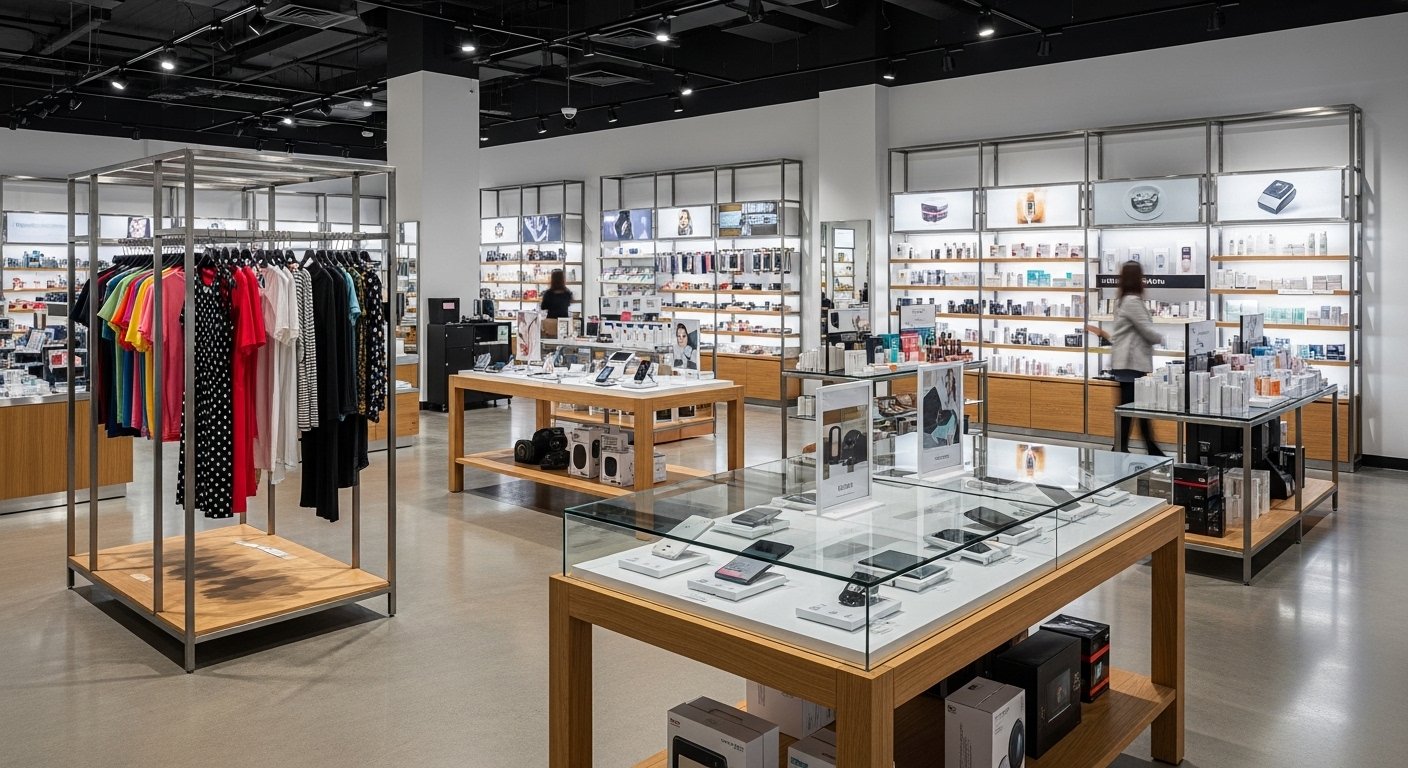
I have seen many projects fail because a designer picked a material that looked good but lacked the right certification. It is a mistake that costs time and trust. If you want your retail project to succeed, you must understand what happens beneath the surface of the wood. Reading further will show you how to navigate these complex global standards without losing your mind.
What are the core differences between European E0 and American P2 standards for display fixtures?
Confused by different labels from different continents? Using the wrong standard for the wrong market can lead to your shipment being blocked at customs. Understanding these technical limits is your first line of defense.
The European E0 standard is a voluntary industry benchmark that is stricter than the legal E1 requirement, focusing on ultra-low formaldehyde. The American P2 standard, originated by CARB and now a federal EPA law, is a mandatory requirement for all wood products sold in the United States. [1][2]

When I design Display Fixtures and Bespoke Shopfittings, I always look at the specific wood type first. In Europe, E0 is the gold standard for high-end projects, often used in luxury retail. In America, the P2 standard is the law. If your wood does not meet P2, you cannot sell it in the US. The main difference lies in how they measure the gas. Europe often uses the "Perforator method" or "Desiccator method," while the US uses a "Large Chamber" test to mimic real-room conditions.
In my experience, American particle board standards are often higher than the general standards in China. [2] If you source MDF or particle board for a US project, you must ensure the factory uses P2-certified glue. The price between MDF and particle board might be similar in China, but the chemical composition is what truly matters for compliance. Below is a comparison of how these materials differ in the context of retail fixtures:
| Feature | European E0 Standard | American P2 (CARB/EPA) |
|---|---|---|
| Legal Status | Often voluntary/High-end | Mandatory Federal Law |
| Emission Limit | ≤ 0.5 mg/L | 0.05 - 0.11 ppm (varies by wood) |
| Common Material | High-end MDF / Plywood | Particle Board / MDF / Hardwood Plywood |
| Market Focus | EU and UK | USA and Canada |
| Testing Focus | Raw board content | Finished product emissions |
Why is strict compliance with E0 and P2 standards critical for international retail brands?
Brands often ignore material specs to save a few dollars. Then, a store opens and customers complain about a "chemical smell." This creates a PR nightmare and puts the health of every employee at risk.
Strict compliance protects people from respiratory issues and cancer risks associated with formaldehyde. It also ensures that international brands avoid expensive product recalls and legal lawsuits. Using certified materials like E0 and P2 proves that a brand cares about sustainability and human health. [1][3]

In the world of Display Fixtures and Bespoke Shopfittings, "cheap" often means "dangerous." I have seen factories try to cut corners by using non-compliant glue. This saves money in the short term, but it ruins the project's value. If a retailer in the UK or USA gets caught with non-compliant fixtures, the government can force them to remove everything. This leads to empty stores and lost revenue.
Furthermore, luxury brands demand a higher level of finish. For these projects, we often use 2 layers of primer and 3 layers of topcoat to ensure a perfect surface. [3] If the base wood is poor quality or high-emission, the paint might not bond correctly, or the gas will eventually cause the paint to bubble. I always tell my clients that the certificate is just as important as the drawing. It is about building a brand that people can trust for the long term. We even use 3D printing for prototypes to test the fit before we commit to large batches of compliant wood. [1]
How do professional manufacturers ensure material consistency across global supply chains in China and Vietnam?
Managing a factory in one country is hard. Managing a supply chain across China and Vietnam is even harder. Many buyers worry that a product made in Vietnam won't match the quality of a Xiamen-made fixture.
We maintain consistency by using the same engineering standards and quality discipline in both locations. We audit every supplier and perform batch testing on all raw materials. Our team in Xiamen supports our Vietnam facility with technical expertise to ensure every Display Fixture meets E0 or P2 requirements. [5]

I spent the last two years integrating our standards between our China and Vietnam factories. It was not easy. Vietnam’s supply chain is still growing. Many parts, like specific acrylics or high-end hardware, are still shipped from China to Vietnam for assembly. [2][5] This ensures that the final product uses the exact same components regardless of where the final assembly happens. We use advanced powder coating equipment that controls surface thickness perfectly. This is vital because many Display Fixtures and Bespoke Shopfittings have tight tolerances for assembly. [1]
To keep costs low and quality high, we use 3D printing for fast testing during the prototype phase. [1] If a project is for the North American market, we often produce in Vietnam to help our clients reduce import taxes. [3] However, we still use the same P2-certified wood sources we trust in China. We don't just "hope" the quality is the same. We use the same drawings, the same QC checklists, and the same management mindset. This bridge between Xiamen and Vietnam allows us to offer flexibility without ever sacrificing the safety standards like E0 and P2 that Mark and other designers rely on.
| Production Factor | China (Xiamen) Strategy | Vietnam Strategy |
|---|---|---|
| Material Sourcing | Local high-standard supply | Import key components from China [2] |
| Quality Control | 12 years of OEM experience [3] | Xiamen-trained engineering team [5] |
| Technical Support | CNC, Laser, Advanced Powder Coating | Assembly focus with China-made parts |
| Market Advantage | Speed and complex customization | Lower tariffs for US market [3] |
Conclusion
Understanding E0 and P2 standards is essential for safe, legal, and high-quality Display Fixtures and Bespoke Shopfittings. Choosing a manufacturer with integrated global standards ensures your brand remains protected.